The 2010s File Feature
Sleigh Ride
Sleigh Ride — The Ronettes (Holiday Catalog, Charting 2018) The Ronettes' recording of "Sleigh Ride" has one of the more unusual chart histories in American …
01 The Story
Sleigh Ride — The Ronettes (Holiday Catalog, Charting 2018)
The Ronettes' recording of "Sleigh Ride" has one of the more unusual chart histories in American pop music: it is a recording made in 1963 that gained its most significant Billboard Hot 100 visibility more than five decades later, when the annual holiday season streaming surge that began reshaping the chart landscape in the mid-2010s started routinely lifting classic Christmas recordings back into active chart territory. The song's appearance on the Hot 100 in the 2018 holiday season was part of a broader phenomenon that changed how the chart's year-end eligibility rules were interpreted and applied.
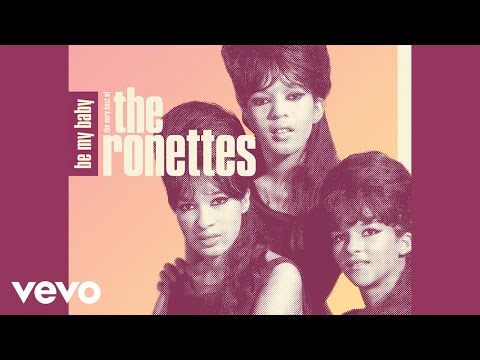
The Ronettes were a vocal trio from New York City consisting of sisters Veronica and Estelle Bennett and their cousin Nedra Talley. They recorded for Philles Records, the label founded by producer Phil Spector, whose Wall of Sound production technique defined the sonic landscape of early 1960s pop. Spector's approach layered multiple instruments, echo chambers, and overdubbed vocals into a dense, emotionally overwhelming sonic architecture that was particularly effective in the holiday recording context, where maximalism is expected and celebrated.
"Sleigh Ride" was originally composed by Leroy Anderson with lyrics added by Mitchell Parish. Anderson's composition dates to 1948 as an orchestral piece, and Parish added words in 1950, making it one of the older holiday standards that continued to attract new interpretations throughout the 1950s and 1960s. The Ronettes' version, arranged and produced by Phil Spector with his characteristic orchestral density and the trio's layered harmonies, gave the song a distinctly teenage pop energy that differentiated it from the more adult-oriented renditions by other artists.
The original release performed modestly on the charts in 1963, when holiday recordings were a standard commercial category but streaming did not exist to give them multi-decade second lives. The track was included on holiday compilation albums over the following decades and was a staple of oldies radio during the Christmas season, maintaining a degree of cultural visibility without accumulating mainstream chart activity in the way that more recent recordings did.
The transformation of the Billboard Hot 100 in the streaming era fundamentally altered the commercial calculus for catalog holiday recordings. Beginning around 2016 and accelerating significantly in 2017 and 2018, holiday classics began returning to the chart each November and December as streaming listeners collectively shifted to seasonal playlists that featured decades-old recordings alongside new releases. Billboard revised its methodology to address this phenomenon, ultimately implementing rules that limited how far back catalog songs could remain eligible for certain year-end calculations, but not before numerous classic recordings had re-entered chart territory.
The Ronettes' "Sleigh Ride" was among the beneficiaries of this shift. In the 2018 holiday season, it appeared on the Billboard Hot 100 alongside other vintage holiday recordings, including the perennial "All I Want for Christmas Is You" by Mariah Carey (which topped the chart that year after more than two decades of annual returns), Brenda Lee's "Rockin' Around the Christmas Tree," and Bobby Helms's "Jingle Bell Rock." The presence of these recordings on the chart simultaneously demonstrated the power of streaming to democratize music discovery across generations and prompted ongoing discussions about chart methodology.
For the Ronettes specifically, the renewed chart attention was a posthumous commercial moment of a particular kind: Veronica "Ronnie" Spector, the group's lead vocalist, was still alive and publicly active in 2018, and the chart re-entry brought renewed attention to the group's legacy and the Phil Spector-produced recordings that represented some of the most significant pop production work of the early 1960s. The complicated legal history between Ronnie Spector and Phil Spector, which involved royalty disputes and control over the recordings' commercial use, meant that the streaming windfall's benefits were distributed according to long-established contractual arrangements that Ronnie Spector had repeatedly discussed publicly as inequitable.
The cultural footprint of the Ronettes' "Sleigh Ride" in the streaming era is thus a story with multiple dimensions: a masterpiece of early 1960s pop production, a holiday perennial that had survived on cultural memory for decades, and a chart story that illustrated how digital streaming was rewriting the rules of commercial success in ways that the industry had not fully anticipated. Its presence in the 2018 holiday chart cycle placed it in the company of recordings from across several generations of American pop history, all finding new audiences through algorithmic playlist placement.
02 Song Meaning
Why the Ronettes' "Sleigh Ride" Endures Across Generations
The Ronettes' recording of "Sleigh Ride" succeeds as a holiday classic not simply because it is cheerful and seasonally appropriate, but because Phil Spector's production transforms a relatively conventional piece of holiday source material into something genuinely thrilling. The Wall of Sound technique, with its cascading orchestral layers, echo-drenched percussion, and the dense interplay of Veronica Bennett's lead vocal with the group's harmonies, gives the song a physical sensation that goes beyond what the lyrics alone would suggest. Listening to it is an experience in sonic immersion that rewards full volume and decent speakers in a way that more spare holiday recordings do not.
The lyric itself, which describes the simple pleasures of a horse-drawn sleigh ride through a winter landscape and the happiness of the company one keeps, is unambiguously innocent in its emotional content. There is no irony, no hidden darkness, nothing to decode. The pleasure of the text is entirely surface: the crisp air, the sound of bells, the warmth of shared joy against a cold backdrop. This straightforwardness is part of why the song translates across generations without becoming tiresome: it asks nothing of the listener except the willingness to be temporarily transported.
What the Ronettes bring to the material that separates their version from many others is a quality of genuine enthusiasm that registers as youthful rather than professional. The group was young when they recorded it, still teenagers or barely past adolescence, and Ronnie Bennett's lead vocal has a warmth and spontaneity that sounds less like a seasoned entertainer delivering a holiday standard and more like someone who is actually delighted by the scenario being described. This quality of apparent sincerity is extremely difficult to manufacture, and it is a significant reason why the recording has outlasted dozens of competent but less emotionally alive versions by other artists.
The recording's endurance into the streaming era raises interesting questions about what cultural memory looks like when it is mediated by algorithmic recommendation. Listeners discovering the Ronettes' "Sleigh Ride" on a holiday playlist in 2018 were encountering a sound from a very different era of American life, a period before the British Invasion, before rock's dominance of pop culture, before the cultural upheavals of the mid-1960s that would transform everything. The innocence of the recording, which could be read as either genuine or nostalgic depending on one's perspective, carries a different emotional charge for listeners who encounter it in historical context versus those who simply receive it as a pleasurable piece of holiday ambience without the full weight of that history.
For the Ronettes' legacy, "Sleigh Ride" occupies an interesting position: it is neither their signature song (that distinction belongs to "Be My Baby") nor their most artistically ambitious recording, but it is arguably the one that has reached the widest audience in the most recent decades. The holiday catalog's commercial durability means that a recording made in 1963 can find listeners who will never seek out the group's other work but who will nonetheless hear and respond to the quality of Ronnie Bennett's voice and the extraordinary production craftsmanship that Phil Spector brought to his best recordings. In this sense, "Sleigh Ride" functions as an entry point to a broader and more significant catalog, a gift that keeps giving in ways its original creators could not have foreseen.
→ More from The Ronettes
View all The Ronettes hits →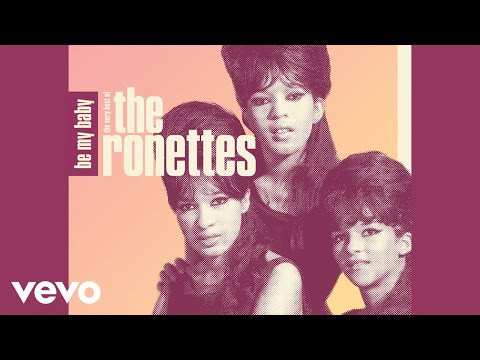
→ More from the 2010s File
View all 2010s hits →



Keep digging