The 1960s File Feature
(The Best Part Of) Breakin' Up
(The Best Part Of) Breakin' Up: The Ronettes and Spector's Wall of Sound at Full Volume The Ronettes released "(The Best Part Of) Breakin' Up" in the spring …
01 The Story
(The Best Part Of) Breakin' Up: The Ronettes and Spector's Wall of Sound at Full Volume
The Ronettes released "(The Best Part Of) Breakin' Up" in the spring of 1964, and the single became another chapter in one of the most artistically productive partnerships in the history of American popular music: the collaboration between the group and producer Phil Spector. The song debuted on the Billboard Hot 100 on April 4, 1964, at number ninety-eight, and climbed steadily through the spring to reach its peak of thirty-nine during the week of May 16, 1964, spending eight weeks on the chart. Its release came in the immediate wake of the British Invasion launched by The Beatles' arrival in February 1964, placing it at a particularly competitive and transformative moment in American pop history.
The Ronettes consisted of sisters Veronica and Estelle Bennett and their cousin Nedra Talley, three young women from Spanish Harlem whose look, sound, and presentation set them apart from virtually every other female act of the era. Their beehive hairdos, heavy eye makeup, and tight dresses projected an image that was simultaneously glamorous and approachable, sophisticated and street-level. Veronica, who performed under the name Ronnie and would later become Ronnie Spector after her marriage to the producer, served as lead vocalist and embodied the group's particular combination of vulnerability and defiance.
Phil Spector's Wall of Sound production technique, which he had been developing since the early 1960s at his Gold Star Studios in Hollywood, reached some of its most elaborate and emotionally overwhelming expressions in his work with the Ronettes. The approach involved layering multiple instruments playing the same parts, surrounding the core rhythm section with strings, horns, and additional percussion, and then applying liberal amounts of echo and reverb to fuse all of these elements into a single massive sonic object. "(The Best Part Of) Breakin' Up" received the full Wall of Sound treatment, with the production creating a richly orchestrated backdrop against which Ronnie's lead vocal could both soar and find shelter.
The song was written by Barry Mann and Cynthia Weil, the celebrated songwriting partnership who were among the most prolific and successful contributors to the Brill Building tradition of professional pop songwriting. Mann and Weil had developed a particular gift for songs that combined direct emotional expression with sophisticated harmonic and melodic structures, and their work with Spector and the Ronettes represented some of their finest output in the early 1960s. The combination of their compositional craft with Spector's production vision and Ronnie's vocal expressiveness created a formula that generated several significant chart entries for the group.
The Ronettes had achieved their commercial breakthrough in 1963 with "Be My Baby," which reached number two on the Billboard Hot 100 and became one of the defining recordings of the girl group era. Its production by Spector was so influential that it later became a touchstone for musicians ranging from Brian Wilson, who considered it the greatest pop record ever made, to Bruce Springsteen, who cited it as a foundational experience. "(The Best Part Of) Breakin' Up" arrived in the glow of that breakthrough and carried the weight of its predecessor's reputation, though it did not match its commercial ceiling.
The release of the single in April 1964 placed it in direct competition with the extraordinary flood of British material that was then dominating American radio and the charts. The Beatles had arrived in February, and within weeks the Hot 100 was filling with tracks from British artists who had previously been unknown to American audiences. American acts, including many who had been commercially dominant just months earlier, found themselves competing for chart positions against a wave of new sounds and new faces. That the Ronettes managed to reach number thirty-nine in this environment was a testament to the durability of Spector's production approach and the group's distinctive identity.
Gold Star Studios in Hollywood, where Spector recorded the Ronettes sessions, was famous for its acoustic properties, particularly the echo chambers that gave Spector recordings their characteristic cavernous reverb. The studio attracted a rotating cast of the finest session musicians in Los Angeles, who worked collectively under the informal designation of the Wrecking Crew. These musicians, including drummer Hal Blaine, bassist Carol Kaye, pianist Leon Russell, and guitarist Tommy Tedesco among many others, provided the instrumental foundation upon which Spector stacked his elaborately orchestrated Wall of Sound productions. Their versatility and precision were essential to the Spector method; the technique only worked when the underlying performances were immaculate.
Ronnie Bennett's vocal on "(The Best Part Of) Breakin' Up" demonstrated the particular quality that made her one of the most effective pop vocalists of her generation. Her voice had a girlish, trembling quality that could convey both joy and heartbreak simultaneously, and she deployed this instrument with an instinctive emotional intelligence that no amount of production could have manufactured. Spector recognized this quality early in their working relationship and built his arrangements around it, using the orchestral grandeur of the Wall of Sound to amplify and contextualize her vocal rather than to overwhelm it.
The song's chart performance, peaking at thirty-nine after eight weeks, placed it in the second tier of the Ronettes' commercial successes rather than among their biggest hits. Nevertheless, it contributed to a period of sustained chart presence that established the group as one of the most consistently successful female acts in early-1960s pop. Their run of charting singles through 1963 and 1964 defined the girl group era alongside contributions from The Crystals, The Shirelles, The Chiffons, and several other acts, many of whom also recorded for Spector's Philles Records label.
02 Song Meaning
The Meaning Behind "(The Best Part Of) Breakin' Up": Finding Joy in Romantic Endings
"(The Best Part Of) Breakin' Up," recorded by The Ronettes and produced by Phil Spector in 1964, takes on a romantic paradox that pop songs of the era rarely confronted directly: the idea that dissolution can be pleasurable, that the process of ending a relationship might contain its own rewards. Written by Barry Mann and Cynthia Weil, the song argues that making up after a fight is so intensely satisfying that breaking up becomes, in a sense, worthwhile as a mechanism for producing that reconciliation. This is not a conventional celebration of love's stability but rather an acknowledgment of love's dramatic cycle, the rhythmic tension and release of conflict and resolution.
The title's parenthetical construction is itself meaningful. The full phrase "(The Best Part Of) Breakin' Up" signals from the outset that the song is about a subset of an experience rather than the experience itself. It is not about breaking up in the sense of final separation but about a particular moment within the larger drama of a volatile romantic relationship. Barry Mann and Cynthia Weil were careful and sophisticated songwriters, and the grammatical structure of the title reflects their precision; they were describing something specific rather than generalizing about romantic endings.
The emotional world the song inhabits is one of high drama and emotional intensity, which made it ideally suited to Phil Spector's Wall of Sound production aesthetic. Spector's arrangements were built on the principle that popular music should be overwhelming, that the emotional content of a song should be amplified to the point of total immersion. The paradox of breaking up as pleasurable, which might seem trivial in a more understated setting, becomes genuinely moving when surrounded by the orchestral grandeur that Spector brought to the recording. The scale of the production validates the emotional stakes the lyrics claim.
Ronnie Bennett's vocal performance is central to the song's meaning in a way that transcends the text itself. Her voice conveys the specific emotional register of someone who genuinely believes what she is singing, who finds real joy in the making-up even as she describes the breaking-up as its necessary precondition. Ronnie's delivery is not ironic or detached but fully committed to the emotional logic of the song, and this commitment is what allows the listener to accept the song's somewhat counterintuitive premise. She persuades through the quality of her feeling rather than through argumentation.
The song participates in a broader tradition of girl group recordings that explored the emotional complexity of romantic relationships with more honesty and specificity than the dominant pop conventions of the era typically allowed. Where many pop songs presented idealized, uncomplicated visions of love, songs like "(The Best Part Of) Breakin' Up" acknowledged that real relationships involved friction, misunderstanding, and the difficult negotiation of two people with incompatible desires. The girl group genre, perhaps because it was written and produced primarily by professionals rather than by the performers themselves, was sometimes more willing to engage with this complexity than genres where the performer's personal image was more directly at stake.
The song's commercial moment in the spring of 1964 placed it within the context of the British Invasion's transformation of American pop. The Ronettes' sound represented a specifically American response to the romanticism of the girl group era, built on Spector's idiosyncratic production philosophy rather than on the guitar-driven energy arriving from Britain. That the song charted at all in this competitive environment speaks to the enduring appeal of its emotional content: the paradox it describes is universal enough to transcend any particular musical moment or competitive landscape. People recognize the experience the song describes because it is a genuine feature of intimate relationships, and recognition generates engagement.
The making-up after conflict as a source of intense pleasure is a theme that appears across cultures and across literary traditions, and Mann and Weil's contribution was to translate this timeless experience into a three-minute pop song with enough specificity and emotional honesty to feel fresh rather than formulaic. The parenthetical in the title is the key: it tells you exactly what you are getting before the music even begins, and then the production and performance deliver on that promise with overwhelming conviction.
→ More from The Ronettes
View all The Ronettes hits →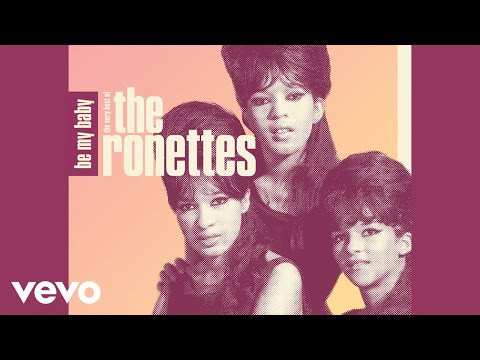

→ More from the 1960s File
View all 1960s hits →




Keep digging