The 2010s File Feature
See You Again
The Making and Meaning of "See You Again" by Wiz Khalifa Featuring Charlie Puth "See You Again" arrived in the spring of 2015 as more than a pop single, it a…
01 The Story
The Making and Meaning of "See You Again" by Wiz Khalifa Featuring Charlie Puth
"See You Again" arrived in the spring of 2015 as more than a pop single, it arrived as a memorial. Written as a tribute to actor Paul Walker, who died in a car accident on November 30, 2013, the song became the centerpiece of the Furious 7 film soundtrack and one of the most emotionally resonant commercial releases of the decade. The track debuted at number one on the Billboard Hot 100 dated April 11, 2015, and its reign at the top of the American chart lasted twelve consecutive weeks, making it one of the longest-running number-one singles of the 2010s.
The song was written by Charlie Puth, Andrew Cedar, Cameron Thomaz (Wiz Khalifa), and Justin Franks. Production was handled by DJ Frank E and Charlie Puth himself, with Puth composing the melodic piano hook that gives the song its contemplative, elegiac character. Puth was only twenty-three years old when he co-wrote and recorded his vocals for the track, and his performance, raw, earnest, and structurally unusual for mainstream pop, introduced him to a global audience nearly overnight. Wiz Khalifa contributed two rap verses that situate the tribute within the friendship and loyalty themes at the heart of the Fast and Furious franchise, grounding the emotional abstraction of grief in specific, relatable language about loyalty and memory.
The recording was made under Atlantic Records and distributed through Atlantic's partnership with Rostrum Records, Khalifa's longtime home. The song appeared on the Furious 7: Original Motion Picture Soundtrack, released on April 7, 2015. The film itself opened to massive box office numbers, earning more than 1.5 billion dollars worldwide, and the song's omnipresence in promotional materials, trailers, and the film's closing sequence amplified its cultural reach far beyond what radio play alone could have achieved.
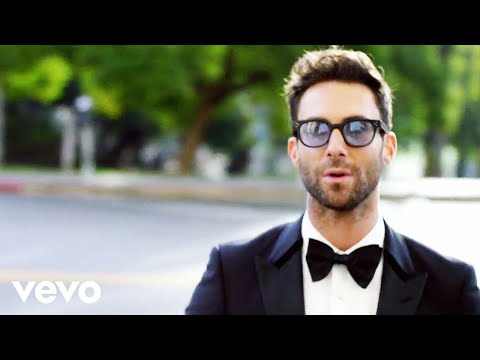
The music video, directed by Director X, played a central role in the song's commercial and emotional impact. Featuring footage of Paul Walker blended with scenes from the film and original material involving the cast, the video functioned simultaneously as tribute and promotion. Its closing sequence, in which two white cars diverge at a fork in the road, one driven by a Walker look-alike and one by Vin Diesel, became iconic. The video accumulated over six billion views on YouTube by the early 2020s, making it one of the most-watched videos in the platform's history and the most-viewed video on YouTube for a substantial period in 2015 and 2016.
Commercially, the single broke records with remarkable speed. It topped charts in more than thirty countries, including the United Kingdom, Australia, Canada, Germany, France, and Ireland. In the United States, the twelve-week run at number one tied it with records set decades earlier and placed it among a very small group of songs to hold that position for that duration in the post-digital streaming era. Billboard ranked it as the number-one Hot 100 song of 2015 on their year-end chart, a recognition that underscored the depth and duration of its cultural penetration during that calendar year.
The Grammy Awards recognized the song's impact with a nomination for Best Pop Duo/Group Performance at the 58th Grammy Awards in 2016. The song also earned nominations at the MTV Video Music Awards, the Billboard Music Awards, and multiple other international award ceremonies. At the Billboard Music Awards in 2015, it won Top Hot 100 Song and Top Rap Song, among other categories. Charlie Puth's performance at the Billboard Music Awards, where he sang the song in front of a massive crowd, became one of the defining televised music moments of that year.
From a musicological perspective, the song is interesting for the way it blends two typically separate emotional registers: the introspective piano ballad and the rap tribute. Puth's melodic hook borrows from classical chord progressions while maintaining a contemporary pop production sensibility, and the combination of acoustic piano with lush orchestral swells and trap-influenced hi-hats reflects the hybrid production aesthetics that were defining mainstream pop in 2015. The structure, with Puth's chorus acting as an emotional anchor and Khalifa's verses serving as personal narrative, allowed listeners to find different points of entry depending on their musical preferences.
The song's streaming numbers placed it at the forefront of a broader industry conversation about how digital consumption was reshaping chart methodology. The Billboard Hot 100 had incorporated streaming data into its formula since 2012, and "See You Again" became an early high-profile example of a song sustained at number one not by radio alone but by the sheer volume of on-demand audio and video streams, a pattern that would define chart performance throughout the late 2010s.
Paul Walker's family publicly acknowledged the song and video as a meaningful tribute. His brothers Cody and Caleb, who stood in for Walker during the completion of filming on Furious 7, were depicted in behind-the-scenes promotional materials, and the emotional authenticity of the tribute was widely noted by critics and fans alike. The song helped reframe public grief over Walker's death from raw shock into something more structured and communal, giving audiences a shared vocabulary for mourning a public figure.
Legacy-wise, "See You Again" has retained its emotional power in the decade since its release. It appears regularly on streaming platforms' mood-based playlists and continues to accumulate listens tied to memorial moments in popular culture. The song occupies a particular cultural position, sitting at the intersection of franchise entertainment, social grief, and digital-era chart dominance, that makes it a meaningful case study in how popular music functions in the 2010s media landscape.
02 Song Meaning
The Meaning Behind "See You Again", Grief, Loyalty, and the Promise of Reunion
"See You Again" is structured around a central emotional paradox: the certainty of loss combined with the hope of reunion. The song's thematic architecture draws from a tradition of memorial music that resists pure despair, choosing instead to reframe death as a temporary separation rather than a final severing. This framing was not accidental. The song was written explicitly as a tribute to Paul Walker, and its emotional language is calibrated to speak both to the specific grief of losing a collaborator and friend and to the universal experience of mourning someone beloved.
Charlie Puth's melodic contribution centers on the idea of a reunion deferred rather than denied. The recurring promise embedded in the song's central hook, the idea of meeting again after a long journey, draws from a long tradition of spirituals, hymns, and gospel music that treat death as a threshold rather than an ending. This religious undercurrent is handled with a light touch, never becoming explicitly theological, but the emotional logic is unmistakably shaped by traditions of faith-based consolation. The song tells listeners that mourning is appropriate and real, but that it need not be permanent despair.
Wiz Khalifa's verses approach the theme from a different angle, grounding the abstract promise of reunion in the concrete language of personal loyalty and shared experience. The friendship described in the verses mirrors the on-screen bond between the characters in the Fast and Furious films, where family, chosen rather than biological, is the central moral value. This is a significant thematic choice: it extends the song's relevance beyond those who knew Paul Walker personally and invites any listener who has experienced loyalty within a chosen community to identify with the grief being described.
The tension between success and loss is another meaningful undercurrent. The song was crafted to accompany a moment of professional triumph, the release of a massively anticipated franchise blockbuster, while simultaneously marking an irreversible personal absence. This tension between achievement and grief gives the song a maturity unusual for mainstream pop, which typically separates celebration from mourning rather than holding them in simultaneous tension. The song's emotional complexity resonated with audiences precisely because it refused to simplify its subject.
Memory is treated in the song not as a passive repository but as an active, sustaining force. The act of remembering is framed as a form of ongoing relationship rather than mere recollection, a philosophically significant distinction that aligns with contemporary psychological understandings of grief as a continuing bond rather than a process of detachment. This framing made the song particularly effective as a vehicle for collective mourning, giving audiences not just permission to feel but a specific emotional framework within which to locate their feelings.
The song's visual complement, its music video, deepens these thematic layers considerably. The imagery of diverging roads, of white cars separating at a junction, literalizes the emotional content in a way that is powerful without being heavy-handed. Roads in popular symbolism carry strong associations with life journeys, and the divergence of paths at the end of the video makes the separation feel spatial and metaphorical simultaneously. The choice of white for the vehicles carries its own symbolic weight, suggesting clarity, purity, and peace in a visual vocabulary widely understood across cultures.
The song also functions as a meditation on the relationship between public and private grief. Paul Walker was a public figure, and his death was processed publicly, with millions of fans around the world experiencing something genuine even without personal connection. "See You Again" gave those fans a structured way to participate in that mourning. It democratized the grief, making the emotional experience accessible not just to those who knew Walker but to anyone who had loved his work and felt his absence.
In the broader context of twenty-first century popular music, the song's thematic success points to an enduring appetite for emotionally substantive material within mainstream commercial frameworks. Its enormous commercial success demonstrated that audiences did not require emotional distance or irony in their pop music, and that sincerity, handled skillfully, remained a powerful artistic and commercial tool.
→ More from the 2010s File
View all 2010s hits →



Keep digging