The 1960s File Feature
Is This What I Get For Loving You?
Is This What I Get For Loving You? — The Ronettes Featuring Veronica and the Edge of the Spector Sound A Group at a Crossroads By the spring of 1965, the era…
01 The Story
Is This What I Get For Loving You? — The Ronettes Featuring Veronica and the Edge of the Spector Sound
A Group at a Crossroads
By the spring of 1965, the era that had made The Ronettes one of the defining acts of early rock and roll was already beginning to shift beneath their feet. The British Invasion had redrawn the map of popular music, and the dense, orchestrated sound that producer Phil Spector had built around the group's recordings was facing new competition from rawer, guitar-driven arrangements. The Ronettes themselves, led by the extraordinary voice of Veronica Bennett (later Ronnie Spector), had scored one of the decade's most iconic records with "Be My Baby" in 1963 and followed it with a string of releases that showcased Spector's wall-of-sound production technique at its most grandiose. By 1965, the commercial ground had shifted, but the group's talent remained undimmed.
"Is This What I Get For Loving You?" arrived as a Philles Records release in early 1965, credited on the label to "The Ronettes Featuring Veronica", a billing that underscored how central Veronica Bennett's voice had become to the group's commercial identity. The designation was partly a Spector branding decision; he understood that the lead vocalist was the emotional focal point and wanted radio stations and record buyers to connect a name to a sound.
The Production and Its Place in the Spector Catalog
Phil Spector's production approach was unlike anything else in American pop at the time. Where most pop producers worked in relatively spare arrangements, Spector stacked instruments in layers, filling the sonic spectrum until the record seemed to breathe with its own atmospheric pressure. Strings, horns, percussion, and vocal overdubs combined into what contemporaries called the wall of sound, a registered-trademark approach to pop that made Spector's recordings instantly recognizable on radio.
"Is This What I Get For Loving You?" fits within this production philosophy while carrying the particular emotional temperature of a heartbreak narrative. The arrangement provides an almost overwhelming backdrop for Veronica's vocal, giving her performance room to convey anguish and confusion against a sweeping orchestral landscape. The recording captures Spector's approach at a moment when it was both fully realized and beginning to feel slightly out of step with the changing pop landscape, a quality that gives the track a bittersweet historical resonance.
The Chart Performance
The single debuted on the Billboard Hot 100 on May 29, 1965, entering at position 88. Its chart run was modest; the record climbed steadily through its opening weeks, reaching its peak position of number 75 during the chart dated June 12, 1965, a position it held for two consecutive weeks before departing. The four-week chart stay reflected the challenges the group was facing in an increasingly competitive singles market.
A peak of 75 represents a chart performance that was commercially workable in the era's terms without breaking through to the upper reaches that "Be My Baby" had occupied. The year 1965 was crowded with landmark recordings, from the Beatles and Rolling Stones releases flooding American airwaves to the rise of Motown's string of hits, and carving out space in that environment required extraordinary momentum. The Ronettes had it in 1963; by 1965, sustaining that momentum had become more difficult.
Veronica Bennett's Voice as an Instrument
Whatever the commercial outcome, the recording itself stands as a showcase for one of the most distinctive voices in 1960s pop. Veronica Bennett's delivery on the track carries a rawness and vulnerability that is difficult to manufacture. Her ability to locate and project genuine emotional pain within the highly constructed environment of a Spector production was a talent that very few vocalists of the era possessed. The question embedded in the title becomes, through her performance, something genuinely felt rather than merely performed.
This quality is what made The Ronettes worth listening to beyond their biggest hits. The catalog contains performances that reward repeated attention, and "Is This What I Get For Loving You?" is among them. It may not have the immediate cultural footprint of their peak recordings, but it demonstrates the depth of the group's artistry in a way that the biggest singles sometimes obscure.
Legacy and the Wider Ronettes Story
The Ronettes disbanded in 1966, and Ronnie Spector's subsequent decades brought both remarkable artistic persistence and well-documented personal difficulty. Her later recognition as one of the foundational voices of rock and roll, including her induction into the Rock and Roll Hall of Fame as part of The Ronettes in 2007, confirmed what attentive listeners had always understood: the group's body of work, including mid-tier chart performances like this one, documents a talent that exceeded any single commercial moment.
"Is This What I Get For Loving You?" stands as evidence of a group still capable of compelling recordings even as the cultural winds shifted around them. Put on Veronica's vocal and hear what it sounds like when a singer refuses to let a great performance be anything less than completely honest.
"Is This What I Get For Loving You?" — The Ronettes Featuring Veronica's singular moment on the 1960s charts.
02 Song Meaning
Is This What I Get For Loving You? — Betrayal, Bewilderment, and the Spector Lens
The Question That Drives Everything
The title of the song is a question, and the entire emotional architecture of the recording is built around that question's inability to find a satisfying answer. Loving someone and receiving pain in return is one of the oldest subjects in popular music, but the framing here carries a specific quality of disbelief. The speaker is not simply heartbroken; she is genuinely confused, as though the transaction of love has produced an outcome that violates some basic law of fairness. That bewilderment gives the song a rawness that pure grief alone could not provide.
The questioning tone places the listener in a position of shared uncertainty. The narrator has done everything right, or so she believes, and still arrived at this point. The song invites the audience to sit with that discomfort rather than resolve it quickly, which is a more emotionally honest position than the clean resolution many pop records of the era reached for.
The Wall of Sound as Emotional Environment
Phil Spector's production approach was never merely decorative. The density and pressure of the orchestration on tracks like this one served a specific emotional purpose: it created an environment that matched the interior intensity of the narrative. When someone is overwhelmed by the experience of love gone wrong, the world does not feel quiet and sparse; it feels enormous and pressing in from all directions. Spector's production philosophy gave that psychological reality an acoustic form.
The production surrounds and amplifies Veronica Bennett's vocal rather than supporting it from a distance. The effect is immersive, almost claustrophobic. This is a deliberate choice that makes the emotional content of the lyric feel more urgent, more inescapable. For listeners who experienced these recordings on the transistor radios and car stereos of 1965, the sheer physical presence of the sound was part of its emotional impact.
The Mid-1960s Context of Heartbreak Pop
By 1965, the American pop chart was filled with records that examined romantic pain from a variety of angles. The girl group sound, of which The Ronettes were a central component, had developed a particular vocabulary for communicating loss and longing that resonated strongly with teenage female audiences. These records gave voice to experiences that were genuinely felt but rarely addressed in public life, the grief of romantic disappointment, the confusion of being left, the anger beneath the sadness.
"Is This What I Get For Loving You?" fits within this tradition while also carrying something slightly different: a quality of accusation that sits underneath the bewilderment. The question in the title is not entirely passive; it implies a reckoning, a demand for accountability from someone who has caused harm. That undercurrent of strength within apparent vulnerability was a defining feature of the best girl group recordings of the era.
Why the Song Still Matters
The record's modest chart performance in 1965 does not define its significance. Many recordings that failed to crack the top 40 carry more artistic and historical weight than their commercial outcomes suggest. "Is This What I Get For Loving You?" documents a great singer at work within a production approach that was being tested by changing tastes, and the result is a fascinating artifact of a moment of transition in pop history.
Veronica Bennett's performance on the track is the primary reason to return to it decades later. Her ability to communicate genuine emotional complexity within the highly constructed framework of a Spector production is evident in every phrase. The song asks a question; her voice makes it feel like the only question that matters. That is the mark of a vocalist who transcended the material and the moment, which is exactly what the best interpretive singers do.
"Is This What I Get For Loving You?" — The Ronettes Featuring Veronica's singular moment on the 1960s charts.
→ More from The Ronettes Featuring Veronica
View all The Ronettes Featuring Veronica hits →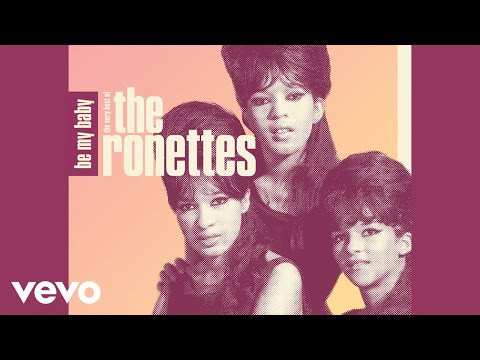
→ More from the 1960s File
View all 1960s hits →




Keep digging