The 1960s File Feature
Baby, I Love You
Baby, I Love You — The Ronettes Phil Spector's Wall and the Group at Its Center Picture New York in late 1963, a city where every girl group seemed to have a…
01 The Story
Baby, I Love You — The Ronettes
Phil Spector's Wall and the Group at Its Center
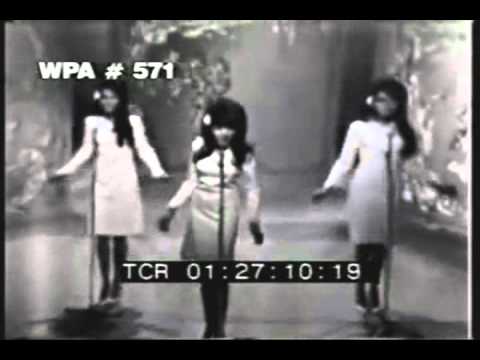
Picture New York in late 1963, a city where every girl group seemed to have a sound and a look, a city where pop music was changing so fast that a record could feel dated within months of its release. Into this competitive landscape stepped The Ronettes with a sound unlike anything else on the radio: a dense, layered, cathedral-sized production that buried listeners in drums, strings, and echo before a single note was sung. Phil Spector's Wall of Sound technique, applied to the group's recordings throughout this period, transformed songs that might have been pleasant into something genuinely overwhelming.
The Ronettes, led by Ronnie Spector, had already placed Be My Baby on the chart by the time Baby, I Love You arrived. That debut had reached number 2 on the Billboard Hot 100 in the fall of 1963, making the group an immediate commercial force and establishing the sonic template that would define their subsequent recordings. The follow-up needed to justify the promise of that debut without simply repeating it.
The Craft Behind the Recording
The song was written by Phil Spector, Ellie Greenwich, and Jeff Barry, the songwriting team responsible for several of the most memorable pop records of the early 1960s. Greenwich and Barry in particular were among the most prolific contributors to the Brill Building tradition, a school of professional songwriting that treated popular songs as precision instruments, engineered to deliver maximum emotional impact in minimum time. Their contribution to Baby, I Love You followed that discipline without becoming mechanical.
The production was, like all Spector recordings of this period, assembled with obsessive care at Gold Star Studios in Hollywood. The layering of multiple guitar tracks, the orchestral arrangement, and the deliberate use of reverb created a sound that was simultaneously intimate and enormous, a combination that suited Ronnie Spector's voice precisely. She could sing directly into that vast sonic space and still feel close to the listener's ear, which is a remarkable technical and artistic achievement.
Entering the Chart and Building Momentum
The single debuted on the Billboard Hot 100 on December 21, 1963, entering at position 100. That date places its debut in an extraordinary moment for American pop music: the weeks immediately following the assassination of President Kennedy and the weeks immediately preceding the Beatles' American breakthrough. The chart landscape was shifting in real time, and Baby, I Love You had to make its case amid enormous external noise.
It climbed steadily over the following weeks, moving from 100 to 63 to 42 before reaching its peak position of 24 on the Billboard Hot 100 on February 1, 1964. The record spent 9 weeks on the chart in total. The peak arrived precisely as Beatlemania was exploding in the United States; the Beatles would land in New York on February 7, 1964. That the Ronettes held their chart position through this seismic moment speaks to the genuine appeal of their sound.
The Ronettes in 1963 and 1964
The group occupied a fascinating cultural position at this point in their career. Ronnie, Estelle, and Nedra were three young women from Washington Heights, and their image projected something that the girl groups of the early 1960s often avoided: a directness and physicality that made the romantic declarations in their music feel genuinely meant rather than performed for propriety. Spector understood this and built recordings around Ronnie's voice that amplified rather than softened that quality.
The transition from 1963 to 1964 was not kind to many established acts; the British Invasion reshaped commercial radio in ways that displaced numerous American artists. The Ronettes, however, managed a degree of continued success that others did not, partly because their sound had been so thoroughly defined that it could not be easily imitated, and partly because Ronnie Spector's voice carried an authority that no amount of market disruption could diminish.
Place in Their Catalog and Lasting Influence
Within the Ronettes' relatively brief commercial peak, Baby, I Love You stands as confirmation that Be My Baby was not a fluke. The two singles together established the group as genuine hitmakers rather than one-off sensations, and they have remained the twin pillars on which the group's reputation rests. Their influence on subsequent generations of artists has been substantial: from the British Invasion groups who cited them as a direct influence to the countless indie and alternative acts who found in the Wall of Sound a template for emotional amplitude, the Ronettes' recordings have proven remarkably generative.
The layered, reverb-drenched quality that Spector gave these records has aged in an unexpected way: it sounds neither period nor timeless but something in between, permanently located in a specific era yet still capable of producing the same physical response it did in 1963. If you play this record now, the production still hits before the song fully registers, which is exactly what a great pop arrangement should do.
"Baby, I Love You" — The Ronettes' singular moment on the 1960s charts.
02 Song Meaning
Baby, I Love You — The Ronettes
The Declaration as Sonic Event
There is something interesting about the way Baby, I Love You constructs its emotional statement. The words themselves are simple, almost elemental: a direct profession of love, uncomplicated by doubt or narrative complication. What transforms this simplicity into something resonant is the production that surrounds it. Phil Spector's arrangement turns a three-word declaration into an immersive event, using orchestral density and studio reverb to suggest that love of this magnitude deserves a sound that matches its scale.
This approach reflects a belief embedded in the best Brill Building songwriting: that popular music could reach emotional truths through exaggeration rather than understatement, that the bigger the sound, the more accurately it represented the inner life of someone genuinely in love. The Ronettes were the ideal vehicle for this philosophy because Ronnie Spector's voice retained its personality even within that enormous sonic frame.
Youth, Romance, and the Early Sixties
The lyrical territory of the song belongs entirely to a particular vision of young romantic love: certain, uncomplicated, and completely consuming. In 1963 and 1964, this was the dominant emotional vocabulary of teen pop, and yet Baby, I Love You manages to deliver it without condescension. The song treats its subject seriously. The sincerity Ronnie Spector projects is not performed innocence; it has a directness that separates the Ronettes from groups whose recordings feel more calculated.
The cultural context of early 1960s America placed enormous value on romantic love as an organizing principle for young lives, particularly young women's lives. Songs that addressed this territory honestly and without irony found immediate audiences because they reflected the emotional landscape of their listeners directly. Baby, I Love You did not subvert or complicate that landscape; it inhabited it fully.
Female Voice and Authority
One of the more significant aspects of the Ronettes' recordings, including this one, is the confidence with which they advance their romantic claims. The narrator of Baby, I Love You is not passive, uncertain, or seeking permission. She is making an assertion, stating her feelings as fact, expecting them to be received and answered. This was not universal in girl group recordings of the era, many of which positioned young women as suppliant or dependent. The Ronettes' persona was something different, and it made their records feel more alive.
That quality of directness is part of why these recordings have influenced so many subsequent artists. From the girl groups who came immediately after to the feminist punk and indie acts who cited the Ronettes decades later, the combination of enormous sound and unapologetic romantic authority proved endlessly useful as a model.
Why the Song Still Connects
What keeps Baby, I Love You audible across the decades is a combination of the indestructible emotion at its center and the unique sonic world Spector constructed around it. The feeling of complete romantic certainty that the song describes does not belong to one era; it belongs to anyone who has felt it. The production, meanwhile, is so specific to its moment that it functions almost as a time capsule, an invitation to hear the early 1960s not as history but as a felt experience. The two qualities together, universal emotion and period-specific sound, create a listening experience that is simultaneously immediate and remote, which is the condition of all great pop recordings that survive their own moment.
→ More from The Ronettes
View all The Ronettes hits →



→ More from the 1960s File
View all 1960s hits →




Keep digging