The 1970s File Feature
When You Get Right Down To It
"When You Get Right Down To It" — The Delfonics Philadelphia's Finest at the Turn of the Decade The opening months of the 1970s were a transitional moment fo…
01 The Story
"When You Get Right Down To It" — The Delfonics
Philadelphia's Finest at the Turn of the Decade
The opening months of the 1970s were a transitional moment for soul music. The decade that followed Motown's dominance was still establishing its new textures, and Philadelphia was in the process of becoming the genre's new center of gravity. The Delfonics occupied a particular and highly influential position in that transition, a group whose lush orchestration, falsetto lead vocals, and emotionally elaborate arrangements pointed directly toward what Philadelphia International Records would soon codify as the definitive soul sound of the first half of the 1970s.
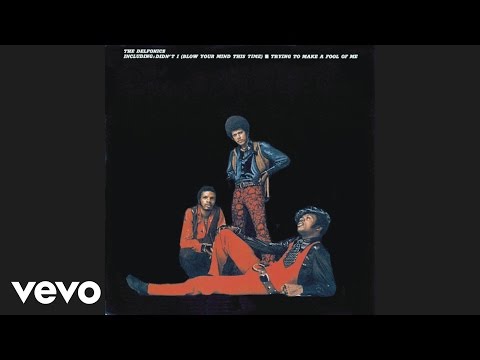
By 1970, the Delfonics had already established themselves as one of the most distinctive vocal groups in American soul, largely through their work with producer Thom Bell, whose string-heavy, emotionally opulent productions gave their recordings an almost cinematic quality. The group, led by William Hart's extraordinary falsetto, had scored with tracks like La-La (Means I Love You) and Didn't I (Blow Your Mind This Time), establishing a sound that was simultaneously sophisticated and deeply felt.
The Sound and the Session
When You Get Right Down To It arrived in the fall of 1970 as a continuation of the Delfonics' signature style. The production, characteristic of the Philadelphia approach that Bell and his collaborators were developing, featured layered strings, a rhythm section that swayed rather than drove, and Hart's falsetto floating above the arrangement with the particular combination of vulnerability and control that had become the group's most recognizable quality. The song built slowly, allowing its emotional content to accumulate rather than declaring itself immediately.
The Delfonics were working with producers and arrangers who treated the recording studio as a compositional space, not merely a capture device, and the results reflected that ambition. The arrangements were dense with detail without ever feeling cluttered, a balance that was far more difficult to achieve than the finished product suggested.
Eight Weeks and a Summer-into-Autumn Chart Run
The single debuted on the Billboard Hot 100 on September 19, 1970, entering at position 83. It climbed methodically through the fall, moving from 71 to 66 to 64 as the weeks passed. The peak of number 53 arrived on October 31, 1970, after the record had spent 8 weeks on the chart. That chart history, entering in late September and peaking at Halloween, traces the track's movement through the early autumn of 1970, a period when the album era was beginning to assert itself over the singles market.
Peaking at 53 on the Hot 100 was a respectable showing for a group whose strongest commercial performances came on the R&B chart, where their style was even more specifically valued. The Hot 100 showing demonstrated that their sound could travel across format lines and reach listeners who were not primarily R&B-focused.
The Influence That Outlasted the Chart
The Delfonics' historical importance far exceeds what their Hot 100 positions might suggest. Thom Bell's work with the group helped invent the orchestrated Philadelphia soul sound that would dominate the early-to-mid 1970s through acts including the Stylistics, the O'Jays, and the Spinners. The sonic template established in these recordings, lush strings over a groove, falsetto vocals conveying emotional intensity, deeply felt arrangements rather than raw energy, shaped an entire decade of Black popular music.
Decades later, the group received another wave of recognition when Quentin Tarantino's 1997 film Jackie Brown prominently featured their music, introducing them to an entirely new generation of listeners who found the sound as beautiful and distinctive as it had been on first release.
A Legacy in Sound
Revisiting When You Get Right Down To It today is an exercise in understanding what the phrase "sophisticated soul" actually means at its highest level. The production is immaculate, the performance is controlled without being cold, and the emotional message is delivered with a precision that only comes from knowing exactly what you are doing. The Delfonics at this period were operating at a very high standard, and this single is a fine example of that standard. The strings still shimmer; the falsetto still reaches. Put it on and understand where all those later Philadelphia records came from.
"When You Get Right Down To It" — The Delfonics's singular moment on the 1970s charts.
02 Song Meaning
The Meaning Behind "When You Get Right Down To It" by The Delfonics
Distillation as a Theme
The title phrase "when you get right down to it" is a colloquial construction that signals the cutting away of excess to find the essential truth underneath. Songs built around this kind of stripping-down gesture are inviting listeners to listen for what really matters, to move past complications and surface appearances toward something fundamental. The Delfonics were specialists in this kind of emotional clarity, using their elaborate, ornate productions as vehicles for messages that were ultimately simple: love is real, feeling is the point, connection is what matters most.
The apparent paradox of using lush, complex musical arrangements to deliver emotionally simple messages was actually the heart of the Philadelphia soul aesthetic. The production was elaborate because the feelings it described were large; the message was simple because truth usually is.
The Falsetto and Its Emotional Function
William Hart's falsetto deserves particular attention as a vehicle for meaning. The falsetto register in soul music traditionally carries connotations of reaching, of straining toward something that requires effort and vulnerability to achieve. A man singing in falsetto is departing from the register his speaking voice occupies, climbing toward something higher, something more exposed. In the context of a love song, that physical act of reaching translates into an emotional statement about how much the feeling costs, how exposed the singer is prepared to be.
This was the Delfonics' genius: they used the formal properties of the falsetto not just as a stylistic signature but as an expressive tool, one whose meaning listeners absorbed unconsciously even when they could not articulate it analytically.
Philadelphia Soul and Black Emotional Life in 1970
The early 1970s Philadelphia sound emerged at a specific moment in African American cultural life, a period of transition following the upheavals of the 1960s. The civil rights movement had won significant legislative victories; the cultural landscape was more open than it had been; and there was both celebration and exhaustion in the community. Soul music in this period served partly as a space for processing this complex emotional terrain, offering beauty and feeling as a kind of sustenance.
The Delfonics' music, with its emphasis on romantic devotion and emotional depth, participated in this function without being overtly political. Love songs, at their most profound, are always also about larger human needs: the need to be seen, valued, and held. In that sense, the seemingly private subject matter of a song like this one connected to broader themes of dignity and recognition.
The Legacy of the Message
What has kept the Delfonics relevant across more than five decades is the durable truth of the emotional content they delivered. Songs that strip away complication to find the essential feeling beneath tend to age well, because the underlying emotions they address remain constant across changing fashions and technologies. When you get right down to it, people still want to feel what Hart's voice describes: the certainty of love, the comfort of it, the way it simplifies everything it touches.
That message, delivered inside one of the most beautiful production frameworks the American recording industry ever created, is why this music continues to move new listeners who encounter it for the first time, often through film soundtracks or sampling, and are immediately struck by how fully realized and emotionally complete it feels. The Delfonics understood what mattered and said it directly. That is the oldest and most reliable formula in the songbook.
→ More from The Delfonics
View all The Delfonics hits →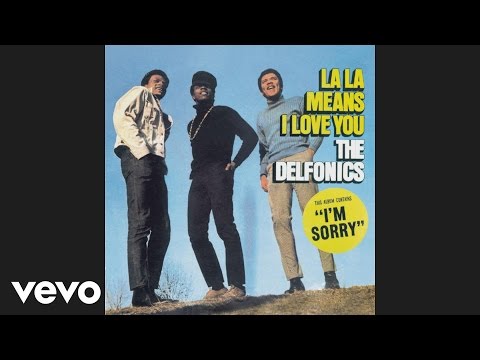

→ More from the 1970s File
View all 1970s hits →




Keep digging