The 1960s File Feature
La - La - Means I Love You
La - La - Means I Love You — The Delfonics Philadelphia Before the Sound Had a Name There is a sound that most people call Philadelphia Soul, and most people…
01 The Story
La - La - Means I Love You — The Delfonics
Philadelphia Before the Sound Had a Name
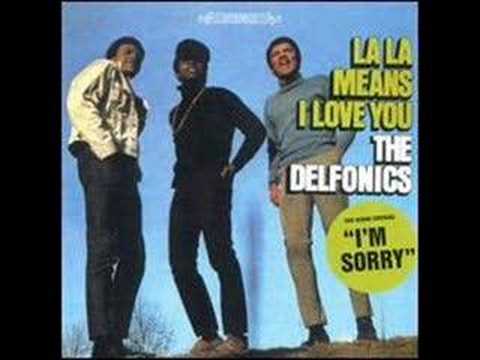
There is a sound that most people call Philadelphia Soul, and most people associate it with the early 1970s recordings that came out of Sigma Sound Studios under the direction of Kenny Gamble and Leon Huff. But that sound had precursors, and among the most important was the work being done by producer Thom Bell with a vocal group from North Philadelphia called the Delfonics. When "La - La - Means I Love You" appeared on the chart in early 1968, it announced that something genuinely new was being made in Philadelphia, something that drew on doo-wop, pop orchestration, and rhythm-and-blues but synthesized them into a texture that felt unlike anything else on the radio.
The Delfonics, anchored by the extraordinary falsetto of William Hart alongside his brother Wilbert and Rich Daniels, had the vocal instrument that Bell's production required. William Hart's voice occupied a register that was simultaneously delicate and powerful, capable of conveying profound romantic feeling without tipping into mannered affectation. In the right setting, with the right material, it was one of the most arresting sounds in contemporary soul music.
Thom Bell and William Hart Create the Track
The song was written by Thom Bell and William Hart, a creative partnership that would produce some of the finest soul recordings of the late 1960s. Bell's production instincts ran toward lushness: strings arranged with genuine sensitivity to the harmonics of a vocal group, rhythmic beds that provided support without becoming the primary focus, arrangements that allowed the melody and the voices to remain the central experience for the listener.
The recording sessions for the Delfonics took place in Philadelphia, and the resulting tracks were released on the Philly Groove label, a small independent imprint that would punch well above its weight commercially thanks to the quality of the material it was releasing. The combination of Hart's falsetto, the elegant string arrangements, and Bell's production created a sound that felt immediately finished and authoritative, the work of craftsmen who knew exactly what they were building.
Fifteen Weeks and a Peak at Number Four
The single entered the Billboard Hot 100 on February 3, 1968, debuting at number 92. Its climb was steady rather than explosive: 66, then 50, 35, 19, and upward through the spring. The track peaked at number 4 on April 6, 1968, an exceptional result for a debut single from a group on an independent Philadelphia label competing against the full commercial weight of Motown and the major-label soul apparatus. The chart run extended across 15 weeks, giving the record extended exposure on radio and in record stores throughout the early months of 1968.
The song was simultaneously a major crossover success and a number 4 hit on the R&B chart, confirming the Delfonics' ability to move across demographic boundaries in the way that the most commercially potent soul music always did. The record established the group as genuine contenders in a crowded field and set up the further successes that would follow across the next several years.
The Delfonics in the Soul Landscape of 1968
The soul music of 1968 carried a particular emotional charge. The assassinations of Martin Luther King Jr. and Robert Kennedy, the urban unrest, the escalating Vietnam War: the year was dense with loss and anger. In that context, the Delfonics' romantic balladry occupied an interesting position. The music offered beauty and tenderness without ignoring the emotional needs of listeners who were living through difficult times. Romantic love songs in periods of social upheaval often serve as emotional necessary relief, providing space to feel something gentle and uncomplicated amid surrounding difficulty.
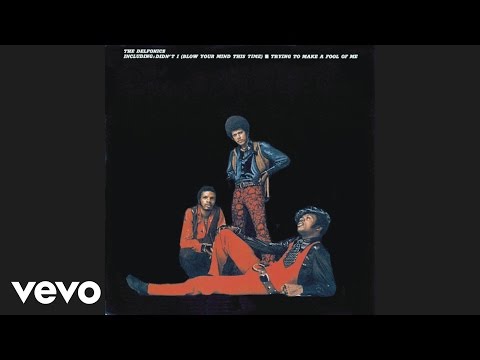
The group would go on to record a string of classic singles across the late 1960s and early 1970s, including "Didn't I (Blow Your Mind This Time)" and "La La Didn't I Tell Ya," tracks that confirmed the Thom Bell-William Hart collaboration as one of the most productive in contemporary soul. But this first major hit established the template that all those subsequent recordings would refine.
A Foundation for What Followed
The influence of "La - La - Means I Love You" on the subsequent development of Philadelphia soul is difficult to overstate. Thom Bell's arranging and production approach, developed and refined through his work with the Delfonics, would become the foundation of the Philadelphia International sound that dominated the first half of the 1970s. The string writing, the rhythmic sensibility, the attention to vocal balance: all of it was present here, in embryonic but already accomplished form, before it became a genre-defining signature.
The record rewards repeated listening, which is always the test. Press play, hear that first falsetto entrance, and understand why this record started a revolution.
"La - La - Means I Love You" — The Delfonics' singular moment on the 1960s charts.
02 Song Meaning
La - La - Means I Love You — Themes and Legacy
Beyond Language: When Sound Carries the Feeling
The title of the song makes a philosophical argument about language and love. If "la-la" means "I love you," then the syllables themselves are merely placeholders for a feeling that exists prior to and independent of any particular words. The lover in the song communicates not through the conventionally understood vocabulary of romance but through pure vocalization, through sound that carries meaning because it is invested with genuine feeling rather than because it follows a grammatical rule. This premise is quietly radical: it suggests that love finds its own language, one that bypasses the circuits of learned speech entirely.
William Hart's falsetto performance embodied this theme perfectly. A falsetto voice already exists at the edge of what the human voice can do; it strains upward toward something it cannot fully reach, which gives it an inherent expressiveness that heavier registers sometimes lack. When Hart sang the wordless syllables of the title, the emotional content was undeniable regardless of literal meaning.
The Romantic Simplicity of the Lyric
In its lyrical content, "La - La - Means I Love You" occupies the long tradition of soul ballads that locate the totality of emotional life in a single relationship. The narrator's world is organized entirely around the beloved; external events, social context, the broader landscape of daily life, none of it appears. This deliberate narrowing of focus is a poetic strategy rather than a limitation. By excluding everything except the central relationship, the song creates an intensely concentrated emotional space in which the feeling being described can exist without competition or distraction.
Listeners who encountered the record in 1968, living through one of the most turbulent years in recent American history, may have found that concentrated space particularly welcome. The song offered total absorption in something uncomplicated and tender, which is not an escape from reality so much as a reminder of what reality is ultimately for.
Thom Bell's Arrangement and the Construction of Warmth
The sonic meaning of the recording is inseparable from Thom Bell's production and arrangement choices. The strings that enter on the track do not merely decorate; they amplify the emotional temperature of the vocal, translating feeling from the human voice into orchestral color. This technique of using strings as emotional intensifiers rather than atmospheric wallpaper would become one of the defining characteristics of the Philadelphia soul sound that Bell helped develop through the late 1960s and early 1970s.
The arrangement also demonstrated a remarkable restraint. Bell understood that the point of the production was the voice and the melody; everything else existed to support those elements rather than to compete with them. That clarity of purpose gave the record its emotional coherence and its lasting power.
Legacy in Soul Music and Hip-Hop Sampling
The Delfonics' recordings, including this debut classic, became foundational sampling material for hip-hop producers from the late 1980s onward. The Philly soul aesthetic of warm strings, falsetto vocals, and melodic sophistication proved irresistible to producers seeking to build new music on an already-established emotional foundation. The Delfonics were among the most sampled groups of the entire soul era, a measure of how deeply their sound had embedded itself in the collective musical imagination.
That legacy of sampling extended the song's cultural life well beyond its original audience, introducing the group's distinctive sound to listeners who came to it through contemporary hip-hop productions rather than through the original recordings. Whether heard on its own terms or mediated through a later reinterpretation, the emotional power of the track remains consistent.
"La - La - Means I Love You" — The Delfonics' singular moment on the 1960s charts.
→ More from The Delfonics
View all The Delfonics hits →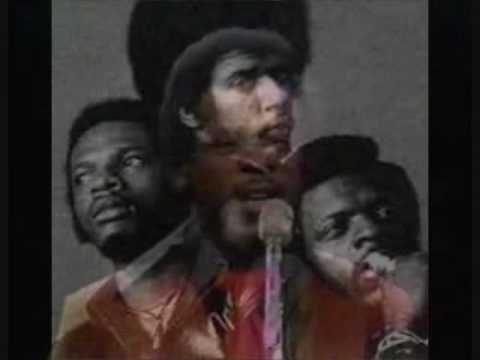

→ More from the 1960s File
View all 1960s hits →




Keep digging