The 1960s File Feature
Break Your Promise
The Delfonics — Break Your Promise: Making and Chart History The Delfonics were a Philadelphia vocal group whose recordings in the late 1960s helped establis…
01 The Story
The Delfonics — Break Your Promise: Making and Chart History
The Delfonics were a Philadelphia vocal group whose recordings in the late 1960s helped establish the sound that would come to be known as Philadelphia soul, a genre characterized by lush orchestral arrangements, falsetto lead vocals, and an emotional intensity that distinguished it from the more percussive soul styles emanating from Detroit and Memphis. "Break Your Promise" was released in 1968 on Philly Groove Records, the independent Philadelphia label founded specifically to release the group's recordings, and it represented an early demonstration of the aesthetic that producer Thom Bell and songwriter William Hart were developing through their collaboration with the group.
William Hart, the group's primary songwriter and lead vocalist, possessed one of the most technically striking voices in soul music of the period. His falsetto had a quality of controlled anguish that suited the emotionally elaborate scenarios his songs typically depicted, and "Break Your Promise" drew extensively on that combination of technical precision and expressive intensity. The song's arrangement, which Bell constructed with characteristic attention to orchestral color and harmonic movement, provided a setting of considerable sophistication for Hart's performance. Strings, woodwinds, and a rhythm section working in the measured, unhurried style that Bell favored combined to create a sound unlike anything being produced in soul music outside of Philadelphia.
Thom Bell's production approach was already fully formed by the time of this recording. He worked with arrangers who could translate his harmonic instincts into full orchestral scores, and the result was a sonic environment that was as close to a chamber music aesthetic as anything in contemporary popular music while remaining entirely accessible to listeners raised on the soul and R&B radio formats of the 1960s. "Break Your Promise" demonstrated that these apparently contradictory ambitions could be reconciled within a single recording.
The single debuted on the Billboard Hot 100 on August 31, 1968, entering at number 86. Its progress up the chart was gradual through the early autumn weeks, gaining momentum through R&B radio play that preceded its crossover to the pop chart's upper reaches. The song reached its peak position of number 35 during the week of October 26, 1968, and it spent a total of 10 weeks on the Hot 100. On the Billboard R&B chart, the song performed more strongly, reflecting the group's deeper penetration of the Black radio audience that was their primary constituency.
The Philly Groove label, though small and without the distribution network of major labels, benefited from local industry connections and the quality of its product, which made it attractive to distributors who could place its releases in markets beyond Philadelphia. The success of "Break Your Promise" helped establish Philly Groove's viability and demonstrated that the Philadelphia sound, however distinctive, had commercial reach beyond its regional origins.
The song preceded the group's greatest commercial success: "La-La (Means I Love You)," released in early 1968, had been their breakthrough, reaching number four on the Billboard Hot 100, and "Break Your Promise" confirmed that the group could sustain commercial momentum rather than producing a single isolated hit. It also confirmed Thom Bell's status as one of the most talented producers working in American soul music, a reputation that would lead him to work with the Stylistics, the Spinners, and other groups through the early 1970s, crafting the Philadelphia sound into one of the dominant genres of that decade.
The Delfonics' recordings from this period, including "Break Your Promise," have been extensively sampled by hip-hop producers since the 1980s, and the group's catalog has received renewed critical attention in light of those subsequent uses. Their work is now recognized as foundational to both the Philadelphia soul tradition and the broader evolution of sophisticated Black popular music in the late twentieth century. "Break Your Promise" stands as evidence of that sophisticated tradition at an early, formative stage of its development.
02 Song Meaning
The Delfonics — Break Your Promise: Meaning and Themes
"Break Your Promise" inhabits the emotional territory that the Delfonics made distinctively their own in the late 1960s: the world of romantic suffering rendered through a vocal and musical idiom of unusual refinement. The song concerns the aftermath of a broken commitment, the moment when one partner in a relationship recognizes that the promises made have not been kept and that the emotional investment the relationship demanded has not been honored. This subject matter was far from unusual in soul music of the period, but the Delfonics' treatment of it was distinguished by the specificity of the emotional register and the sophistication of the musical setting in which that emotion was placed.
William Hart's falsetto carries the song's central meaning in ways that extend beyond the lyrical content. The falsetto voice in soul music had a complex set of cultural associations by the late 1960s, suggesting both vulnerability and an almost transcendent emotional pitch, the sense that the feeling being expressed has exceeded the capacity of the natural voice to contain it. Hart's use of the falsetto for the primary expression of betrayal and pain gave the song's emotional content a quality of urgency and fragility that a chest voice delivery could not have supplied.
The orchestral arrangement that Thom Bell constructed around the vocal performance functions as both support and counterpoint. The strings carry harmonic weight that implies the gravity of the emotional situation, while the arrangement's overall restraint suggests that the suffering being described is dignified rather than melodramatic. Bell's genius in this period was his ability to calibrate the relationship between emotional intensity and compositional elegance, ensuring that the music amplified feeling without drowning it in excess.
The song also participates in a tradition of soul music that treated romantic relationships as occasions for emotional and almost philosophical reflection. The best of the Motown and Philadelphia soul recordings from the 1960s elevated the material of everyday romantic experience to a level of seriousness that implied genuine human significance, proposing that love and its failures were worth sustained artistic attention. "Break Your Promise" exemplifies this tradition, asking the listener to take romantic betrayal as seriously as the song's musical setting suggests it deserves to be taken.
Within the Delfonics' catalog, the song represents a consistent application of the aesthetic that the group and Thom Bell were developing in parallel with their more commercially prominent recordings. Its position in their discography is that of a confirming statement rather than a breakthrough, evidence that the sound and emotional approach of "La-La (Means I Love You)" were not accidental achievements but the products of a coherent artistic vision capable of sustained realization.
The song's themes connect to a broader pattern in late 1960s soul music, a moment when the genre was simultaneously achieving its greatest commercial reach and deepening its emotional and musical sophistication. The Delfonics participated in that deepening with particular distinctiveness, and "Break Your Promise" documents the depth of their contribution to a tradition that would continue to evolve through the Philadelphia soul productions of the 1970s and into the hip-hop samplings of the decades that followed.
→ More from The Delfonics
View all The Delfonics hits →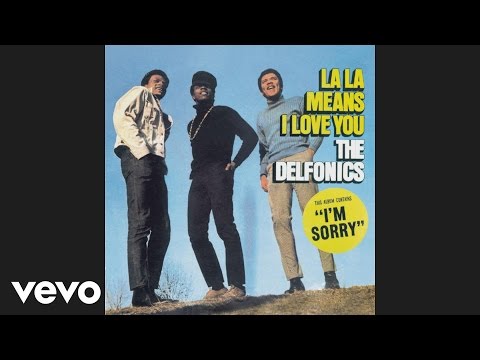

→ More from the 1960s File
View all 1960s hits →




Keep digging