The 1960s File Feature
I'm Sorry
I'm Sorry — The Delfonics: History A note on disambiguation: this entry concerns "I'm Sorry" by The Delfonics, a Philadelphia soul recording from 1968. It is…
01 The Story
I'm Sorry — The Delfonics: History
A note on disambiguation: this entry concerns "I'm Sorry" by The Delfonics, a Philadelphia soul recording from 1968. It is entirely distinct from the country pop hit of the same title recorded by Brenda Lee in 1960, which was a major pop number one in a different genre and from a different period. The Delfonics' recording belongs to the Philadelphia soul tradition and the Philly Groove label, and it shares nothing with Brenda Lee's recording beyond the title.
The Delfonics were one of the foundational groups of the Philadelphia soul sound that would reach its commercial and artistic peak in the early 1970s. The group had formed in Philadelphia in the mid-1960s, built around lead singer William Hart and his brother Wilbert Hart, along with Randy Cain. Their sound was distinguished by its concentration on falsetto harmonics, lush vocal layering, and an emotional register that was more tender and romantically vulnerable than the tougher, more assertive approaches characteristic of the Memphis and Detroit soul styles. They were, from the beginning, a group whose identity was built on emotional delicacy rather than rhythmic power.
Thom Bell emerged as the Delfonics' primary musical architect, developing a production approach for the group that would eventually be recognized as one of the central contributions to the Philadelphia soul sound. Bell had extraordinary instincts for string arrangement, for the placement of orchestral color within a pop production, and for the specific harmonic qualities that made the Delfonics' vocal style most effective. His collaboration with lyricist William Hart produced some of the most emotionally sophisticated recordings in 1960s and early 1970s soul music.
"I'm Sorry" was released on the Philly Groove label in 1968, one of the earlier recordings to fully articulate the direction that Bell and the Delfonics were developing together. Philly Groove was a small independent that had been established specifically to develop Philadelphia soul talent, and its catalog became increasingly important as the Philadelphia sound's national profile grew through the late 1960s and into the 1970s. The label gave Bell and the Delfonics the creative latitude to develop their approach without the commercial pressure that might have pushed them toward a more conventionally formatted soul sound.
The production of "I'm Sorry" featured the kind of orchestral cushion beneath the vocal performance that would become a Bell signature. The string writing was not merely decorative but was integrated with the vocal harmonics in ways that created a unified tonal environment rather than a voice plus accompaniment structure. The lead vocal and the background harmonies sat within the orchestral sound rather than on top of it, giving the recording a sonic depth that was unusual for soul recordings of the period.
William Hart's lead vocal demonstrated the qualities that made the Delfonics' approach distinctive. His falsetto was not straining for effect but was the natural mode of expression for the emotional content of the material. The vulnerability that the falsetto register communicated matched precisely what the song's lyrical content required: a romantic apology of genuine sincerity, a voice reaching into registers of feeling that the more comfortable chest voice could not quite access. This correspondence between vocal technique and emotional content was central to the Delfonics' artistic effectiveness.
The record charted on the rhythm and blues charts, building the Delfonics' reputation within the soul music audience before their work reached the broader pop mainstream. The timing placed "I'm Sorry" within the development period for what would shortly become the Philadelphia International sound, and the recording can be heard in retrospect as an important step in the elaboration of that approach. The Delfonics were working out, in real time, what it meant to make soul music in Philadelphia rather than in Memphis or Detroit, and the Philly Groove recordings documented that process of discovery.
The historical significance of the Delfonics' early Philly Groove recordings, including "I'm Sorry," is perhaps most clearly visible in the influence they exerted on subsequent generations of musicians and producers. The lush, orchestrated, falsetto-centered approach they developed with Thom Bell became a template that was widely imitated and adapted across the 1970s and beyond. The specific emotional register they established, tender, vulnerable, romantic rather than aggressive or sexually assertive, opened a space in soul music that had not previously been clearly defined and that proved to be commercially and artistically fertile ground for years to come.
02 Song Meaning
I'm Sorry — The Delfonics: Meaning
The Delfonics' "I'm Sorry" belongs to a specific and emotionally demanding subgenre of the romantic apology song. The form requires a singer to convey genuine contrition without descent into self-pity, genuine vulnerability without self-indulgence, and genuine longing for reconciliation without implying that the apology is merely strategic rather than heartfelt. The Delfonics navigated these requirements with unusual skill on this recording, producing a performance that felt emotionally authentic rather than calculated.
The lyrical situation, described in paraphrase, involves a narrator acknowledging responsibility for damage done to a romantic relationship and expressing genuine regret alongside a hope for the relationship's continuation. What distinguished the Delfonics' treatment of this situation from more conventional apology songs was the specific emotional register they brought to it. The approach was not merely sorrowful but tender, communicating not just regret for what had happened but genuine affection for the person wronged. The distinction matters because it elevated the song above the category of simple confession into something more emotionally complex and honest.
William Hart's falsetto is the central vehicle of the song's emotional meaning. The falsetto register in soul music has specific connotations: it represents a kind of straining toward feeling that the more comfortable vocal register cannot contain, an emotional intensity that pushes the voice into territory where it is working harder than usual. The vulnerability this creates is expressive rather than merely technical, and it gives apology songs a particular poignancy when handled well. The listener hears not just the words of apology but a voice that is reaching beyond its comfort zone to express something it finds genuinely difficult to convey.
The Philadelphia soul context in which the Delfonics were working shaped the song's meaning in important ways. The Philadelphia approach to soul music emphasized emotional refinement over raw power, orchestral beauty over rhythmic insistence, and romantic tenderness over the more aggressive modes of desire that characterized some other soul traditions. Thom Bell's production philosophy was built around the idea that soul music could be simultaneously sophisticated and deeply felt, that elaboration and emotional authenticity were not in tension. "I'm Sorry" embodies this philosophy, presenting emotional vulnerability in an elaborately beautiful musical frame without the beauty diminishing the sincerity.
For the Delfonics as a group, the song carries meaning as an early articulation of an artistic identity that they would develop more fully in subsequent years. The specific qualities that make "I'm Sorry" work, the falsetto lead, the lush orchestral cushion, the tender rather than assertive emotional register, are the qualities that would define the group's most celebrated recordings and their contribution to the Philadelphia soul tradition. Hearing the song in its 1968 context is to hear an artistic identity in the process of being discovered and established.
The song also carries meaning in terms of what it demonstrated about the range of emotional experience that soul music could address. The genre's dominant emotional vocabularies in the late 1960s tended toward celebration, desire, or righteous anger. Vulnerability and contrition were less commonly centered, and when they were, they were typically expressed through blues-rooted idioms that gave the vulnerability a kind of toughness as well. The Delfonics' approach removed that toughness and presented vulnerability as its own sufficient and valid mode of feeling. This was a genuine artistic contribution to the emotional possibilities of popular music, and "I'm Sorry" is one of its clearest early expressions.
→ More from The Delfonics
View all The Delfonics hits →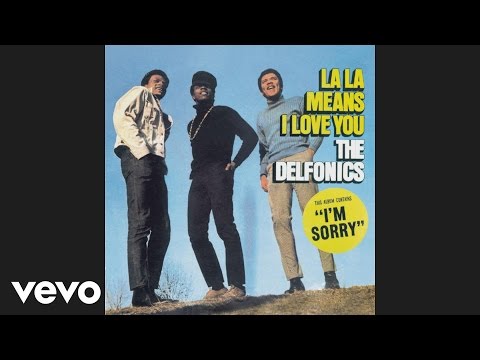
→ More from the 1960s File
View all 1960s hits →




Keep digging