The 1970s File Feature
Hey! Love/Over And Over
Hey! Love / Over And Over — The Delfonics Philadelphia Soul at the Turn of the Decade The early 1970s in Philadelphia felt like the future of Black music was…
01 The Story
Hey! Love / Over And Over — The Delfonics
Philadelphia Soul at the Turn of the Decade
The early 1970s in Philadelphia felt like the future of Black music was being assembled in real time, block by block, studio by studio. The city that would soon give the world the Philadelphia International Records sound and its attendant lush orchestral soul was already incubating the sensibility, and few groups embodied that transition more gracefully than The Delfonics. By the time Hey! Love / Over And Over arrived on the charts in the summer of 1971, the group was navigating the third year of commercial success with the confidence of artists who had found their lane and intended to stay in it.
The Delfonics formed in North Philadelphia in the mid-1960s, anchored by brothers William and Wilbert Hart and their harmonizing partner Randy Cain. But the group's identity was as much a product of their creative partnership with producer and songwriter Thom Bell as it was of their own remarkable vocal talents. Bell, who would go on to define the Philadelphia soul sound through work with The Stylistics, The Spinners, and others, understood that the Delfonics' falsetto-heavy harmonic blend required arrangements of a particular sophistication, something that reached beyond the stripped-down soul of the early Motown model toward something more orchestral, more cinematic.
Thom Bell and the Architecture of Desire
Thom Bell produced and co-wrote the Delfonics' most important recordings, including those that appeared on the Philly Groove label through which the group achieved their greatest commercial success. His approach to production elevated string arrangements and sophisticated chord progressions into the foreground of pop music at a time when many soul producers were working in a rawer, more visceral register. The Delfonics' records sound expensive and emotionally complex because Bell designed them that way, believing that Black artists deserved production values equal to their talent.
Hey! Love / Over And Over arrived in this context as a double-sided release, a practice that allowed radio programmers to choose their preferred side while giving the group two potential chart entries for the price of one. This kind of tactical flexibility was standard practice in the soul single market of the era, and the Delfonics had enough credibility by 1971 to justify it.
The Chart Run of Summer 1971
The single debuted on the Billboard Hot 100 on June 19, 1971, entering at number 82. Through the summer weeks it climbed steadily, moving from 77 to 57 to 53 before reaching its peak. The track hit number 52 on July 17, 1971, spending eight weeks on the Hot 100 in total. That peak position, while modest by comparison to the group's biggest hits, reflected a record finding its audience through consistent radio airplay rather than explosive breakout momentum. The Delfonics were at this point reliable hitmakers whose records generated steady enthusiasm rather than the chart-dominating hysteria of their earlier crossover moments.
The summer 1971 radio landscape was extraordinarily competitive, with soul, funk, rock, and country all contesting for pop chart territory. For a record steeped in the softer, more melodic end of the soul tradition to maintain eight weeks of Hot 100 presence during that summer was a genuine commercial accomplishment.
Vocal Craft and Harmonic Sophistication
What The Delfonics did better than almost anyone in their era was the high falsetto lead surrounded by close-harmony supporting voices. William Hart's lead vocal had a quality that other falsetto singers of the period worked hard to approximate but rarely matched: a combination of pure tone, emotional vulnerability, and technical precision that made the most romantic sentiments feel genuinely felt rather than professionally produced. The group's harmonic architecture, with voices stacking and resolving against each other, created a sound that occupied a specific emotional frequency, tender without weakness, romantic without sentimentality.
Those qualities made Delfonics recordings ideal for the kind of slow-dance moments that remained essential to the social function of popular music throughout the early 1970s. The tempo and mood of Hey! Love in particular positioned it perfectly for that usage.
A Career in Full Flower
By 1971, The Delfonics had already produced major hits including "La-La (Means I Love You)" and "Didn't I (Blow Your Mind This Time)," the latter winning a Grammy Award for Best R&B Song. Those achievements gave the group a critical and commercial standing that allowed later singles like Hey! Love to find an audience that already understood and valued what they were offering. The Delfonics were not fighting for credibility; they were maintaining a creative standard that they had established with some of the finest soul recordings of the late 1960s. Put the record on and let that legacy speak for itself.
"Hey! Love / Over And Over" — The Delfonics' singular moment on the 1970s charts.
02 Song Meaning
Hey! Love / Over And Over — Themes and Meaning
The Language of Longing in Philadelphia Soul
Philadelphia soul in the early 1970s had developed a distinctive emotional vocabulary, one built around romantic longing expressed through harmonic lushness and melodic sophistication rather than the rawer emotional directness of Southern soul or the percussive drive of funk. Hey! Love operates in that vocabulary with fluency and grace. The themes are the perennial ones of romantic soul music: the desire to be noticed, the ache of wanting someone's attention, the vulnerability of making a declaration. What distinguishes the Delfonics' treatment of these themes is the combination of melodic elegance and vocal sincerity that made them one of the defining groups of their genre.
The "hey" at the front of the title is doing real emotional work. It is a bid for attention, an interruption of ordinary life, a small act of romantic courage. That single syllable carries within it the nervousness and hope of anyone who has ever needed to stop another person and say: please, look at me, hear me, love me.
Repetition and Reinforcement
The B-side title, Over And Over, points to another of the core themes in the Delfonics' emotional world: the quality of romantic devotion that expresses itself through constancy and persistence rather than grand gestures. The soul tradition has always understood that love declared once is not enough, that the music of courtship and romantic commitment requires repetition, variation, and sustained expression. This is partly a function of the music's roots in gospel tradition, where repeated declaration serves both communal and spiritual purposes.
When the Delfonics say something over and over, the repetition is itself the message. Devotion does not make its case once and expect to be believed; it returns, and returns again, with the same sincerity each time.
Softness as Strength
In the context of 1971, when James Brown's hard funk was reshaping the sound of Black popular music and soul was fragmenting into multiple directions, The Delfonics' commitment to softness and melodic refinement was something of a counter-statement. Their music proposed that tenderness was a masculine value, that vulnerability in a love song was not weakness but a form of emotional courage. William Hart's falsetto carried that proposition in his voice itself, a register traditionally associated with vulnerability and longing, transformed by his technical mastery into something authoritative.
This cultural work was significant. The Delfonics were showing audiences that there were multiple ways to be a Black man in love, and that the softest of those ways was no less valid or powerful than the loudest.
Legacy in Sampling Culture
The Delfonics' catalog has found renewed relevance through hip-hop's sampling tradition, with producers across multiple decades returning to their recordings for melodic material that carries a recognizable emotional signature. The group received significant exposure through Quentin Tarantino's 1997 film Jackie Brown, in which their music plays a central role in establishing the emotional world of the film. That exposure introduced the Delfonics to audiences who had never encountered them in their original context, demonstrating the timeless quality of soul music built on genuine harmonic craft and sincere emotional expression. Their songs about love and longing translate across time because the feelings they describe are not specific to any era.
"Hey! Love / Over And Over" — The Delfonics' singular moment on the 1970s charts.
→ More from The Delfonics
View all The Delfonics hits →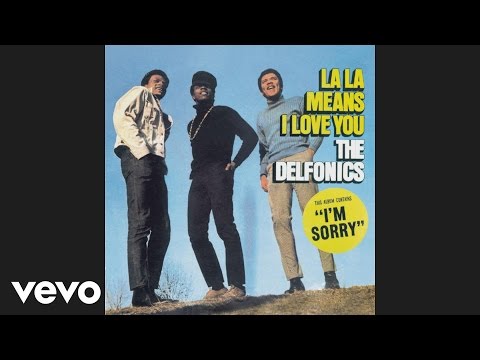

→ More from the 1970s File
View all 1970s hits →




Keep digging