The 1960s File Feature
Ready Or Not Here I Come (Can't Hide From Love)
Ready Or Not Here I Come (Can't Hide From Love) — The Delfonics The Delfonics arrived at the intersection of doo-wop tradition and a new, lush orchestral sou…
01 The Story
Ready Or Not Here I Come (Can't Hide From Love) — The Delfonics
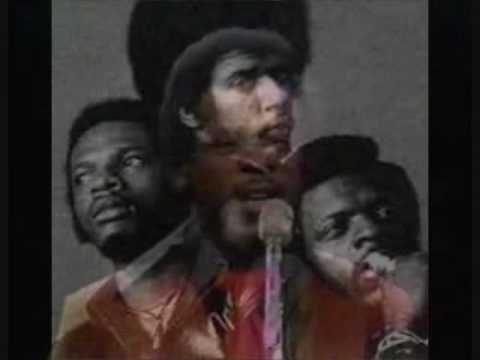
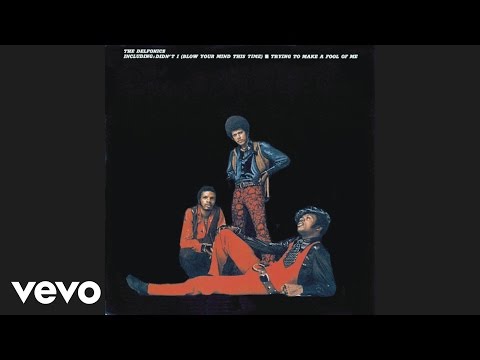
The Delfonics arrived at the intersection of doo-wop tradition and a new, lush orchestral soul sound at precisely the right moment. Formed in Philadelphia during the early 1960s by brothers William and Wilbert Hart along with Randy Cain, the group had spent years developing close harmonies before they connected with producer and arranger Thom Bell, whose sweeping string arrangements and meticulous studio craftsmanship would transform their sound into something unlike anything else on American radio. "Ready Or Not Here I Come (Can't Hide From Love)" stands as one of the clearest early expressions of that partnership, and its 1968 release on Philly Groove Records marked a pivotal moment both for the group and for the emerging Philadelphia soul movement.
Bell came to the project with a clear sonic philosophy. He believed that rhythm and blues could sustain the harmonic complexity of classical composition without sacrificing any of its emotional directness. Working alongside lyricist William "Poogie" Hart, Bell constructed arrangements in which pizzicato strings, French horns, and layered vocal overdubs operated as a single unified texture. The result was music that felt simultaneously intimate and cinematic. For "Ready Or Not Here I Come," Bell built the production around the group's natural vocal hierarchy, with William Hart's falsetto soaring above the ensemble while Wilbert Hart and Randy Cain anchored the blend below him.
The recording sessions took place in Philadelphia, where Bell had cultivated relationships with a core group of session musicians who would eventually become the backbone of what critics and industry figures began calling the Philadelphia International sound. Many of these players, including members of what later coalesced into MFSB, contributed to the lush sonic environment Bell was constructing for the Delfonics. The care invested in the arrangement was evident: each instrument had a specific role in conveying the song's emotional progression, from the tentative opening to its cascading climax.
Philly Groove Records, a small independent label with distribution muscle provided by Bell Records, released the single in 1968. The label had been founded specifically to serve as a home for the Delfonics, and the arrangement with Bell Records gave the record national reach. Radio programmers at urban contemporary and soul-formatted stations responded immediately. The combination of Hart's piercing falsetto and Bell's orchestral sweep was difficult to categorize and equally difficult to ignore. DJs in major markets across the East Coast and Midwest added the record quickly, and its momentum built steadily through the spring and into the summer.
On the Billboard Hot 100, "Ready Or Not Here I Come" climbed to a peak position that validated what Philadelphia insiders already knew: the Delfonics were operating at the highest level of their genre. The record also performed strongly on the R&B charts, where it competed against the harder-edged soul coming out of Memphis and Detroit. That the Delfonics held their own against those more established sounds said something meaningful about the appetite audiences had for Bell's orchestral approach. The song gave the group their commercial breakthrough and established a template they would return to throughout their career.
The cultural footprint of the record extended well beyond its initial chart run. Thom Bell's production methods on this and subsequent Delfonics recordings influenced a generation of producers who came after him, including Kenny Gamble and Leon Huff, whose Philadelphia International Records would formalize and industrialize the Philadelphia sound during the 1970s. The lush string arrangements, the elevated falsetto lead, the careful attention to dynamic range, all of these elements became hallmarks not just of the Delfonics but of an entire regional production aesthetic.
The song's longevity has been sustained by several factors. Its emotional intensity made it a natural choice for film and television placements across subsequent decades. Director Quentin Tarantino's enthusiastic embrace of 1970s soul and funk music in his films brought a new generation of listeners to the Delfonics' catalog, with several of their recordings appearing on high-profile soundtracks. The Delfonics became touchstones for a broader revival of interest in classic Philadelphia soul during the 1990s and 2000s, and "Ready Or Not Here I Come" was routinely cited as one of the defining recordings of that tradition.
For Thom Bell personally, the success of the Delfonics project opened doors that would define the rest of his career. His subsequent work with the Stylistics and the Spinners built on the production philosophy he had developed in these early sessions, and each of those collaborations produced major chart successes. But the Delfonics recordings, particularly the ones from 1968 and 1969, retain a particular rawness and urgency that his later, more polished work sometimes sacrificed in the name of studio perfection. "Ready Or Not Here I Come" captures Bell and the Delfonics in a moment of discovery, and that quality has kept it compelling across more than five decades of changing popular taste.
The song has been sampled and interpolated by hip-hop and R&B artists across multiple generations, testifying to the durability of its melodic and rhythmic ideas. Each new context in which the record appears introduces it to listeners who were not alive when it was first released, extending the work of William Hart, Thom Bell, and the rest of the Delfonics into an ongoing cultural conversation about what American popular music can be at its most ambitious and most emotionally direct.
02 Song Meaning
The Pursuit of Love: Meaning and Emotional Register in "Ready Or Not Here I Come"
"Ready Or Not Here I Come (Can't Hide From Love)" operates on a premise that is simultaneously playful and insistent. The song frames romantic longing as an act of pursuit, a chase in which the singer declares his intentions openly and asserts that the object of his affection has no real avenue of escape. This is not threatening in its emotional register. It reads instead as a declaration of ardor so complete that the singer cannot conceive of any outcome other than reunion. The pursuit is joyful. The chase is the point.
William Hart's lyrical construction leans into the paradox at the center of this premise. The very act of announcing the pursuit undermines the supposed hiding. If the singer is telling the person they love that he is coming for them, that he already knows they cannot hide, then the song functions less as a hunt and more as a mutual acknowledgment, a way of saying that love, once felt, cannot be unfelt, and that the distance between two people who care for each other is an illusion both parties understand. The falsetto delivery that William Hart employed throughout the recording adds a layer of vulnerability that complicates any reading of the song as mere bravado. The voice cracks at its highest registers not from weakness but from the pressure of feeling too much.
Thom Bell's arrangement reinforces the emotional complexity of the lyric. The strings do not provide a backdrop so much as they participate in the narrative, rising when the vocal reaches toward hope and settling when the lyric acknowledges uncertainty. This kind of arranger-as-collaborator approach was relatively unusual in popular music at the time, where strings were more commonly applied as a cosmetic layer after the core recording was complete. On the Delfonics sessions, Bell worked differently, conceiving the orchestral elements as integral to the meaning of the song rather than decorative additions to it.
The song's emotional register belongs to a specific phase of romantic experience, the moment after initial feeling has been acknowledged but before it has been reciprocated or resolved. The singer is not in despair but he is not at rest. He is in motion, propelled by certainty about his own feelings and uncertainty about their reception. This in-between state, simultaneously hopeful and urgent, gives the recording its particular tension and makes it relatable across contexts and generations. The fundamental human experience of wanting someone and not knowing whether that wanting will be returned is the emotional core the song returns to again and again.
For the Delfonics as a group, the song represented a statement about what kind of artists they intended to be. Philadelphia soul at its best was always about emotional sophistication, about the idea that rhythm and blues could hold the same complexity of feeling that was being explored in other art forms without sacrificing its directness or its physicality. "Ready Or Not Here I Come" accomplishes exactly that balance. It is a record you can dance to and one you can think about. Its meaning accumulates with repeated listening in a way that distinguishes it from more disposable pop product of the same era.
The song's lasting appeal in film, television, and sample culture reflects how well its emotional logic has traveled across time. Directors and producers who reach for this record are reaching for a particular quality of yearning, one that feels both timeless and specifically located in a moment of American cultural production when artists and producers were discovering how much ambition popular music could sustain without losing its audience.
→ More from The Delfonics
View all The Delfonics hits →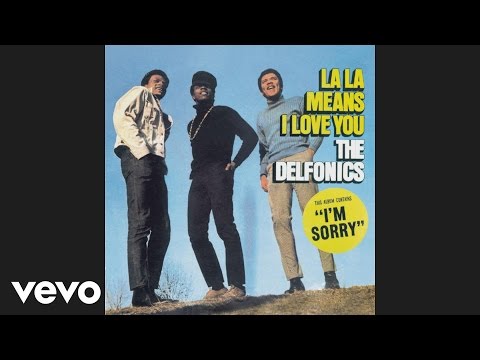

→ More from the 1960s File
View all 1960s hits →




Keep digging