The 1960s File Feature
Born To Be Together
Born To Be Together by The Ronettes Featuring Veronica: Wall of Sound, 1965 Picture the winter of 1965 in America: the Beatles had already shaken the foundat…
01 The Story
Born To Be Together by The Ronettes Featuring Veronica: Wall of Sound, 1965
Picture the winter of 1965 in America: the Beatles had already shaken the foundations of popular music, girl groups were competing fiercely for airplay, and the lush production style pioneered in New York studios was giving love songs a kind of orchestral grandeur that felt almost cinematic. Into that landscape arrived Born To Be Together by The Ronettes Featuring Veronica, a record that carried all the hallmarks of the group's signature sound while staking out its own corner of the romance-and-yearning territory they had made their own.
The Ronettes and Their Moment
By early 1965, The Ronettes were already one of the most visually striking and sonically distinctive acts in American pop. Led by Veronica Bennett, later known as Ronnie Spector, the group had established itself through a run of records that combined beehive hairdos, dramatic eyeliner, and a vocal style that mixed vulnerability with fierce confidence. Their earlier releases had charted strongly, and the trio carried a cultural magnetism that extended beyond the charts into the wider consciousness of the era.
The group's association with Phil Spector and Philles Records was central to their sound. Spector's studio methods were already legendary: layered orchestration, reverb-soaked chambers, and a density of instrumentation that he described as a Wall of Sound. On Born To Be Together, those methods are fully deployed, wrapping Veronica's lead vocal in a shimmering curtain of strings, percussion, and backing voices that makes the record feel simultaneously intimate and enormous.
The Chart Run of 1965
Born To Be Together entered the Billboard Hot 100 on February 6, 1965, debuting at position 78. Over the following weeks it climbed steadily, reaching positions 63, 56, and 55 before peaking at number 52 during the week of March 6, 1965. The single spent six weeks on the chart in total, a modest but respectable showing that reflected the competitive density of the pop landscape at the time. The first quarter of 1965 was crowded with British Invasion acts and domestic girl group entries vying for the same radio slots, and charting at all required genuine commercial traction.
While the peak of 52 placed it beneath the group's biggest successes, the record nevertheless contributed to a sustained period of Hot 100 presence for The Ronettes, demonstrating that their audience remained loyal and engaged even as the market shifted around them.
The Sound and the Era
The production on Born To Be Together reflects the full sophistication of the Philles Records approach. The arrangement builds layers upon layers, with horns and strings providing the harmonic cushion beneath a rhythm track that moves with an irresistible shuffle. Veronica's voice sits at the center of this sonic architecture, her phrasing simultaneously conversational and elevated, as though confessing something deeply personal to a room full of strangers who immediately understand. The backing vocals, provided by the group's other members, add a communal warmth that balances the song's sense of romantic destiny.
The theme of the song taps directly into the girl-group genre's central preoccupation: the certainty of belonging to one person, the feeling that romantic partnership is written into the fabric of existence. That message carried enormous resonance in 1965, when popular music was still largely structured around the expression of uncomplicated romantic longing.
Legacy of the Ronettes' Run
The Ronettes' catalog from this period has grown in stature considerably over the decades. Their records have been sampled, covered, and cited as foundational texts by artists ranging across rock, pop, and soul. Ronnie Spector's voice in particular has been recognized as one of the defining instruments of 1960s popular music, capable of communicating both fragility and strength within a single phrase. Born To Be Together stands as a representative example of what the group accomplished during their peak years: polished, emotionally direct, and sonically ambitious.
The song invites you to close your eyes and let the Wall of Sound wash over you, to feel what it was like when a record on the radio could make the world feel perfectly, irreversibly right.
Born To Be Together — The Ronettes Featuring Veronica's singular moment on the 1960s charts.
02 Song Meaning
The Meaning Behind Born To Be Together: Destiny, Romance, and the Girl-Group Gospel
Few themes in popular music have proven as durable as the idea of romantic predestination, and Born To Be Together by The Ronettes Featuring Veronica builds its entire emotional architecture on that foundation. The song articulates a form of love that feels less like a choice and more like a gravitational fact, an inevitability woven into the singer's very identity. Understanding what the record says, and why it resonated, requires situating it within both the emotional vocabulary of its era and the specific creative world the Ronettes inhabited.
Romantic Certainty as Emotional Anchor
The central claim of Born To Be Together is one of absolute certainty. The lyrics describe a relationship not as something tentative or provisional but as something ordained, something that could not have gone any other way. This posture of romantic confidence was a cornerstone of the girl-group genre in the early 1960s, and it functioned as a kind of emotional security blanket for listeners navigating the turbulence of adolescence and young adulthood. The conviction in Veronica's delivery transforms what might read as sentiment into something that feels like testimony, a declaration made from a position of unshakeable knowledge rather than wishful thinking.
In 1965, young women in America existed within a set of social expectations that were beginning to fray at the edges but were still largely intact. The language of romantic destiny gave emotional permission to invest completely in a relationship, to frame partnership as the natural culmination of identity rather than a compromise of it. The Ronettes, with their confidence and their visual glamour, delivered that message in a way that felt aspirational rather than resigned.
Production as Emotional Argument
It would be a mistake to analyze the meaning of Born To Be Together without accounting for the production itself, because on a Philles Records release the sound is inseparable from the message. Phil Spector's Wall of Sound technique layers instrumentation so densely that the music begins to feel inevitable, inescapable. When a record surrounds you with that much sound, it makes its emotional argument through sheer presence. The string arrangements do not merely accompany the vocal; they corroborate it, adding weight and solemnity to the claim that these two people were always going to find each other.
The reverb chambers Spector used in his Gold Star Studios recordings gave the productions a sense of physical space that was unusual for the era. The result is music that sounds simultaneously close and vast, intimate and universal. That paradox mirrors the experience the lyrics describe: a private love that feels cosmically significant.
The Voice as Vessel of Meaning
Veronica Bennett's vocal performance carries the song's emotional meaning as much as the words themselves. Her phrasing, the way she shapes certain syllables and drops others, communicates a lived-in quality that prevents the sentiments from feeling abstract. The longing is specific, the certainty is personal. This specificity of feeling is what separates a memorable vocal performance from a technically correct one, and it is what has kept this record compelling decades after its original release.
The backing vocal arrangements also contribute meaningfully to the song's thematic impact. The group harmonies behind Veronica's lead function as a kind of chorus of affirmation, a community of voices agreeing with the central declaration. This communal quality reinforced the song's resonance with young female listeners who heard in it not just one person's experience but something shared and recognized.
Why It Still Matters
The meaning of Born To Be Together extends beyond its moment of creation because the emotional territory it maps remains permanently relevant. The experience of feeling matched to another person at a level that exceeds rational explanation is not historically specific; it is simply human. The Ronettes gave that experience a sound and a voice in 1965, and the record continues to communicate across the decades with remarkable directness. The Wall of Sound may be a product of its time, but the longing underneath it is timeless. The song rewards repeated listening precisely because its production rewards attention: every layer reveals something new about why this particular combination of voice, arrangement, and lyric proved so enduring across six decades of popular music history.
→ More from The Ronettes Featuring Veronica
View all The Ronettes Featuring Veronica hits →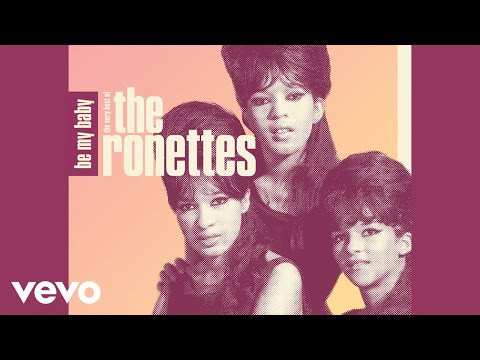

→ More from the 1960s File
View all 1960s hits →




Keep digging