The 1960s File Feature
Somebody Loves You
Philadelphia Soul Takes Shape: The Delfonics and "Somebody Loves You" "Somebody Loves You" by The Delfonics , released in 1969 on Philly Groove Records , arr…
01 The Story
Philadelphia Soul Takes Shape: The Delfonics and "Somebody Loves You"
"Somebody Loves You" by The Delfonics, released in 1969 on Philly Groove Records, arrived at a moment when the Philadelphia soul sound that would define much of the next decade was crystallizing around a small cluster of producers, arrangers, and vocal groups. The record stands as an early and essential example of that sound's capacity to blend orchestral complexity with intimate emotional directness, and it demonstrates why The Delfonics occupied such an important place in the development of what would eventually be called Philadelphia soul or Philly soul.
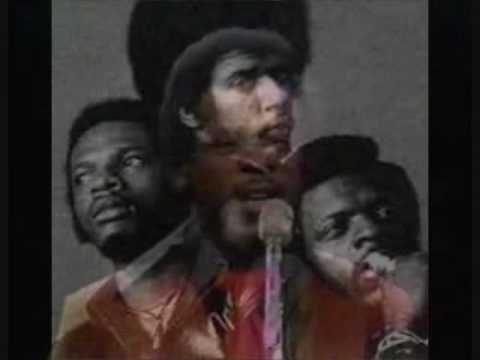
The Delfonics had formed in Philadelphia in the early 1960s, initially as the Four Gents, before settling on their final name and lineup. The group's core consisted of brothers William and Wilbert Hart, along with Randy Cain and later Major Harris. Their sound was distinguished from the outset by the extraordinary falsetto range of William Hart, a voice of unusual purity and emotional expressiveness that placed the group in a distinct register from their contemporaries in soul music. The falsetto was not merely a technical device but the primary emotional instrument of their music, capable of conveying tenderness, longing, and vulnerability with a directness that lower-register voices could not achieve in the same way.
The architect of their sound was producer and arranger Thom Bell, who would go on to become one of the defining figures of Philadelphia soul, later working with The Spinners, The Stylistics, and many others. Bell's approach combined elements of classical music training with a deep knowledge of gospel, soul, and pop, creating arrangements that were harmonically sophisticated without being cold or clinical. His string writing, in particular, had a quality of warmth and emotional openness that suited the Delfonics' vocal style perfectly.
"Somebody Loves You" was recorded at Sigma Sound Studios, the Philadelphia facility that would serve as the primary location for the Philadelphia International Records sound in the 1970s. The production involved Bell's characteristic layering of orchestral strings over a rhythm section groove, with the Delfonics' harmonies sitting inside the arrangement rather than on top of it, creating a sense of the voices emerging from the orchestral texture rather than being accompanied by it. This integration of voices and arrangement was one of the distinguishing features of the Philadelphia approach.
The song performed well on the soul charts in 1969, contributing to a period of consistent commercial success for the group that had begun with "La-La Means I Love You" in 1968 and continued through a series of recordings that established them as one of the leading vocal groups in soul music. Their chart presence during this period, both on the rhythm-and-blues charts and crossing over to the broader Hot 100 audience, confirmed that the Philadelphia approach had a wide popular appeal.
Philly Groove Records, the label founded by Stan Watson and distributed through Bell Records, provided an infrastructure for The Delfonics' recordings that allowed Bell and the group the creative latitude to develop their sound without the pressures of a major label environment. The relative autonomy of the arrangement was crucial to the development of a style that was too orchestrally ambitious and too focused on its specific sonic identity to have been easily shaped by more commercially conservative label oversight.
The Delfonics' work in this period influenced a generation of soul vocal groups, establishing templates for harmonic arrangement, falsetto lead vocals, and orchestral production that could be heard in the work of groups as diverse as The Stylistics, The Chi-Lites, and, later, early Earth, Wind and Fire. The Philadelphia sound that Thom Bell developed with The Delfonics was one of the seeds from which the entire lush soul tradition of the 1970s grew.
"Somebody Loves You" exemplifies the qualities that made The Delfonics' early recordings so distinctive: the interplay between William Hart's lead vocal and the group harmonies, the sophisticated chord movement in Bell's arrangement, and the emotional directness of a lyric delivered without affectation or theatrical excess. It is a record that rewards repeated listening, revealing new details in the arrangement on each encounter and sustaining its emotional impact across decades.
02 Song Meaning
Reassurance as Music: The Emotional World of "Somebody Loves You"
"Somebody Loves You" belongs to a tradition in soul music of reassurance, the song that tells its listener that despite whatever doubts or uncertainties the world might generate, love is present and real and available. The narrator addresses someone who appears to need this assurance, someone whose faith in being loved may have been undermined by circumstance or experience, and offers the certainty of emotional presence as a corrective to that doubt.
The emotional function of the song is in some ways therapeutic in the broadest sense. It is music designed to counteract a specific kind of psychic weather, the low-level anxiety of feeling unseen or unvalued. By asserting, directly and without qualification, that somebody loves you, the song positions itself as an antidote to that anxiety. The directness of this assertion was characteristic of Thom Bell's approach to soul songwriting and production, which favored emotional clarity over ambiguity and tended to present love as a stable, available, and reliable force rather than something contested or fragile.
This emotional stance was part of what made the Philadelphia soul sound distinctive in the landscape of late-1960s soul music. Where some strands of the tradition dealt in hurt and loss, in the complexity of romantic relationships that had gone wrong or relationships that were contested and painful, the Philadelphia approach often gravitated toward a warmer and more affirming emotional territory. This was not naivety but a deliberate artistic choice, an understanding that reassurance was itself a form of emotional depth.
William Hart's falsetto was the ideal vehicle for this message. A falsetto voice, positioned at the upper registers of human vocal range, carries an inherent quality of vulnerability and sincerity that lower registers do not automatically achieve. When Hart sang of love's presence and constancy, the timbre of his voice added a quality of emotional openness to the assertion, making it sound like a genuine offering rather than a formal declaration.
The group harmonies surrounding Hart's lead further amplify the song's emotional meaning. The Delfonics sang in close, intricately voiced harmonies that wrapped around the lead vocal like an embrace, and this sonic arrangement reinforces the lyric's thematic content. The music literally surrounds the listener with voices, multiple voices asserting together that love is present, that somebody loves you, creating through the texture of the sound an acoustic analogue to the feeling of being held and reassured.
Within The Delfonics' catalog, "Somebody Loves You" represents the group's mature articulation of the emotional values that animated their work across the late 1960s and into the 1970s. Their records consistently returned to themes of tenderness, devotion, and emotional sustenance, building a body of work that offered listeners a consistent emotional landscape, a world in which love was real and worth believing in. This consistency was not repetition but commitment, a deliberate artistic identity that distinguished The Delfonics from soul groups who ranged more widely across emotional registers.
The song's lasting appeal rests on the timelessness of its emotional content. The need for reassurance, for the affirmation that one is loved and valued, is not specific to any era or demographic. By addressing that need with directness and musical beauty, The Delfonics created a record that continues to speak to listeners across the considerable distance in time since its 1969 release. The arrangement's warmth and the voices' sincerity combine to make the promise of the title feel, in the moment of listening, genuinely true.
→ More from The Delfonics
View all The Delfonics hits →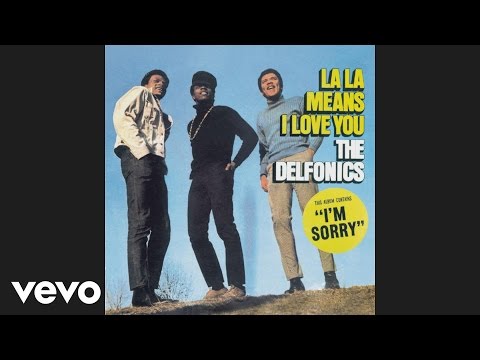

→ More from the 1960s File
View all 1960s hits →




Keep digging