The 1960s File Feature
The Letter
"The Letter" — The Box Tops Memphis on the Edge of a Revolution The summer of 1967 was one of the most turbulent in American history. Cities were burning, so…
01 The Story
"The Letter" — The Box Tops
Memphis on the Edge of a Revolution
The summer of 1967 was one of the most turbulent in American history. Cities were burning, soldiers were dying in Southeast Asia, and the counterculture was busy turning San Francisco into a spectacle. Against all that noise, a 16-year-old from Memphis named Alex Chilton stepped up to a microphone in a recording studio and delivered a vocal performance that sounded like it belonged to a man twice his age. The result was one of the year's most arresting singles, a two-minute burst of blue-eyed soul that radio programmers simply could not ignore.
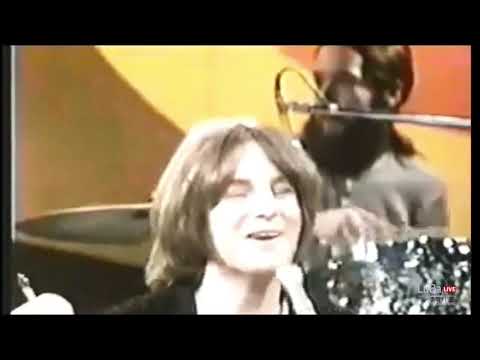
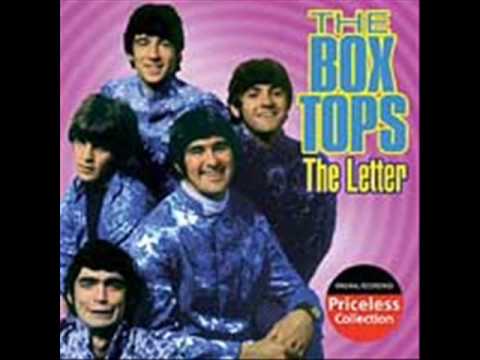
The Box Tops formed in Memphis, Tennessee, in 1965, initially playing the fraternity and high school circuit under the name the Devilles. When producer Dan Penn and Chips Moman brought them into American Sound Studio, the band was still finding its footing. Wayne Carson Thompson, a songwriter working in the Memphis orbit, had written a propulsive little number about a man desperate to get home to the woman he loves. The lyrics sketch a scene of pure urgency: a traveler clutching a letter, ready to spend his last dollar on a plane ticket just to return to her side. It was direct, physical, emotionally unambiguous.
A Vocal That Defied Belief
What made the recording extraordinary was Chilton's voice. Rough-edged, world-weary, saturated with a grit that no formal training could manufacture, it sat completely at odds with his actual age. The production around him was lean and purposeful: a driving rhythm section, a brassy horn stab, and virtually nothing wasted. Producer Dan Penn and Chips Moman kept the arrangement skeletal, letting the urgency of the vocal carry the song rather than burying it in orchestration. The whole thing clocked in at under two minutes, barely long enough for a proper verse-chorus-verse structure, which only amplified its breathless energy. Radio programmers at the time were conditioned to three-minute singles, and this one hit like a telegram.
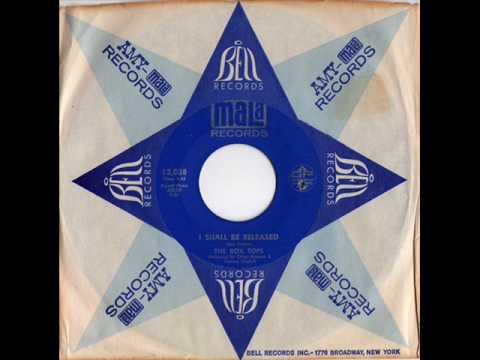
The record appeared on Mala Records and began its chart climb in early August 1967, debuting on the Billboard Hot 100 at number 81. The ascent was steep and steady. By the week of September 9, it had reached number 5, and two weeks later, on September 23, 1967, "The Letter" reached number one on the Billboard Hot 100, where it held its position and became one of the signature hits of that autumn. It spent a total of 16 weeks on the chart, a remarkable run for a record so brief.
The Sound of a Southern Studio in Its Prime
American Sound Studio in Memphis was, in the late 1960s, one of the most productive recording environments in the country. The house rhythm section and the production instincts of Penn and Moman generated a series of recordings that straddled soul, pop, and country with unusual ease. "The Letter" fit squarely within that tradition. It had the emotional directness of Memphis soul without the gospel heaviness, the commercial polish of pop radio without the sanitized smoothness. The song became one of American Sound Studio's earliest and most significant commercial triumphs, establishing the room's credentials before its celebrated run of late-decade sessions.
For The Box Tops, the success was almost immediately complicated. The band members were young, the business arrangements were controlled largely by adults, and the commercial machinery around them moved fast. Follow-up singles came quickly, some of them charting well, but none matched the cultural immediacy of their debut smash.
Legacy and Alex Chilton's Long Shadow
Alex Chilton's subsequent career became, in many respects, the more enduring part of the story. After The Box Tops dissolved in 1970, he went on to form Big Star with Chris Bell, a group that sold modestly in its time but whose influence cascaded through alternative rock for decades. The contrast between the mainstream success of "The Letter" and the cult obscurity of Big Star became a defining narrative in rock criticism. Chilton himself was often ambivalent about the fame "The Letter" had brought, viewing it through the lens of a musician who had moved far beyond the commercial mainstream of his teenage years.
Joe Cocker's 1970 cover version, with its gospel-drenched rearrangement and Cocker's characteristically overwrought delivery, introduced the song to a new generation and reached number 7 on the Hot 100, extending its commercial life well beyond the original run. The song has continued to surface in films, commercials, and retrospective compilations, each new context reinforcing its status as a document of a very particular moment in American pop.
Two Minutes That Refused to Fade
What is remarkable, looking back, is how much emotional weight "The Letter" packs into its compressed runtime. There is no extended guitar solo, no key change, no bridge designed to delay the climax. It trusts the listener to feel the urgency in those two minutes and to fill in the rest. The recording remains a masterclass in economy, a reminder that brevity in pop music is not a limitation but, in the right hands, a virtue. The song reached a generation living through an anxious, complicated year, and it offered something clean and primal: the need to get home to someone you love. That is a feeling that does not expire.
Put it on and you will hear 1967 Memphis in its purest form, a teenage voice carrying the weight of something much older, and a two-minute record that somehow contains a whole era.
"The Letter" — The Box Tops' singular moment on the 1960s charts.
02 Song Meaning
"The Letter" — Themes and Meaning
The Oldest Desire in Popular Music
Strip away the production, the chart numbers, and the historical context, and "The Letter" is about one of the most elemental human impulses: the need to return to the person you love. The narrator has received word from his partner, and that single piece of correspondence is enough to make every obstacle irrelevant. Money, distance, the logistics of travel, none of it matters. He will spend whatever it takes to get back to her side. The lyric does not complicate this desire with irony or ambiguity; it presents the feeling raw and direct, and in doing so creates a kind of emotional clarity that more elaborate love songs rarely achieve.
The letter itself functions as a catalyst rather than a subject. The audience never learns what it contains. Its specific content is irrelevant; what matters is the effect it produces in the narrator, the galvanizing urgency that transforms him from passive to active. This economy of detail is part of what gives the song its power. Wayne Carson Thompson's lyric trusts the listener to understand that some communications are so significant they require immediate physical action, not just an emotional response.
Urgency as Emotional Statement
The song's compressed runtime reinforces its thematic content. A man this desperate to return home does not have time for a leisurely musical arrangement. The two-minute structure mirrors the psychological state of the narrator, someone who sees the path from where he is to where he needs to be as short and non-negotiable. Every second spent in the wrong place is a second wasted. The production's lean muscularity, the driving rhythm, the minimal ornamentation, all of it serves the central emotional argument that some feelings demand immediate response.
This urgency connected with listeners in the summer of 1967 in ways that went beyond the literal lyric. That year carried enormous anxieties about absence and return. Young men were serving overseas; families were separated; the social fabric was pulling in multiple directions. A song about the desperate need to get home resonated against that backdrop in ways neither songwriter nor artist could have consciously planned.
Class, Sacrifice, and the Value of Return
There is a telling detail in the lyric: the narrator's willingness to spend his last dollar on a plane ticket. This small economic sacrifice grounds the song in a recognizable working-class reality. He is not a wealthy man easily booking first-class passage; he is someone for whom this expenditure represents genuine commitment. The song equates love with sacrifice, and the scale of that sacrifice, however modest, carries its own dignity. It says that some things are worth more than money, a sentiment that pop music has explored countless times but rarely with such directness.
Alex Chilton's Vocal and the Question of Authenticity
Part of what makes the song's meaning land so forcefully is the apparent authenticity of Alex Chilton's vocal performance. A 16-year-old singing about the desperate longing of adult love should not convincingly portray that emotion, and yet he does. The roughness in his voice, the hoarse insistence, communicates a lived experience that transcends his age. The gap between Chilton's biography and his vocal persona became one of the most discussed elements of the recording, raising questions about whether emotional authenticity in music requires actual experience or simply the capacity to inhabit a feeling fully.
That question has no clean answer, but the fact that it arises speaks to how completely the performance succeeds on its own terms. The song works because the listener believes it, not because they know anything about who is singing it. That distinction is worth sitting with. Some art earns its emotional authority through what it is, not where it came from.
"The Letter" — The Box Tops' singular moment on the 1960s charts.
→ More from The Box Tops
View all The Box Tops hits →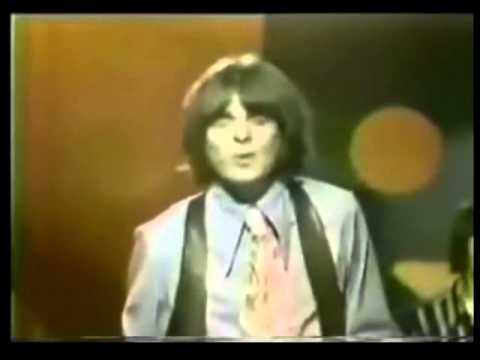
→ More from the 1960s File
View all 1960s hits →




Keep digging