The 1960s File Feature
Sweet Cream Ladies, Forward March
The Box Tops and "Sweet Cream Ladies, Forward March": A Late-1968 Curio From a Band in Transition By the autumn of 1968, The Box Tops had already secured the…
01 The Story
The Box Tops and "Sweet Cream Ladies, Forward March": A Late-1968 Curio From a Band in Transition
By the autumn of 1968, The Box Tops had already secured their reputation as one of the most commercially potent blue-eyed soul outfits to emerge from Memphis. Their debut single "The Letter" had reached number one on the Billboard Hot 100 in September 1967 and stayed there for four weeks, a performance that no amount of follow-up product could quite replicate. "Cry Like a Baby" climbed to number two in the spring of 1968, and "Choo Choo Train" charted respectably that summer. Yet the group and its production team at Mala Records were restless, unwilling to settle into a predictable formula, and the result of that creative restlessness was a single whose title alone was capable of raising eyebrows in any American household.
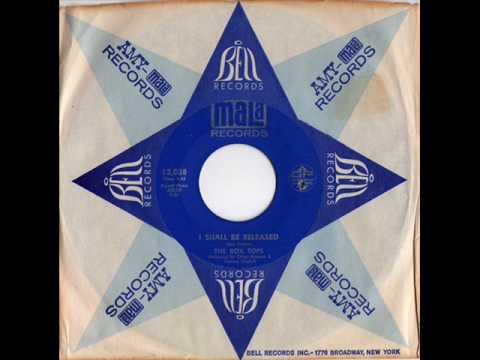
"Sweet Cream Ladies, Forward March" was released in late 1968 and entered the Billboard Hot 100 on December 28 of that year, debuting at number 89. Over the following weeks it climbed steadily, reaching its peak position of number 28 on the chart dated February 22, 1969, after fifteen total weeks on the survey. The title was a deliberate provocation, a barely veiled reference to sex workers in the military-adjacent culture of the American South, framed in the language of parade-ground commands. It was the kind of wordplay that could pass muster on radio playlists of the era precisely because it wrapped its subject matter in absurdist, comedic militarism rather than explicit language.
The production was handled by Dan Penn and Spooner Oldham, the songwriting-production partnership that had been central to the Southern soul sound emanating from Muscle Shoals and Memphis throughout the mid-to-late 1960s. Penn and Oldham brought their characteristic ear for groove and rhythmic tension to the track, setting up a horn-driven arrangement that matched the mock-military theme while keeping the sound rooted in the soulful tradition that had defined the Box Tops' output. The Muscle Shoals session players who appeared on many of the group's recordings gave the track its instrumental backbone, producing a sound simultaneously playful and musically polished.
Alex Chilton, the teenage lead vocalist who had already become something of a phenomenon through his raspy, world-weary delivery on "The Letter," brought his signature intensity to the performance. Chilton was only seventeen when "The Letter" had been recorded and was barely into his twenties by the time the group's commercial momentum began to slow. His ability to sound far older and more emotionally weathered than his years gave the Box Tops their peculiar appeal, and that quality did not abandon him on this track, even as the lyrical subject matter veered into comedy.
The single appeared on the album Non-Stop, which Bell Records released in 1968. The Box Tops' discography during this period was prolific by any standard, with multiple albums and singles appearing within short intervals as the label sought to capitalize on the group's initial commercial breakthrough. This pace of production was standard practice in the era but placed considerable demands on the musicians and their creative collaborators, and the results were inevitably uneven. "Sweet Cream Ladies, Forward March" fell somewhere in the middle of that range: notable enough to chart meaningfully but unable to match the heights of the group's earlier chart-toppers.
Culturally, the song occupies an interesting position in the late-1960s pop landscape. The period saw a general loosening of lyrical content across mainstream radio, with artists testing boundaries that earlier in the decade would have been firmly closed to them. The double entendre, a long-standing tradition in blues and rhythm and blues, was finding its way into pop production with increasing frequency, and a song that winked at prostitution through a military framing was very much a product of that loosening atmosphere. The track did not generate the controversy that more direct treatments of such subject matter might have provoked, partly because its humor defused potential objections.
The Box Tops would continue releasing material into 1970, but the commercial trajectory after 1968 was one of gradual decline. Alex Chilton's growing artistic ambitions were pulling him in directions that the Box Tops' format could not easily accommodate, and his eventual departure led to the group's dissolution. Chilton went on to form Big Star with Chris Bell in 1971, a band that achieved virtually no commercial success during its original run but became extraordinarily influential on subsequent generations of rock musicians. In that light, "Sweet Cream Ladies, Forward March" reads as a late document from a chapter of Chilton's life defined by commercial accessibility rather than the cult art-rock he would later pursue.
The song endures as a minor artifact of its moment, a cheerfully transgressive piece of Southern pop production that captured something real about the late-1960s willingness to push against convention while still operating within the machinery of the mainstream music industry.
02 Song Meaning
The Coded Language of "Sweet Cream Ladies, Forward March": Satire, Innuendo, and the Limits of Pop Subversion
"Sweet Cream Ladies, Forward March" is a song that operates almost entirely through indirection, relying on its audience to decode a premise that its title announces in barely disguised terms. The phrase "sweet cream ladies" was understood at the time of the song's release as a euphemistic reference to sex workers, a reading reinforced by the mock-military command "Forward March" that completes the title. The effect is simultaneously comic and provocative, inviting listeners into a knowing transaction where the joke is shared between the record and its audience rather than explained or elaborated explicitly.
The military framing is central to the song's rhetorical strategy. By dressing its subject matter in parade-ground language, the track draws on a well-established cultural reality in the American South and elsewhere: the proximity of commercial sex work to military installations was widely understood but rarely discussed openly in mainstream entertainment. The command structure implied by the title transforms the song's putative subjects into a regiment, a conceit that permits the lyrical content to remain playful rather than degrading. The absurdity of the image, a parade of sex workers marching in military formation, creates the comic distance necessary for the track to function as entertainment rather than scandal.
This approach aligns the song with a long tradition in American popular music of encoding transgressive content within formal or comic structures. The blues had been doing exactly this for decades, using metaphor, double entendre, and humor to discuss sexuality and social marginality in terms that allowed the music to circulate in contexts where more direct language would have been excluded. Dan Penn and Spooner Oldham, who produced the track, were steeped in this tradition through their work in the Southern soul and rhythm and blues world, and the song reflects their understanding of how far pop radio audiences of 1968 could be pushed without triggering the kind of backlash that would result in airplay bans.
The use of Alex Chilton's voice adds a layer of interpretive complexity. Chilton's delivery had always carried a quality of weary knowingness that exceeded his age, and that quality inflects the song's treatment of its subject with something more ambiguous than pure comedy. There is no moralism in the track's posture toward the women it nominally addresses; the song extends something closer to bemused solidarity than condemnation or titillation. This tonal neutrality, a refusal to either celebrate or condemn, is part of what allowed the song to chart without generating significant controversy.
The social context of 1968 amplifies the song's significance as a cultural document. The year was one of extraordinary turbulence in American life, with the Vietnam War, political assassinations, and widespread social unrest reshaping public consciousness. In that environment, a piece of pop subversion that commented obliquely on the relationship between military life and commercial sex was touching on real social tensions, even if its comic register prevented it from functioning as direct social criticism. The song sits at a point where entertainment and social commentary intersect without quite committing to either fully.
The question of what the song "means" in a deeper sense is partly a question about what meaning is available through this particular mode of ironic, playful engagement with difficult subject matter. The mock-military command at the song's center could be read as a form of dark solidarity, acknowledging the existence and humanity of women whose labor society both relied upon and refused to acknowledge openly. It could equally be read as straightforward comic exploitation, a joke made at the expense of the very people its title addresses. The ambiguity is built into the song's structure and is unlikely to be resolved by analysis.
What remains clear is that the track represented a particular kind of creative confidence, a willingness on the part of its creators to put a genuinely unusual subject in the title position of a mainstream pop single and trust that audiences would engage with the implicit contract rather than recoil from it. That the song reached number 28 on the Billboard Hot 100 suggests that confidence was not entirely misplaced, and it stands as evidence of how much more latitude the late 1960s pop mainstream was willing to extend to artists willing to push against its edges.
→ More from The Box Tops
View all The Box Tops hits →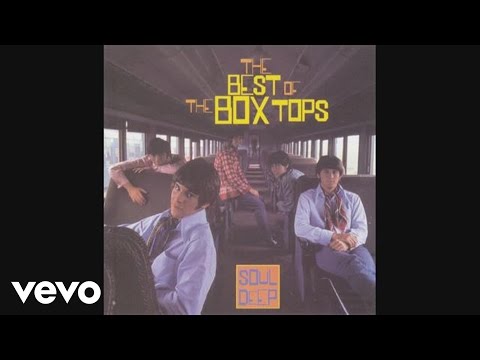
→ More from the 1960s File
View all 1960s hits →




Keep digging