The 1960s File Feature
Soul Deep
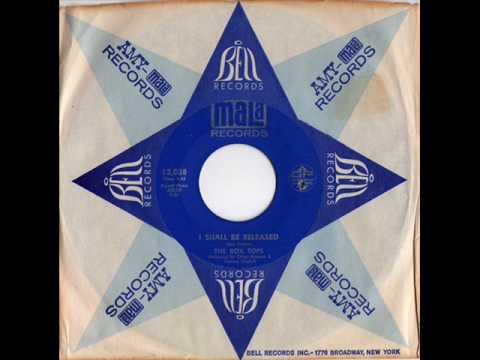
"Soul Deep" — The Box Tops Memphis at the End of an Era The summer of 1969 found the Box Tops in a peculiar position: nationally recognized, commercially act…
01 The Story
"Soul Deep" — The Box Tops
Memphis at the End of an Era
The summer of 1969 found the Box Tops in a peculiar position: nationally recognized, commercially active, and privately dissolving. The Memphis-based group had broken through in 1967 with "The Letter," one of the most instantly recognizable singles of the decade, built on an irresistible guitar riff and the preternaturally aged voice of seventeen-year-old Alex Chilton. Two years later, with a string of follow-up successes to their name, the band was still generating chart presence even as its internal coherence was fraying. Soul Deep arrived in the summer of that year as a strong, confident record that gave no public indication of the turbulence behind the scenes.
The Dan Penn Connection
The Box Tops operated in close orbit with the writers and producers who defined the Memphis and Muscle Shoals soul sound of the late 1960s. Dan Penn and Spooner Oldham were among the songwriters who contributed to the group's catalog, and Penn in particular was a key figure in creating the blue-eyed soul texture that made the Box Tops distinctive. Penn understood how to write songs that allowed a white rock group to inhabit the emotional vocabulary of Southern soul without the result feeling fraudulent. The songs reached for a genuine feeling rather than performing Blackness, which was the distinction between the better blue-eyed soul records of the era and the more cynical commercial exercises. "Soul Deep" reflects that understanding in its construction.
Alex Chilton's Voice as Instrument
Whatever the compositional and production contributions to the Box Tops recordings, the element that made them genuinely distinctive was Alex Chilton's voice. The instrument was remarkable: a deep, raw, almost worn quality that sounded improbable coming from a teenager and that gave even the most conventional material a feeling of lived experience. By 1969, Chilton had been developing that instrument through two years of constant touring and recording, and the maturity audible on "Soul Deep" reflects that development. The vocal performance carries the authority of someone who has earned the emotional range he is displaying, which is a quality that no amount of studio technology can manufacture.
Fourteen Weeks on the Hot 100
"Soul Deep" entered the Billboard Hot 100 on July 5, 1969, at number 94. Over the following eight weeks it climbed with notable consistency, driven by radio airplay and the accumulated goodwill of an audience that had followed the group through several earlier chart successes. The track peaked at number 18 on August 30, 1969, spending 14 weeks on the chart in total. A top-twenty placement was a solid achievement in a period when competition on the Hot 100 was intense, and the fourteen-week chart run confirmed that the record had genuine staying power with radio audiences rather than burning out quickly after an initial burst of attention.
The Box Tops' End and Chilton's Beginning
The group dissolved shortly after this period, and Alex Chilton went on to form Big Star, one of the most influential and commercially unsuccessful bands in rock history. Big Star's impact on subsequent generations of rock musicians is enormous, disproportionate to any commercial success they achieved during their original run. Chilton's later reputation has inevitably colored how the Box Tops catalog is received, lending the earlier recordings a quality of early evidence: you can hear the talent that would eventually produce #1 Record and Radio City. "Soul Deep" stands as one of the group's finer records, a track that captured the Memphis sound at full strength before the scene that produced it began to scatter. Press play and hear 1969 Memphis in its final confident summer.
"Soul Deep" — The Box Tops' singular moment on the 1960s charts.
02 Song Meaning
The Meaning of "Soul Deep" — The Box Tops
Depth as a Standard for Feeling
The phrase "soul deep" carries a specific claim about the quality of an emotional experience: not merely superficial or passing, but located at the deepest level of a person's being. In the context of a love song, it asserts that the feeling described reaches all the way down, that it penetrates to the core of the self in a way that ordinary affection does not. This kind of emotional intensification was central to the rhetoric of Southern soul music in the 1960s, a genre that regularly staked claims about the depth and authenticity of feeling as a way of distinguishing itself from the more polished, surface-level pop of the era. By deploying that rhetoric, the Box Tops aligned themselves with a tradition that carried considerable cultural authority.
Blue-Eyed Soul and Cross-Cultural Reach
The Box Tops occupied a complicated cultural position. They were a white rock group performing in a style and tradition rooted in African American music, drawing on arrangements and song structures developed by Black artists and producers. That cross-cultural appropriation was both a defining feature of 1960s pop music and a source of genuine tension, particularly as the Civil Rights Movement raised consciousness about which communities were profiting from which cultural traditions. The better blue-eyed soul records navigated this complexity by demonstrating genuine musical engagement with the source material rather than simply mining it for commercial returns. "Soul Deep" suggests an authentic connection to the emotional vocabulary it employs.
Alex Chilton's Emotional Authenticity
A large part of what makes the themes of "Soul Deep" credible is the vocal performance that delivers them. Alex Chilton's voice in this period had a quality that communicated vulnerability and depth without performing those qualities; the instrument itself seemed to carry emotional weight. Listeners who bring no prior knowledge of the Box Tops to this record will nonetheless register something genuinely affecting in the vocal performance, which is the mark of a singer who has internalized the material rather than simply executing it. The lyric's claims about deep feeling are supported by the voice making them, which is the only form of evidence that matters in a performance context.
The Late 1960s Soul Crossover
By 1969, the pop-soul crossover that had been building throughout the decade was operating at full commercial velocity. Memphis and Muscle Shoals productions were reaching the top of the mainstream pop charts with regularity, indicating that white radio audiences had developed a significant appetite for the rhythmic and emotional directness that characterized Southern soul. The Box Tops were well positioned to serve that appetite, having established their credentials through several successful years of work in that idiom. "Soul Deep" arrived when the crossover was at its most commercially fluid, which partially explains the track's ability to spend fourteen weeks on the Hot 100.
The Ordinary Made Extraordinary
At its most fundamental level, "Soul Deep" makes a familiar argument: that love has the power to transform ordinary experience into something extraordinary. That argument recurs across virtually every tradition of popular music in every era, which is a sign of its genuineness rather than its clichéd quality. The best love songs do not report on love objectively; they create a space in which the listener can feel the quality of the emotion being described. The Box Tops, with Alex Chilton's voice as their primary instrument, could create that space with unusual effectiveness, which is why records from this period of their career continue to reach listeners across the distance of decades.
→ More from The Box Tops
View all The Box Tops hits →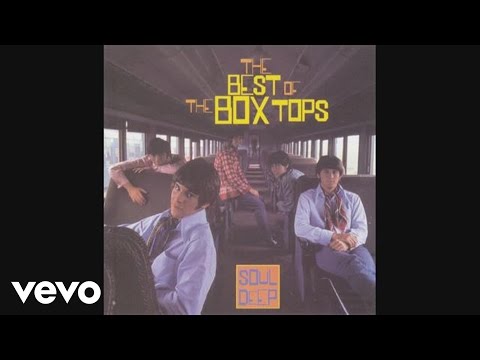
→ More from the 1960s File
View all 1960s hits →




Keep digging