The 1960s File Feature
Cry Like A Baby
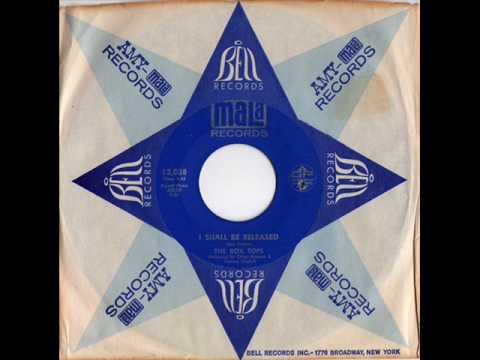
Cry Like a Baby — The Box Tops (1968) "Cry Like a Baby" was released in early 1968 on Mala Records , a subsidiary of Bell Records, and reached number 2 on th…
01 The Story
Cry Like a Baby — The Box Tops (1968)
"Cry Like a Baby" was released in early 1968 on Mala Records, a subsidiary of Bell Records, and reached number 2 on the Billboard Hot 100, making it one of the highest-charting singles of the Box Tops' career and one of the defining records of the white Southern soul subgenre that the group had helped to create with their 1967 breakthrough "The Letter." The single demonstrated that the group's commercial breakthrough was not a fluke but the product of a genuine artistic identity, one built around the extraordinary voice of their seventeen-year-old lead vocalist and the sophisticated production instincts of Chips Moman and Dan Penn.
Alex Chilton, the Memphis-born singer who fronted the Box Tops, was sixteen when "The Letter" was recorded and seventeen when "Cry Like a Baby" became a top-two hit. His voice, with its gritty, weathered quality that suggested a life experience far exceeding his actual years, was the commercial and artistic engine of the group. Critics frequently noted the paradox of a teenage vocalist producing performances of such apparent emotional maturity, and this paradox was itself part of the Box Tops' commercial appeal. Chilton sounded as though he had already suffered considerably and was prepared to document that suffering for the listening public.
The production team of Chips Moman and Dan Penn at American Sound Studio in Memphis was responsible for some of the most commercially successful and artistically significant recordings produced in the American South during the late 1960s. American Sound was a competitor to Stax/Volt but operated with a somewhat different aesthetic, leaning toward a tighter, more pop-oriented production style while retaining the essential qualities of soul rhythm and gospel feeling that defined the broader Memphis sound. Moman's studio and his house musicians, known informally as the 827 Thomas Street Band, provided the instrumental framework for the Box Tops' recordings with the kind of professional precision that allowed multiple successful sessions per week.
The song was written by Dan Penn and Spooner Oldham, a songwriting partnership that produced some of the finest soul material of the 1960s. Penn and Oldham had a particular gift for writing emotionally honest material that avoided sentimentality while remaining accessible to a broad commercial audience. Their collaboration produced hits for multiple artists across multiple labels, and their contribution to "Cry Like a Baby" gave the Box Tops material that was fully worthy of Chilton's vocal talent and Moman's production skills.
Reaching number 2 on the Hot 100 in 1968 placed "Cry Like a Baby" in competition with some of the strongest recordings of that exceptionally rich musical year. 1968 saw the chart dominated by recordings from the full range of soul, rock, and pop, with Marvin Gaye, Aretha Franklin, the Beatles, and a dozen other major artists all active in the marketplace. The Box Tops' ability to reach number 2 in this environment was a remarkable commercial achievement that testified to the universal accessibility of the record's emotional directness and the undeniable power of Chilton's vocal performance.
The chart performance of "Cry Like a Baby" confirmed the Box Tops' position as genuine commercial contenders rather than one-hit wonders, a status they would maintain through several additional hits before the group eventually dissolved and Chilton pursued the more experimental work with Big Star for which he would ultimately be most celebrated by critics. The relative commercial failure of Big Star during its active years, combined with the later recognition of its influence on alternative rock, created a retrospective narrative in which the Box Tops period was sometimes minimized. A more balanced assessment recognizes that the Box Tops recordings represent genuine artistic achievement rather than simply a commercial phase preceding "serious" work.
The record's enduring appeal rests on the combination of Chilton's voice, Penn and Oldham's songwriting, and Moman's production, three elements that were each operating at a high level and that interacted with unusual coherence. When all three elements of a pop record function at this level simultaneously, the result tends to outlast the commercial context in which it was created, and "Cry Like a Baby" has indeed remained a frequently cited example of the Memphis soul sound at its most commercially effective and artistically compelling.
02 Song Meaning
Cry Like a Baby — Meaning and Themes
"Cry Like a Baby" is a song about the dissolution of masculine composure under the pressure of romantic loss. The speaker presents himself as someone who would not ordinarily permit himself to show vulnerability, who has presented a stoic exterior to the world as a matter of habit or pride, and who finds that the departure of the person he loves has stripped away that exterior entirely. The title's image is deliberately infantilizing: to cry like a baby is to abandon the emotional self-regulation that adult life demands, to regress to a state of uncontrolled need. The speaker is not ashamed of this regression; he is confessing it as the most honest account of his current condition.
The emotional landscape the song occupies was particularly well-suited to Alex Chilton's voice and persona. Chilton at seventeen carried a quality of wounded experience that made his confessional performances convincing in a way that they might not have been from a singer whose instrument communicated comfort or security. His voice sounded as though it had already absorbed considerable pain, and the confession of vulnerability that "Cry Like a Baby" demanded was therefore delivered with an authenticity that made the lyric's claim credible rather than merely performed.
The Dan Penn and Spooner Oldham lyric understood something important about the soul music tradition it was working within: that the genre's most powerful moments are often those where the performance of strength gives way to an acknowledgment of weakness, where the singer admits that the emotional situation has exceeded their capacity to manage it with dignity. This is the same dynamic that drives the tradition of "cry songs" in country music, where emotional devastation is rendered with an honesty that other genres might find excessive. Penn and Oldham wrote for both traditions with equal facility, and "Cry Like a Baby" demonstrates their understanding of how to make that emotional nakedness feel like courage rather than weakness.
The song's title and central image also participate in a broader cultural conversation about masculinity and emotional expression that was intensifying in American popular culture during the late 1960s. Soul music in particular had created space for male vocalists to express emotional vulnerability in public without sacrificing their credibility as men; artists like Otis Redding, James Brown, and Marvin Gaye had all explored the relationship between masculine strength and romantic need in ways that complicated simple notions of what emotional expression was appropriate for men. "Cry Like a Baby" belongs to this tradition, using the extreme image of infant weeping to make its point about the limits of emotional self-containment.
For the Box Tops' catalog, the song confirmed that the group's reach extended beyond the more compact, driving sound of "The Letter" into territory that was more emotionally exposed and more nakedly confessional. The Mala Records recording demonstrated that Chips Moman's production instincts could accommodate a wider emotional range than their debut single had suggested, and that Chilton's voice was capable of sustaining a slow-burn ballad with the same authority it brought to uptempo soul. This versatility gave the group a commercial flexibility that their chart performance in 1968 confirmed.
→ More from The Box Tops
View all The Box Tops hits →
→ More from the 1960s File
View all 1960s hits →




Keep digging