The 2010s File Feature
Rap Devil
Rap Devil: Machine Gun Kelly's Response to a Genre Giant In the summer of 2018 , Machine Gun Kelly released "Rap Devil," one of the most widely discussed dis…
01 The Story
Rap Devil: Machine Gun Kelly's Response to a Genre Giant
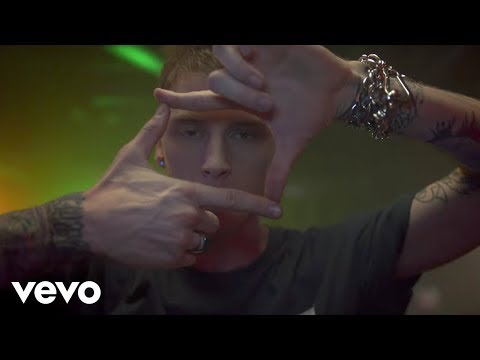
In the summer of 2018, Machine Gun Kelly released "Rap Devil," one of the most widely discussed diss tracks in recent hip-hop memory. The song was a direct response to Eminem's verse on "Not Alike," a track from Royce da 5'9"'s album "Book of Ryan," in which Eminem had taken aim at the Cleveland-born rapper. What followed was a public exchange that drew enormous attention across social media and mainstream entertainment coverage, temporarily elevating Machine Gun Kelly's commercial profile to new heights.
"Rap Devil" was released on September 3, 2018, through Bad Boy Records and Interscope Records. The track was produced by Ronny J, known for his work in the aggressive trap-influenced production sphere. Ronny J's beat provided an energetic, rock-adjacent sonic backdrop that suited Machine Gun Kelly's confrontational delivery and highlighted his affiliation with both hip-hop and alternative rock aesthetics. The title itself was a deliberate reference to Eminem's famous alter ego Slim Shady and the demonic imagery that Eminem had cultivated throughout his career.
The song debuted at number 86 on the Billboard Hot 100, a significant commercial achievement for a diss track and evidence that the feud had captured the attention of a large mainstream audience. Streaming numbers were substantial in the days following release, as listeners rushed to engage with the ongoing back-and-forth between the two artists. The track also performed well on the Billboard Hot Rap Songs chart, demonstrating that the hip-hop audience was engaged despite the unusual circumstances of the release.
Machine Gun Kelly, born Colson Baker, had spent the years prior to this moment building a reputation in Cleveland's underground rap scene before signing to Bad Boy Records. He had achieved modest mainstream success with earlier projects but had not yet broken through to the level of widespread recognition he sought. "Rap Devil" changed that calculus almost overnight. The controversy attached to the feud with Eminem, who was one of the best-selling musicians in American history, guaranteed a level of attention that no conventional promotional campaign could have purchased.
Eminem responded within days with "Killshot," a ferocious counterattack that most observers considered to have won the exchange decisively. "Killshot" debuted at number 3 on the Billboard Hot 100, dramatically outperforming "Rap Devil" commercially and receiving widespread critical praise for its technical precision and sustained aggression. The asymmetry of the two songs' chart performances became a frequent reference point in discussions about the outcome of the feud.
Despite losing the battle in most critical assessments, Machine Gun Kelly emerged from the episode with a considerably enlarged platform. His social media following grew substantially, and the controversy drove new listeners to his catalog who might never have encountered him otherwise. The music industry noted this dynamic as an interesting case study in how conflict with a major artist, even an unfavorable one in terms of artistic outcome, could function as career acceleration for a lesser-known act.
The production on "Rap Devil" deserves attention beyond its role in a celebrity feud. Ronny J's beat blended trap percussion with melodic elements that complemented Machine Gun Kelly's vocal style, which occupied a hybrid space between rapping and singing. This blend had been a consistent feature of his work and pointed toward the eventual pivot to pop-punk that would define his commercial breakthrough years later with albums like "Tickets to My Downfall" in 2020.
Cultural commentary on the track was extensive. Music journalists, hip-hop historians, and entertainment reporters all weighed in on the significance of a relatively unknown artist taking on an established legend. The debate about whether the move was courageous or foolish occupied considerable online space throughout September and October of 2018. Regardless of where observers landed on that question, the track itself had demonstrated that Machine Gun Kelly was willing to compete at the highest levels of hip-hop confrontation, a willingness that commanded a degree of respect even from those who judged him to have come up short.
"Rap Devil" remains one of the defining cultural moments in the diss-track tradition of the 2010s and a pivotal chapter in Machine Gun Kelly's evolving career narrative.
02 Song Meaning
The Meaning Behind Rap Devil
"Rap Devil" is a diss track, which means its primary function is combative rather than confessional or reflective in the conventional sense. Yet within its confrontational frame, the song communicates a set of convictions about identity, legitimacy, and the politics of hip-hop hierarchy that give it dimensions beyond mere competitive posturing. Machine Gun Kelly used the track to argue for his own relevance and to challenge the authority of an artist who had come to represent a certain kind of gatekeeping within the genre.
The core argument embedded in "Rap Devil" is about generational transition. Machine Gun Kelly positioned himself as a representative of a newer wave of hip-hop, one that embraced emotional directness, genre hybridity, and an alternative rock sensibility that older figures in the genre viewed with suspicion. His criticisms of Eminem were not purely technical but also ideological, suggesting that the elder artist had become out of touch with the current cultural moment. This generational framing gave the track a dimension that extended beyond the personal grievance of two artists in conflict.
The title itself carries significant symbolic weight. By calling himself the "Rap Devil," Machine Gun Kelly inverted the moral hierarchy implied by Eminem's "Rap God" persona. Where Eminem had claimed divine status through technical mastery and longevity, Machine Gun Kelly embraced a more transgressive identity, positioning himself as a disruptive force rather than a guardian of tradition. This was a smart rhetorical move that reframed the terms of the contest on more favorable ground.
The song also functions as an assertion of authenticity. One of the central charges Machine Gun Kelly leveled against Eminem was hypocrisy, the idea that an artist who had built his career on provocative, boundary-pushing content had become comfortable and establishment. This is a recurring accusation in hip-hop culture, where authenticity carries enormous ideological weight and where commercial success is perpetually suspected of corrupting artistic integrity.
Machine Gun Kelly's lyrical approach in the track reflected his hybrid artistic identity. He moved fluidly between rapped verses and more melodic passages, incorporating a rock-influenced aggression that distinguished his delivery from pure hip-hop. This hybridity was itself a statement, suggesting that the rigid genre boundaries enforced by traditionalists were irrelevant to a new generation of artists who had grown up consuming music across multiple formats and influences.
Within Machine Gun Kelly's catalog, "Rap Devil" occupies a transitional position. It represented his most prominent moment within hip-hop before the full pivot to pop-punk that would define his later commercial peak. The track demonstrated that he was capable of generating cultural conversation at scale, even if the artistic consensus on the outcome of the feud was unfavorable to him. His willingness to engage a much larger opponent communicated something about his artistic character that pure commercial performance could not have conveyed.
The song also touched on themes of underestimation and resilience that have broad resonance beyond the specific feud context. The narrative of a challenger taking on an established power, whatever the outcome, connects to archetypal stories about the relationship between ambition and institutional gatekeeping. Listeners who had no strong feelings about either artist found something compelling in that structural tension.
Ultimately, "Rap Devil" meant different things to different audiences. For hip-hop traditionalists, it was an overreach by an artist operating outside his lane. For younger listeners, it was a declaration of independence from the critical hierarchies that older figures had established. For Machine Gun Kelly himself, it was the moment that proved he was willing to fight for the position he believed he deserved, regardless of the odds.
→ More from Machine Gun Kelly
View all Machine Gun Kelly hits →


→ More from the 2010s File
View all 2010s hits →


Keep digging