The 2020s File Feature
Drunk Face
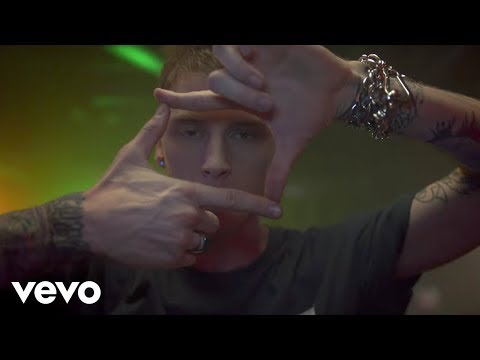
Drunk Face — Machine Gun Kelly (2020) By the summer of 2020, Machine Gun Kelly was in the middle of one of the most dramatic reinventions in recent pop-punk …
01 The Story
Drunk Face — Machine Gun Kelly (2020)
By the summer of 2020, Machine Gun Kelly was in the middle of one of the most dramatic reinventions in recent pop-punk history. Born Colson Baker, he had spent the better part of a decade establishing himself as a Cleveland-bred rapper, releasing mixtapes and albums under the Interscope imprint before his profile rose sharply through a high-profile feud with Eminem in 2018. But the record he was secretly building in 2019 and early 2020 had nothing to do with rap. It was a guitar-driven, punk-inflected album that would eventually be titled Tickets to My Downfall, released on September 25, 2020, through Bad Boy Records and Interscope. That album debuted at number one on the Billboard 200, making it the first pop-punk album to top that chart since Blink-182's Enema of the State in 1999, a fact that generated considerable industry attention.
"Drunk Face" appeared on Tickets to My Downfall as one of the album's more emotionally exposed tracks. The song was produced by Travis Barker, the Blink-182 drummer who served as the album's primary producer and creative anchor. Barker's involvement was central to the entire project: he and MGK had developed a close creative partnership that blurred the line between collaboration and co-authorship. Barker's ability to translate punk energy into polished, radio-adjacent recordings gave the album, and "Drunk Face" specifically, its hybrid character, simultaneously raw and commercially refined.
The song's production features live drums at the center of the mix, a driving guitar arrangement, and a melodic vocal approach that leaned heavily on the pop-punk conventions of the early 2000s. MGK has cited bands like Paramore, Fall Out Boy, and Blink-182 itself as touchstones for the record, and those influences are audible in "Drunk Face," particularly in the song's verse-chorus structure and its use of layered vocals to amplify emotional peaks. Rather than rapping in his traditional cadence, MGK delivers the track almost entirely through melody, a choice that reflected the deliberate nature of his genre shift.
Tickets to My Downfall was executive produced by MGK himself and Travis Barker, with additional production credits distributed across the album's fourteen tracks. "Drunk Face" stands out within that sequencing as one of the more introspective offerings. Critical reception to the album was mixed but widely covered. Reviewers noted that the sincerity of MGK's pop-punk commitment was difficult to fully dismiss, even among skeptics who questioned whether the genre pivot was opportunistic or authentic. The album's commercial success argued loudly for the latter interpretation.
The album spawned the single "my ex's best friend," featuring Blackbear, which reached number seven on the Billboard Hot 100 and became one of the highest-charting pop-punk songs in years. While "Drunk Face" did not receive a standalone single push with the same promotional resources, it circulated widely on streaming platforms and found an audience among the pop-punk fanbase the album had cultivated. Tickets to My Downfall was certified platinum by the RIAA within months of release, reflecting genuine consumer engagement across formats.
The broader cultural context of 2020 amplified the album's reach. Released during a period of widespread lockdowns and social disruption, the record tapped into a nostalgic appetite for the guitar-driven music of the late 1990s and early 2000s. Several music critics noted that "Drunk Face" and its neighboring tracks captured a specific emotional temperature suited to that moment: restless, slightly reckless, and earnest about vulnerability in ways that pop music had largely moved away from in the years of EDM and trap dominance.
MGK performed music from Tickets to My Downfall extensively over the following months and years, and the album's success established the pop-punk lane as a genuine long-term direction rather than a brief experiment. "Drunk Face" became part of the live setlist and was embraced by fans as one of the album's more personal moments. The song's existence within a number-one album, and as part of a historically significant chart achievement for the genre, cemented its place in the record's legacy and in the broader story of pop-punk's mid-2020s commercial resurgence.
02 Song Meaning
The Emotional Architecture of "Drunk Face"
"Drunk Face" operates as an investigation into altered states, specifically the way intoxication lowers the walls that sober self-consciousness erects around genuine feeling. Machine Gun Kelly does not use the premise simply as an excuse for hedonistic celebration. Instead, the song frames vulnerability through the lens of a person who can only speak honestly when inhibitions are loosened. The emotional register is neither triumphant nor despairing; it sits in a more complicated middle space where honesty and instability coexist.
The lyrical subject matter, described in paraphrase, revolves around the gap between who someone presents themselves to be in ordinary life and who they become when emotional guards are down. The song gestures toward romantic tension and self-examination, treating both as intertwined rather than separate concerns. This thematic pairing, of desire and self-awareness, is central to MGK's work on Tickets to My Downfall as a whole, but "Drunk Face" condenses it into a compact emotional statement.
Within the context of MGK's artistic catalog, the song marks a significant moment of tonal maturity. His earlier rap work was characterized by aggression, bravado, and an adversarial stance toward authority figures, critics, and rival artists. "Drunk Face" does not abandon that directness, but it redirects it inward. The song asks questions about sincerity and performance that his rap material rarely addressed with this degree of melodic openness. Travis Barker's production plays a key role in shaping that emotional register: the live drums and anthemic guitar lines create a sonic environment that encourages emotional candor in a way that harder rap production typically discourages.
The pop-punk genre framework itself carries meaning here. Pop-punk has historically functioned as a vehicle for young men to express emotional states, specifically longing, confusion, and romantic turmoil, that mainstream culture discourages them from expressing otherwise. MGK's adoption of the genre is not incidental; it reflects an understanding of what the idiom permits emotionally. "Drunk Face" fits squarely within that tradition, using the genre's conventions to make emotional confession feel natural rather than forced.
The title itself carries layered significance. A "drunk face" is simultaneously a loss of control and a moment of unfiltered truth, a state that can be read as weakness or as rare honesty depending on perspective. The song doesn't resolve that tension, and that ambiguity is part of what gives it staying power with listeners who return to it. People navigating complicated emotional landscapes tend to respond to art that acknowledges complexity rather than flattening it into easy conclusions.
The song's placement on Tickets to My Downfall also shapes how it lands. Surrounded by tracks that range from confrontational to playful, "Drunk Face" functions as one of the album's more earnest pauses, a moment where the swagger of the genre pivot gives way to something quieter and more uncertain. For an artist who had spent years performing toughness as a primary identity, this kind of vulnerability carried real artistic risk. The audience's reception of that risk, as part of a platinum-certified, chart-topping album, suggests that the gamble succeeded.
Ultimately, "Drunk Face" represents the kind of emotional directness that defines the most durable work in the pop-punk tradition: the willingness to describe confusion and longing without resolving them into tidy lessons. The song added depth to MGK's creative portrait and demonstrated that his genre reinvention was not merely aesthetic but reached into the substance of what he wanted to say as a songwriter.
→ More from Machine Gun Kelly
View all Machine Gun Kelly hits →

→ More from the 2020s File
View all 2020s hits →

Keep digging