The 1980s File Feature
No One Can Love You More Than Me
No One Can Love You More Than Me: Melissa Manchester's 1983 Billboard Entry The fall of 1983 was a moment of particular richness in mainstream adult contempo…
01 The Story
No One Can Love You More Than Me: Melissa Manchester's 1983 Billboard Entry
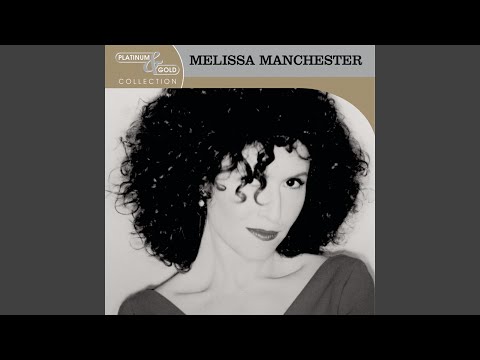
The fall of 1983 was a moment of particular richness in mainstream adult contemporary music. Synthesizers had completed their takeover of the pop production landscape, but within that electronic sheen, there remained a hunger for voices that could actually sing , voices capable of communicating emotion with the kind of depth and nuance that no amount of production technology could manufacture. Melissa Manchester was one of those voices, and she had been deploying it to great commercial effect for a decade by the time "No One Can Love You More Than Me" appeared on the charts.
Melissa Manchester's Career Arc
Melissa Manchester came up through a remarkable school: she studied at New York's High School of Music and Art before working with Paul Simon in the early 1970s and then training at the Berklee College of Music ethos that surrounded the New York songwriter scene. Her career was built on an instrument , her voice , that was immediately identifiable: powerful in the chest register, with a warmth in the middle range and a controlled intensity at the top that made her ballads land with particular force. Her 1979 hit "Don't Cry Out Loud" remains her most celebrated recording, a song of such emotional directness that it became an audition standard for aspiring performers across multiple generations.
The Single and Its Chart Journey
"No One Can Love You More Than Me" entered the Billboard Hot 100 on October 29, 1983, at number 91. The trajectory over the following weeks was a gradual, steady climb: 91, then 85, then 79, before reaching its peak of number 78 on November 19, 1983. Four weeks on the chart , a compact run that placed it in the lower reaches of the Hot 100 without crossing into the chart's upper tier. The record performed more successfully on the Adult Contemporary chart, where Manchester had built her most devoted following over the years.
The Sound of 1983 Adult Contemporary
The production context in which "No One Can Love You More Than Me" existed was defined by polished, synthesizer-enhanced arrangements that gave ballads of the period a specific sonic signature: lush, somewhat airless, built to fill the acoustic space of a radio speaker with warmth and precision. Manchester's voice was well suited to this aesthetic , she was a singer who understood studio performance, who knew how to calibrate her delivery to the microphone rather than simply projecting to the back of a concert hall. The result was a track that sounded authoritative and emotionally present within the conventions of its era.
Love as Declaration: The Song's Emotional Territory
The title itself positions the song clearly: this is a declaration of devotion, a claim to singular commitment. Manchester's strength as an interpreter had always been her ability to make such declarations feel earned rather than merely asserted , to bring a biographical weight to romantic statements that made them credible. By 1983, she had been performing such material for a decade, and the accumulated experience showed in the authority of her delivery. The song fit naturally into the season: the approach of the holidays, with their heightened emotional stakes, gave ballads of devotion a particular resonance in the fourth quarter.
Manchester's Enduring Place in Adult Contemporary
Melissa Manchester's legacy is one of craft and longevity rather than singular explosive success. She maintained a consistent commercial presence across more than a decade of releasing records, built a devoted audience, and created a body of work that showcased one of the more technically accomplished voices in adult contemporary music. "No One Can Love You More Than Me" belongs to the later phase of her Hot 100 presence , a period when her chart appearances were less frequent but her artistry was fully mature. Press play and hear one of the era's great voices doing exactly what she did best.
Manchester and the Art of the Long Career
What distinguishes Melissa Manchester from many of her contemporaries is the longevity and consistency of her engagement with audiences across multiple decades. The 1983 chart entry came roughly a decade into a career that would continue for decades more, encompassing recordings, Broadway work, and sustained touring that kept her in direct contact with her core following. That sustained presence across multiple decades of American popular music reflects both genuine artistic adaptability and a fan base that followed her through the various transitions the music industry underwent. “No One Can Love You More Than Me” belongs to a mid-career moment when her relationship with her audience was fully established and the warmth of that connection comes through unmistakably in the performance.
“No One Can Love You More Than Me” , Melissa Manchester's singular moment on the 1980s charts.
02 Song Meaning
The Claim and the Feeling: Unpacking Melissa Manchester's Devotion Song
Devotion songs occupy a specific and sometimes underappreciated place in the pop canon. Where romantic ballads often trade in longing, uncertainty, or the aftermath of love's complexities, the devotion song makes a simpler and in some ways bolder claim: I am here, I am committed, and what I offer exceeds what any other can offer you. "No One Can Love You More Than Me" is a devotion song in the purest sense, and its emotional architecture is worth examining closely.
The Superlative as Lyrical Strategy
The title's grammatical structure , the comparative superlative "more than me" , does something interesting. It frames love not as an absolute quality but as a competition, as something that can be quantified and compared. This is a significant lyrical choice, because it acknowledges the existence of other potential lovers (the implicit "someone else" against whom the singer is measuring herself) while asserting her superior claim. The song is therefore not simply a declaration of love but a romantic argument, a case being made to someone who may have other options.
Melissa Manchester as Interpreter
What gives the song its emotional credibility is Manchester's approach to material of this kind. She was a singer trained in the New York songwriter tradition where craft and emotional honesty were not merely compatible but inseparable , where technical control served emotional expression rather than substituting for it. When Manchester sings a devotion song, the devotion sounds earned and specific rather than generic. Her delivery carries the weight of someone who has thought carefully about what commitment means and has concluded that what she is offering is real.
The Emotional Stakes of 1983
The early 1980s were an interesting cultural moment for songs about love and commitment. The social changes of the previous decade , the questioning of traditional relationship structures, the rise of the sexual revolution, the increasing instability of marriage as an institution , had created a complicated emotional landscape that pop music was processing in various ways. Some artists responded with ironic distance; others doubled down on romantic sincerity. Manchester belonged firmly in the second camp, and the audience for adult contemporary music in 1983 responded strongly to that sincerity. A straightforward song about loving someone completely was, in the context of a fractured romantic culture, almost a form of reassurance.
The Adult Contemporary Emotional Register
Adult contemporary music in the early 1980s had developed a distinctive emotional vocabulary , one that prioritized clarity of feeling over ambiguity, resolution over tension, and the affirmation of connection over its dissolution. Critics sometimes dismissed this as sentimentality; listeners understood it as the articulation of what they actually felt and wanted. "No One Can Love You More Than Me" operates fluently in this vocabulary, using the conventions of the adult contemporary ballad to communicate something genuine about the experience of loving someone with full commitment. The genre conventions are not limitations here; they are a shared language between singer and audience.
What the Song Offers the Listener
Perhaps the most interesting thing about devotion songs as a category is the experience they offer the listener who is not in a romantic relationship at the moment of listening. The song can function as an aspiration , a model for what someone might say to another person, a script for feelings that the listener has but hasn't yet articulated. It can also function as a kind of emotional gift, the experience of hearing commitment articulated beautifully even if that commitment is being expressed by someone else about someone else. Manchester's warmth as a vocalist makes this gift feel genuine. The song does not ask the listener to share her specific circumstances; it asks them to recognize the feeling she is expressing, and most people who have ever been in love can.
→ More from Melissa Manchester
View all Melissa Manchester hits →



→ More from the 1980s File
View all 1980s hits →




Keep digging