The 1970s File Feature
Midnight Blue
Melissa Manchester and the Making of "Midnight Blue" By the mid-1970s, Melissa Manchester had established herself as one of the more distinctive voices to em…
01 The Story
Melissa Manchester and the Making of "Midnight Blue"
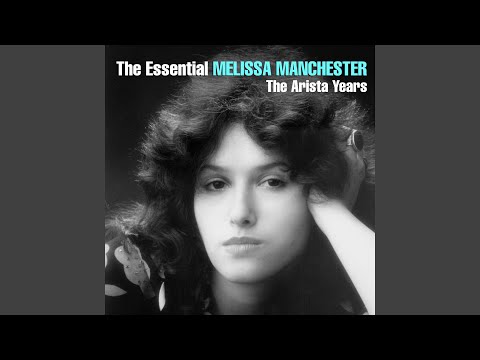
By the mid-1970s, Melissa Manchester had established herself as one of the more distinctive voices to emerge from the New York singer-songwriter scene that had blossomed in the wake of the early-decade confessional movement. A graduate of New York University's music program and a former member of Bette Midler's backing vocal group, Manchester possessed both formal training and hard-earned stage experience by the time she entered the studio to record what would become her signature song. "Midnight Blue" arrived in 1975 as the lead single from her album Melissa and climbed to number six on the Billboard Hot 100, spending seventeen weeks on the chart and establishing her commercial peak in a career already marked by consistent critical goodwill.
The song was co-written by Manchester and Carole Bayer Sager, one of the most sought-after collaborators in popular music during the 1970s. Sager had already demonstrated a facility for writing emotionally precise ballads and mid-tempo pop, and her partnership with Manchester proved particularly fruitful. The two women shared a sensibility rooted in honest emotional disclosure without sentimentality, and "Midnight Blue" reflects that alignment at every structural turn. The song builds from a spare, intimate opening into a full orchestral arrangement that swells without overwhelming the lyrical content, a balance that production team Richard Perry helped engineer with characteristic restraint and elegance.
Manchester had been signed to Bell Records in the early part of the decade, releasing albums that earned admiring reviews but only modest commercial returns. By 1975, she had moved to Arista Records under the supervision of Clive Davis, whose instinct for matching artists with commercially viable material without diluting their artistic identity proved decisive in her career trajectory. Davis recognized in Manchester a voice capable of bridging the sophisticated adult contemporary market and the broader pop audience, and "Midnight Blue" was precisely the vehicle to accomplish that crossing. The song entered the Hot 100 in the spring of 1975 and spent the better part of four months on the chart before finally yielding its position in the summer.
The production approach on "Midnight Blue" drew from a tradition of lush, orchestrated pop that had roots in the work of producers like Burt Bacharach and Hal David, though Perry's arrangement incorporated the warmer, more rhythm-section-forward sound that had become dominant by mid-decade. The interplay between Manchester's voice and the instrumental backing is noteworthy for how carefully it calibrates emotional temperature: the verses are relatively restrained, allowing the lyrical narrative to breathe, while the chorus opens into a more expansive sonic landscape that amplifies the emotional resolution embedded in the words.
Manchester's vocal performance on the track remains one of the more technically impressive recordings of the era. Trained in both classical and popular idioms, she navigated the song's demands with a control that never tipped into clinical detachment. The upper register passages that anchor the chorus required a precision that fewer pop singers of the period could deliver with such apparent ease, and the recording captured that quality with fidelity that held up across decades of subsequent listening. Radio programmers responded accordingly, rotating the single heavily on both pop and adult contemporary formats, which accounts in part for the song's extended chart run of seventeen weeks.
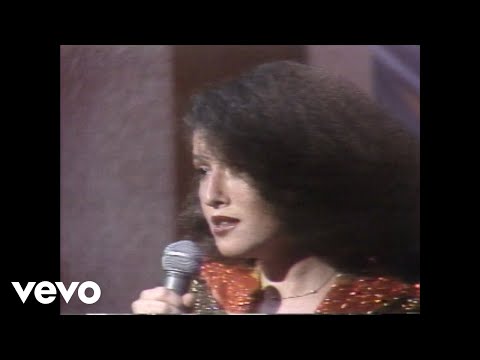
The commercial success of "Midnight Blue" had immediate consequences for Manchester's standing in the industry. It led to television appearances, including prominent slots on variety programs that were still a significant vehicle for popular music promotion in 1975, and it solidified her relationship with Arista at a moment when the label was consolidating its roster and investing in artists with demonstrated pop potential. The song also appeared on her self-titled album, which benefited from the single's momentum and reached a wider audience than her previous records had managed.
In the years following its initial chart run, "Midnight Blue" continued to circulate through adult contemporary radio formats, accumulating the kind of passive audience exposure that eventually elevates a song from hit to standard. Manchester herself returned to the song repeatedly in live performance, acknowledging its centrality to her public identity while finding new interpretive angles that the studio version's fixed arrangement could not accommodate. The song appeared on numerous compilation albums throughout the 1980s and 1990s, each reissue introducing it to listeners who had not encountered it during its original release cycle.
The collaboration with Carole Bayer Sager that produced "Midnight Blue" stands as a notable example of the professional songwriting partnerships that characterized the New York pop world of the period. Sager went on to co-write major hits for numerous artists across the following two decades, and her work with Manchester demonstrated early how effectively she could match her compositional instincts to a specific artist's vocal and emotional range. For Manchester, the song represented a crystallization of the aesthetic she had been developing through her earlier albums, proof that her particular combination of technical sophistication and emotional directness could find a mass audience without requiring either quality to be compromised.
02 Song Meaning
The Emotional Landscape of "Midnight Blue"
"Midnight Blue" operates within the tradition of the adult pop ballad that examines the aftermath of romantic rupture, but it approaches that familiar territory with a precision of emotional observation that distinguishes it from its contemporaries. The song's central concern is the psychological experience of loss rendered not as acute grief but as a sustained, low-register ache — the kind that arrives after the immediate shock has subsided and the full weight of absence settles in. Melissa Manchester and Carole Bayer Sager constructed a lyrical framework that locates this emotional state in specific sensory detail rather than abstract declaration, giving the song a vividness that abstract laments tend to lack.
The color blue in the song's title functions as both a temporal and emotional marker. Midnight blue is not simply sadness but a particular quality of darkness — the hour when distracting noise has ceased and feeling becomes unavoidable. The choice of that specific shade over more generic blue imagery signals the writers' interest in precision: they are not describing generalized melancholy but a particular species of nocturnal awareness in which the mind, stripped of daytime occupation, confronts what it has been avoiding. This kind of carefully observed emotional geography was characteristic of the best songwriting to emerge from the New York school of the early-to-mid 1970s.
The song's narrative perspective occupies a moment of honest self-reckoning. Rather than placing blame or seeking resolution through romantic reunion, the emotional center of gravity is a hard-won acknowledgment of what has genuinely been lost. This willingness to sit with discomfort rather than resolve it prematurely gave the song a psychological authenticity that listeners recognized and responded to. The adult contemporary format for which the song was ideally suited was built on exactly this kind of emotional sophistication — an audience that had moved past the simpler romantic narratives of earlier pop and wanted music that reflected more complex interior experience.
Manchester's vocal interpretation reinforces the lyrical content at every turn. She resists the temptation toward histrionics that the subject matter might seem to invite, delivering the verses in a controlled, measured register that makes the chorus expansions feel genuinely earned rather than merely ornamental. This performance intelligence, shaped by her formal vocal training and years of live experience, is what separates the recording from the many ballads of the period that addressed similar themes with less discipline. The song earns its emotional climax because the performer has not spent the preceding verses prematurely telegraphing it.
The arrangement supports this emotional architecture by maintaining space around the vocal. The orchestration does not overwhelm the lyrical content but instead amplifies it at strategic moments, creating a dynamic relationship between silence and sound that mirrors the song's thematic preoccupation with the gap left by another person's departure. Richard Perry's production understood that restraint is itself an expressive choice, and the sonic texture of "Midnight Blue" reflects that understanding throughout its running time.
What the song ultimately communicates is a kind of dignified grief — the experience of loss handled without self-pity or performative drama. This quality gave it a durability well beyond the typical chart single, because it spoke to an emotional condition that exists outside any particular cultural moment. The specificity of its imagery and the honesty of its emotional accounting ensured that listeners in decades subsequent to its 1975 release could encounter it as freshly as its original audience did. That capacity for sustained resonance is the hallmark of songwriting that functions as genuine art rather than merely as commercial product.
→ More from Melissa Manchester
View all Melissa Manchester hits →
→ More from the 1970s File
View all 1970s hits →




Keep digging