The 1970s File Feature
Give Your Baby A Standing Ovation
Give Your Baby a Standing Ovation — The Dells: Recording, Release, and Chart History The Dells were, by 1973, one of the longest-running and most artisticall…
01 The Story
Give Your Baby a Standing Ovation — The Dells: Recording, Release, and Chart History
The Dells were, by 1973, one of the longest-running and most artistically consistent vocal groups in the history of American soul music. Having formed in Harvey, Illinois, in the mid-1950s and survived personnel changes, shifting musical fashions, and the full arc of the civil rights era, the group arrived at the early 1970s as a functioning institution within Chicago soul. Their partnership with Cadet Records, the progressive jazz and soul subsidiary of Chess Records, had produced some of the most ambitious recordings in the Chicago soul catalog, including the landmark work produced and arranged by Charles Stepney in the late 1960s and early 1970s.
"Give Your Baby a Standing Ovation" was released in 1973 and represented the group's continued ability to generate commercially viable recordings while operating within a production framework that prioritized musical depth over formula. The record was issued on Cadet at a moment when the Chess Records empire was in the final stages of its corporate dissolution, having been sold to GRT and subsequently to All Platinum Records. This institutional turbulence might have derailed a less established group, but the Dells' identity was sufficiently robust to survive it.
The production of the record drew on the full range of Chicago soul arranging traditions, with lush string writing, tight horn punctuation, and the kind of call-and-response structure between lead and background voices that the Dells had perfected over their long career. Johnny Carter and Marvin Junior, whose contrasting vocal approaches had long been central to the Dells' emotional range, were deployed here with a precision that demonstrated why the group's ensemble discipline was so admired. The interplay between their voices, one sweeter and more lyrical and the other rougher and more declamatory, gave the track a dynamic tension that sustained listener engagement across multiple plays.
The song entered the Billboard R&B chart and reached the top ten, confirming that the Dells retained their commercial connection to Black radio audiences even as the music industry around them was transforming rapidly. The Hot 100 performance was also solid, reflecting the group's crossover appeal during a period when Chicago soul was enjoying broader mainstream recognition. The record was among the more successful singles of the group's Cadet period.
The Dells' longevity by this point was itself a kind of statement. Groups formed in the late 1950s faced enormous pressure to adapt to each new commercial cycle, and many simply dissolved or continued in nostalgia contexts without generating new material of consequence. The Dells consistently defied this pattern, maintaining artistic seriousness alongside commercial ambition. Their ability to recruit Charles Stepney as a creative collaborator in the late 1960s had been decisive in this regard, and the production sensibility he established continued to inform their work even after other producers took the chair.
The title itself encapsulates a specific kind of romantic celebration that was characteristic of soul music's engagement with Black vernacular expression. The standing ovation was a gesture borrowed from the concert hall and applied to the context of intimate relationship, suggesting that the person being addressed deserved the kind of public, theatrical acknowledgment usually reserved for exceptional artistic performances. This transposition of registers was both playful and earnest, which is a combination the Dells were particularly skilled at navigating.
The recording has endured as one of the signature tracks of the group's early 1970s catalog, frequently included in retrospective compilations of both the Dells' work and the Cadet Records legacy more broadly. It represents a period when Chicago soul was simultaneously at peak artistic achievement and beginning to feel the commercial pressures that would eventually redirect the genre's energies toward the emerging disco idiom. The Dells, characteristically, continued doing what they did best, and "Give Your Baby a Standing Ovation" is among the clearest pieces of evidence for why that approach was justified.
02 Song Meaning
Give Your Baby a Standing Ovation — Themes, Feeling, and Musical Meaning
"Give Your Baby a Standing Ovation" works on the level of celebratory romantic instruction, directing its listener toward an appreciation of their partner that goes beyond the ordinary expressions of affection. The title's central conceit is borrowed from the world of performance, where a standing ovation represents the highest available form of public acknowledgment, and the song applies this theatrical gesture to the domestic sphere of romantic relationship. The effect is both flattering and slightly playful, insisting that the person being addressed deserves extraordinary recognition for who they are and what they bring to the relationship.
For the Dells as performers, this kind of celebration was both thematically natural and personally resonant. A group that had been performing for nearly two decades by this point understood better than most what it felt like to receive genuine acknowledgment from an audience, and what it meant to withhold such acknowledgment or to offer it carelessly. The standing ovation metaphor carries within it an implicit understanding of what authentic appreciation looks like as opposed to polite or perfunctory acknowledgment.
The soul tradition from which the Dells emerged consistently treated romantic relationships as sites of profound emotional significance, worthy of the same degree of seriousness and attention that other traditions reserved for sacred or civic subjects. "Give Your Baby a Standing Ovation" participates in this tradition, insisting through the grandeur of its central metaphor that romantic partnership is not a minor domestic arrangement but a source of genuine human meaning. The lush production reinforces this claim: strings and horns confer a kind of formal dignity on the subject.
The dynamic between the Dells' lead voices adds interpretive depth to the material. When one voice presents the celebratory instruction with warmth and suavity and another answers with a rougher, more emphatic declaration, the effect is of communal reinforcement, as though the entire group is bearing witness to the importance of the message. This call-and-response structure gives the song the feeling of a shared conviction rather than an individual opinion, which amplifies its emotional authority considerably.
The early 1970s context matters for understanding why a song like this found an appreciative audience. Black communities across American cities were navigating a period of significant social and economic strain, and soul music's consistent return to the themes of romantic celebration and partnership offered not an escape from that context but a reminder of what made endurance possible. The standing ovation the song prescribes is also, in this reading, a form of mutual sustenance: the recognition that the person beside you is extraordinary and that saying so matters.
The Dells brought to this material the accumulated authority of two decades of communal performance, which meant that their celebration of romantic recognition carried the weight of genuine experience rather than mere sentiment. "Give Your Baby a Standing Ovation" endures as a piece of soul music precisely because the group singing it had been through enough to know what deserves applause and how to give it properly.
→ More from The Dells
View all The Dells hits →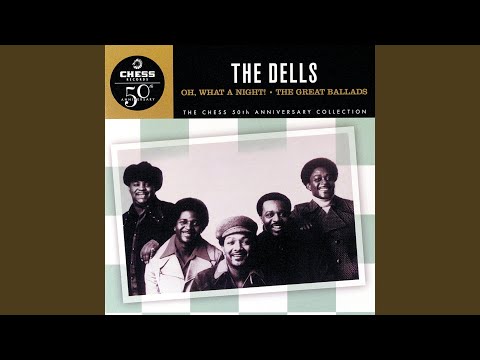



→ More from the 1970s File
View all 1970s hits →




Keep digging