The 1960s File Feature
I Can Sing A Rainbow/Love Is Blue
"I Can Sing A Rainbow/Love Is Blue" — The Dells' Late-Decade Triumph Chicago Soul at Full Maturity By the time 1969 arrived, The Dells had already lived thro…
01 The Story
"I Can Sing A Rainbow/Love Is Blue" — The Dells' Late-Decade Triumph
Chicago Soul at Full Maturity
By the time 1969 arrived, The Dells had already lived through more musical lives than most groups ever get. Founded in Harvey, Illinois in the early 1950s, they had survived the doo-wop era, pivoted through rhythm and blues, weathered a serious car accident that temporarily derailed the group, and emerged on the other side as one of the most compelling vocal acts in Chicago soul. Their signing with Cadet Records, the subsidiary of Chess Records that focused on more sophisticated R&B material, marked the beginning of their commercial and artistic peak. The pairing with producer Charles Stepney, one of the most visionary arrangers in the city's music scene, transformed the group's sound entirely.
The Dells that recorded in the late 1960s bore little surface resemblance to the doo-wop group that had started out on the street corners of Harvey. Stepney's orchestrations brought string sections, complex harmonic structures, and a cinematic scope that placed the group in dialogue with the most ambitious soul recordings of the era. The interplay between bass vocalist Marvin Junior and the smoother, higher tones of Johnny Carter gave the group a sonic range that few vocal ensembles could match. This contrast, earthy against ethereal, became the group's signature.
Two Songs Become One
"I Can Sing A Rainbow/Love Is Blue" was an unusual release even by the experimental standards of the late 1960s soul catalog. The track combined two distinct melodies into a single medley: "I Can Sing A Rainbow," a traditional children's song with British origins, and "Love Is Blue," the French ballad that had been an enormous international hit in multiple instrumental versions in 1967 and 1968. The decision to marry these two pieces reflected both the adventurousness of The Dells and the willingness of Charles Stepney to work with unconventional source material.
The arrangement treated both songs as complementary rather than competing. The strings carried the melodic material while the vocal group navigated the emotional content, finding genuine feeling in material that in less skilled hands might have seemed merely novelty. Stepney's genius was his ability to make ambitious production choices feel inevitable rather than strange. The result was a recording that felt simultaneously familiar, because both source melodies were widely known, and genuinely fresh, because the combination was entirely new.
The Chart Journey Through Summer 1969
The single debuted on the Billboard Hot 100 on May 24, 1969, entering at position 82. The chart run that followed was a steady progression upward through the summer weeks as radio programmers and listeners responded to the recording's distinctive character. By the chart dated July 19, 1969, the track had reached its peak position of number 22, the highest it would climb. Ten weeks on the Hot 100 represented a meaningful run in a period when competition for chart real estate was fierce. The summer of 1969 was one of the richest in popular music history, with Sly and the Family Stone, The Rolling Stones, and Creedence Clearwater Revival all active on the charts simultaneously.
The track also performed strongly on the R&B charts, where The Dells had a loyal and dedicated following. The Dells were riding the momentum of a remarkable creative streak, having scored significant chart success with their recordings throughout 1968 and 1969. Their earlier single "Stay In My Corner" and the double-sided smash "Oh What A Night"/"Stay In My Corner" had established them as reliable hitmakers during this period. "I Can Sing A Rainbow/Love Is Blue" extended that run and further demonstrated the group's versatility.
Stepney, Cadet, and the Chicago Sound
The production context of this recording deserves attention as a piece of music history in its own right. Chess Records and its subsidiaries occupied a unique position in American music as the label that had nurtured Chuck Berry, Muddy Waters, Etta James, and Howlin' Wolf. By the late 1960s, the label was evolving its sound to meet a changing marketplace, and Cadet became the laboratory for more sophisticated, orchestrally ambitious material. Charles Stepney's work with The Dells represented some of the highest achievements of that ambition.
Stepney would go on to work with Minnie Riperton, Rotary Connection, and Earth, Wind and Fire before his death in 1976 at the age of 45. His arrangements from the Cadet period are now recognized as among the most sophisticated in the history of American popular music. The Dells recordings he produced stand as a permanent record of what was possible when a visionary arranger met a vocal group with the technique and emotional intelligence to execute his ideas. "I Can Sing A Rainbow/Love Is Blue" is one chapter in that remarkable collaboration.
An Improbable Record That Endures
Medley recordings are unusual in any era, and combining a children's melody with a French instrumental pop hit was not an obvious commercial strategy. That the recording worked as well as it did reflects both the group's interpretive skill and the quality of the production surrounding them. Decades on, the track stands as one of the more fascinating entries in the Chicago soul catalog, a small experiment that succeeded by honoring both the intelligence of the musicians and the curiosity of the audience. Put it on and follow those voices through the strings; it remains one of the more distinctive sounds that 1969 had to offer.
"I Can Sing A Rainbow/Love Is Blue" — The Dells' singular moment on the 1960s charts.
02 Song Meaning
Color and Feeling: The Meaning Behind "I Can Sing A Rainbow/Love Is Blue"
When Childhood Innocence Meets Adult Longing
There is something quietly radical about The Dells' decision to begin their medley with a song most listeners associated with primary school classrooms. "I Can Sing A Rainbow," in its original form, was designed to teach young children color words through melody. The Dells pulled that melody out of its nursery context and placed it inside an elaborate soul production, and in doing so they transformed it into something else entirely. The rainbow imagery took on the weight of longing rather than learning, a spectrum of feeling rather than a spectrum of light. Colors became emotional states, each one corresponding to a different shade of romantic experience.
The Language of Color in Popular Song
The decision to combine the rainbow song with "Love Is Blue" was not arbitrary. Paul Mauriat's instrumental version of "Love Is Blue," originally written by André Popp with French lyrics by Pierre Cour, had spent multiple weeks at number one on the American charts in 1968 and lodged itself deep in the collective musical memory. The song's central metaphor connected emotional states to colors, sadness to blue, jealousy to green, love to red. By joining these two pieces, The Dells created a meditation on color as feeling that had a kind of internal logic.
The arrangement by Charles Stepney supported this thematic coherence. The string writing moved through tonal colors with the same kind of painterly intention that the lyrics suggested. There was nothing accidental about the way the production built and receded. Stepney understood that great arranging is itself a form of emotional language, and he used the full palette available to him in the Cadet studio to make the music feel as vivid as the imagery in the words.
Soul's Capacity for Transformation
One of the defining characteristics of soul music at its finest is its ability to transform almost any raw material into something emotionally immediate. The Dells demonstrated that soul vocal craft could redeem even the most unlikely source material through sheer interpretive power. A children's song and a French instrumental pop piece were not natural candidates for inclusion in the Cadet soul catalog. But The Dells and Stepney made the case for artistic flexibility, for the idea that genre boundaries were less important than emotional truth.
This approach reflected a broader tendency in late-1960s soul to expand outward, to borrow from classical music, from pop, from folk, from any source that could serve the emotional purposes of the music. The results were not always successful, but when they worked, as they did here, they demonstrated that soul music was not a narrow category but an expansive one. The Dells were among the most eloquent ambassadors for that expansiveness.
Why the Record Connected
A chart position of number 22 on the Billboard Hot 100, reached over ten weeks of steady upward momentum, reflects genuine audience connection rather than promotional muscle alone. Listeners who encountered "I Can Sing A Rainbow/Love Is Blue" on the radio found something that surprised them without alienating them. The familiar melodic material gave them a handhold while the sophisticated production took them somewhere new. The emotional core of the recording was accessibility paired with ambition, and that combination tends to resonate across a wide audience.
The track also spoke to listeners who were ready, in 1969, for something more complex than the standard love song formula. The late sixties were a period of genuine musical exploration, and audiences were increasingly open to records that challenged easy categorization. The Dells offered them something genuinely unusual, a medley that worked as a unified emotional experience rather than a sequence of disconnected fragments. That unity was the achievement, and it is what has kept the recording interesting to listeners long after its initial chart run ended.
"I Can Sing A Rainbow/Love Is Blue" — The Dells' singular moment on the 1960s charts.
→ More from The Dells
View all The Dells hits →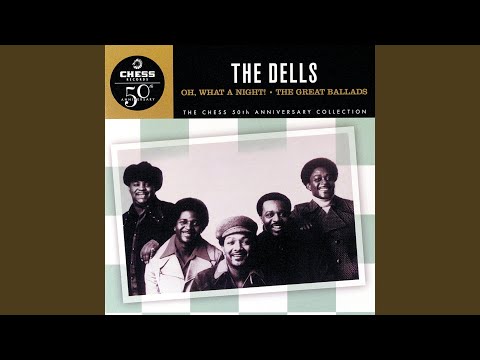


→ More from the 1960s File
View all 1960s hits →




Keep digging