The 1960s File Feature
Oh, What A Night
Oh, What A Night — The Dells: From Doo-Wop to Soul, the Story of a Song Recorded Twice Note on disambiguation: This entry concerns "Oh, What A Night" by The …
01 The Story
Oh, What A Night — The Dells: From Doo-Wop to Soul, the Story of a Song Recorded Twice
Note on disambiguation: This entry concerns "Oh, What A Night" by The Dells, a Chicago vocal group who first recorded the song in 1956 as a doo-wop ballad and re-recorded it in 1969 in an entirely transformed soul arrangement. It is a separate and distinct composition from "December, 1963 (Oh, What a Night)" by The Four Seasons, which was released in 1975 and tells a different story in a different style.
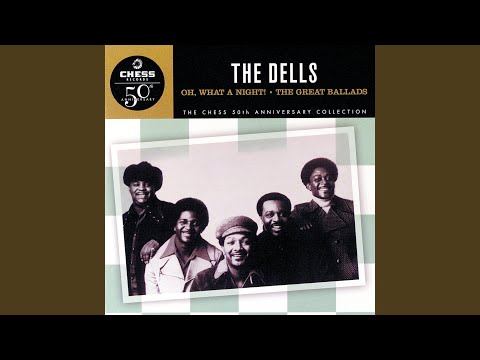
The Dells formed in Harvey, Illinois in the early 1950s, originally called The El-Rays before settling on their definitive name. The original lineup included Marvin Junior, Johnny Funches, Verne Allison, Mickey McGill, and Johnny Carter, and the group signed to Checker Records, a subsidiary of Chess. Their first significant recording, the 1956 version of "Oh, What A Night," was a quintessential doo-wop track built around close harmonies, a conversational lead vocal from Marvin Junior, and the kind of teenage romantic sentiment that defined the genre. The original 1956 recording reached number 4 on the Billboard R&B chart, a strong performance that established the group within the doo-wop universe but did not yet translate to substantial crossover success.
The group's trajectory through the late 1950s and early 1960s was difficult. A serious automobile accident in 1958 injured several members and effectively halted the group's momentum. Personnel changes followed, and the group spent much of the early 1960s rebuilding. Johnny Funches departed and was eventually replaced by Johnny Carter, who had briefly been a member earlier. The reconstituted Dells signed with Cadet Records, the progressive soul subsidiary of Chess, and began working with producer Charles Stepney and arranger Wade Flemons.
The decision to revisit "Oh, What A Night" in 1969 represented a remarkable artistic gamble. The song was thirteen years old by that point, identified in listeners' memories with a dead genre. What the new version did was strip away virtually everything from the original except the basic melodic outline and the title, then rebuild the song from the ground up in a lush, sophisticated soul production that bore the unmistakable fingerprints of producer Charles Stepney, one of the most innovative arrangers working in Chicago during that period. Stepney's orchestrations were dense and cinematic, with string lines that moved against the rhythm rather than simply doubling it.
The new version also solved a vocal equation that the original could not have. By 1969, the Dells had the extraordinary contrast of Marvin Junior's rough, urgent baritone and Johnny Carter's pure, soaring falsetto. The interplay between these two voices, trading lines and completing each other's phrases, gave the re-recording a dramatic tension the doo-wop original had never possessed. Junior's grit against Carter's sweetness created a kind of internal dialogue within the song's romantic narrative.
Released on Cadet Records in 1969, the re-recording of "Oh, What A Night" reached number 10 on the Billboard Hot 100 and performed even more powerfully on the R&B chart, where it became a top-five record. The chart success confirmed that the group's reinvention was genuine, not a novelty. They had taken a piece of their own past and made it contemporary through sheer craft.
The recording arrived during a particularly fertile period for The Dells on Cadet. Their 1968 collaboration with Stepney on the album "There Is" had already established the template for this more orchestrated, emotionally complex approach to soul. That album contained another version of a Dells classic, "Stay in My Corner," which had undergone a similar transformative re-recording. The Dells were essentially demonstrating, across multiple tracks, that their earlier catalog could be reimagined as a more dramatically intense and musically sophisticated body of work.
Chess Records and its subsidiary labels were themselves in a period of creative evolution in the late 1960s. The Chess brothers had sold the label to GRT Corporation in 1969, and the transitional period brought some instability. Nevertheless, Cadet's work with the Dells during this era represented some of the label's finest achievements. The Dells would chart again in 1969 with "Oh, What A Night" peaking inside the top 10 of multiple chart configurations and earning the group renewed radio airplay that had not been available to them since their earliest recordings.
In later years, the group continued performing and recording, and "Oh, What A Night" became the cornerstone of their live set, performed in its 1969 soul arrangement rather than the original doo-wop version. The song had completed the journey from teenage doo-wop artifact to mature soul statement, and in doing so had given The Dells one of the most unusual dual-identity records in the history of American popular music.
02 Song Meaning
Oh, What A Night — The Dells: Meaning, Transformation, and Emotional Register
The meaning of "Oh, What A Night" by The Dells operates on at least two distinct levels, one that belongs to the song's lyrical content and one that belongs to the song's biography. Both reward close attention, and the second cannot be fully separated from the first.
At the level of its lyrical content, the song is a memory piece. Its central perspective is retrospective, looking back on a romantic encounter with an intensity of feeling that has not diminished with time. The narrator recalls a specific night as an experience so vivid and overwhelming that ordinary language feels inadequate to contain it. The exclamatory title phrase functions as the verbal equivalent of a sharp intake of breath, as the moment when feeling overcomes the capacity for description and the speaker can only invoke rather than explain.
This retrospective stance is emotionally significant. The song is not about a current romance but about the permanence of a past experience in the emotional memory of the narrator. It argues that certain moments of human connection are not merely pleasant but constitutive, that they shape the person who experiences them in lasting ways. The remembered night is not just a good memory but a defining one.
The 1969 re-recording transforms the emotional register of this lyrical content quite dramatically. The original 1956 doo-wop version was sweet and light, the memory it invoked belonging to the uncomplicated romantic universe of teenage experience. Charles Stepney's 1969 arrangement, with its dense orchestration and the interplay between Marvin Junior's weathered baritone and Johnny Carter's ethereal falsetto, adds layers of longing, complexity, and even a hint of grief that the original did not carry. The same words, placed in this new musical context, describe what feels like the memory of a more adult and perhaps irrecoverable experience.
The vocal contrast between Junior and Carter is central to how the 1969 version generates meaning. Junior's voice carries the roughness of lived experience, the part of memory that aches. Carter's falsetto reaches for something purer and more elevated, the idealized quality of the recollection. Together they enact the psychological reality of nostalgic memory, which is always divided between the warmth of what was felt and the pain of what has been lost to time.
Within The Dells' catalog, the re-recording of "Oh, What A Night" occupies a position of unusual significance because it directly engages with the group's own history. By returning to a song from their doo-wop past and reimagining it through the lens of their mature soul sound, The Dells were making an implicit argument about artistic growth and the relationship between past and present selves. The exercise was not nostalgic in any simple sense. It was revisionist, a correction of the historical record that claimed more depth for an earlier moment by hearing it differently from the vantage point of greater experience.
The song's theme of a defining memory thus resonated outward into the group's own biography. The Dells had endured the near-dissolution of their career, a serious accident, personnel changes, and years of commercial struggle before arriving at the creative partnership with Charles Stepney that made this re-recording possible. Their own relationship to their 1956 original was exactly the kind of complex retrospective engagement the song describes: recognition of something valuable in the past, sharpened by everything that had intervened.
Producer Charles Stepney's contribution to the meaning of the re-recording cannot be overstated. His arrangements gave the Dells recordings of this period a gravity and emotional weight that placed them in dialogue with the more experimental currents of late-1960s soul, including the work being done at Motown and Stax, while remaining distinctively rooted in the Chicago tradition. The orchestral sweep he brought to "Oh, What A Night" invited listeners to hear a simple story of remembered romance as something closer to an aria.
The song's endurance in The Dells' performing repertoire, and its continued place in compilations of 1960s soul, testifies to how successfully the 1969 re-recording displaced the original in collective memory. Most listeners who know the song know only the soul version. In that sense, the re-recording completed a process of artistic reinvention that the song itself, with its theme of memory transforming experience, had anticipated.
→ More from The Dells
View all The Dells hits →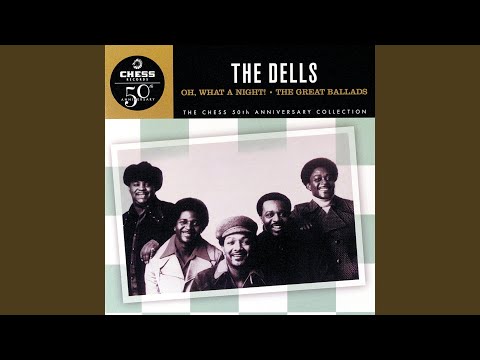



→ More from the 1960s File
View all 1960s hits →




Keep digging