The 1970s File Feature
If Loving You Is Wrong I Don't Want To Be Right
If Loving You Is Wrong (I Don't Want to Be Right) — Millie Jackson (1975) Note: This entry concerns Millie Jackson's 1975 recording of "If Loving You Is Wron…
01 The Story
If Loving You Is Wrong (I Don't Want to Be Right) — Millie Jackson (1975)
Note: This entry concerns Millie Jackson's 1975 recording of "If Loving You Is Wrong (I Don't Want to Be Right)" on Spring Records. The song was originally a major hit for Luther Ingram in 1972; Millie Jackson's version, recorded three years later, is the subject of this entry and represents a distinct artistic achievement within her own catalog.
"If Loving You Is Wrong (I Don't Want to Be Right)" was written by Homer Banks, Carl Hampton, and Raymond Jackson and had entered the cultural mainstream with Luther Ingram's 1972 recording, which had reached the top five of the Billboard Hot 100 and spent an extended period at number 1 on the R&B chart. The song's subject matter, an extramarital affair narrated with full emotional honesty and a conspicuous absence of moral redemption, was provocative for mainstream pop radio but deeply resonant with soul and R&B audiences who recognized the emotional complexity it was willing to address.
Millie Jackson's relationship with the song when she recorded it in 1975 for Spring Records was shaped by her established reputation as a performer who refused to sentimentalize or simplify difficult emotional material. Jackson had built her career on a specifically uncompromising engagement with adult sexuality and relationship complexity, and her stage performances were known for extended spoken-word passages that addressed the emotional realities of love, desire, betrayal, and survival with a frankness that was genuinely unusual in mainstream soul performance of the era.
Her 1974 album Caught Up had been the major artistic and commercial document of this approach, presenting a conceptual narrative told from the perspective of both the wife and the mistress in an extramarital affair. The album was a significant commercial and critical success, reaching the top 20 of the Billboard 200 and generating sustained R&B chart presence. The album established Jackson as one of the most distinctive voices in 1970s soul music and created the context within which her 1975 recordings were received.
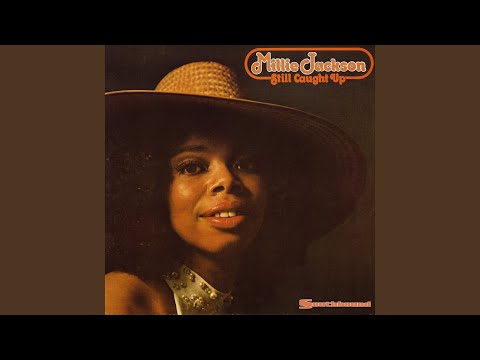
Jackson's recording of "If Loving You Is Wrong" came on her 1975 album Still Caught Up, which continued the conceptual and thematic territory of its predecessor. Where Luther Ingram's version had been a relatively straightforward soul ballad delivery of the lyric, Jackson's approach integrated her signature spoken-word passages, turning the song into a kind of dramatic monologue as much as a conventional vocal performance. This approach made the song feel less like a pop artifact and more like a theatrical performance, an extended confession or plea that gave the listener the sense of overhearing a genuine emotional crisis.
The production on Jackson's recording reflected the southern soul aesthetic that Spring Records favored, with Brad Shapiro and Dave Crawford handling production duties for much of her catalog in this period. The arrangement centered the emotional performance rather than competing with it, providing a lush but supportive backdrop that gave Jackson's voice and her extended spoken passages room to breathe and develop their dramatic impact. This production philosophy was consistent across the Caught Up era recordings and was central to their effectiveness.
The chart performance of Jackson's version built on the audience she had developed through Caught Up and her extensive touring. While the Ingram original had been the defining commercial moment for the song on mainstream charts, Jackson's version found a devoted R&B audience that responded to her more theatrical and emotionally uncompromising interpretation. Her version has, in some critical assessments, been considered equal to or more artistically significant than the Ingram original, precisely because it so thoroughly reshapes the material around Jackson's specific artistic gifts rather than simply reprising the original's approach.
Millie Jackson's standing in the history of 1970s soul music has grown considerably with retrospective critical attention. Contemporary assessments recognize her as a forerunner of the explicit emotional directness that would characterize much of the most influential Black popular music of subsequent decades, including the work of artists who have cited her as an influence. Her willingness to address adultery, desire, and moral ambiguity without the flinching and hedging that characterized most mainstream pop represented a genuine artistic courage that distinguished her catalog from most of what her contemporaries were producing.
"If Loving You Is Wrong" in Jackson's hands became a signature performance, one of the tracks most closely associated with her artistic identity even though she had not written it. The Millie Jackson version of the song circulated through the mid-1970s R&B market as a document of adult emotional experience treated with the full seriousness it deserved, and it remains one of the most compelling recordings of her career.
02 Song Meaning
Meaning and Themes in "If Loving You Is Wrong (I Don't Want to Be Right)" — Millie Jackson
"If Loving You Is Wrong (I Don't Want to Be Right)" is a song that takes seriously the emotional reality of a situation that most popular music of its era would either refuse to engage with or would frame in terms of guilt, redemption, and moral resolution. The narrator is involved in an extramarital affair and is fully aware that what she is doing is, by conventional social standards, wrong. The radical gesture of the song, present in its original Homer Banks, Carl Hampton, and Raymond Jackson composition but amplified enormously by Millie Jackson's performance, is the refusal to apologize or to perform the expected contrition.
The song's title encapsulates its entire emotional argument. By declaring that she does not want to be right if being right means giving up this love, the narrator makes a values hierarchy explicit: personal emotional fulfillment and genuine passionate connection are placed above social convention, marital institution, and community judgment. This is not a comfortable or easily defensible position, and the song does not try to make it comfortable. The emotional power of the recording comes precisely from the narrator's willingness to sit inside the discomfort and refuse to move.
Millie Jackson's specific contribution to this material went beyond singing the song as written. Her performance, extended through spoken-word passages in which the narrator directly addresses both the married man she loves and her own conflicted conscience, transformed the material into something closer to dramatic monologue than conventional pop vocal performance. Jackson gave voice to a character who was thinking out loud, working through contradictions in real time rather than presenting a polished statement of position. This quality of performed interiority was Jackson's signature contribution to soul music of the 1970s.
The song also participates in a specifically female tradition within soul music of refusing to perform victimhood or moral rectitude in the face of complicated desire. Where much popular music about extramarital affairs, when it engaged female perspectives at all, cast the woman as either the betrayed wife deserving sympathy or the scheming other woman deserving condemnation, Jackson's narrator occupied neither position comfortably. She was a full human being experiencing genuine love in circumstances that society had not organized to accommodate that love, and the song's meaning was inseparable from its refusal to reduce her to a moral category.
The relationship between Jackson's version and Luther Ingram's 1972 original is worth examining as part of the song's meaning. Ingram's version presented a male narrator in the same situation, and its emotional content was fully serious and sympathetic. But Jackson's female-narrated version carried additional cultural weight because women's sexuality and women's moral choices in matters of romantic and sexual desire were subject to more severe social policing than men's. A woman declaring that she does not want to be right was a more provocative act than a man making the same declaration, and Jackson understood this and leaned into it.
The Caught Up and Still Caught Up conceptual albums within which Jackson's version of the song existed gave it an extended context that enriched its meaning considerably. The albums had established a narrative framework in which the perspectives of both the wife and the mistress were given full dramatic exploration, without either being unambiguously condemned or vindicated. "If Loving You Is Wrong" within this framework became part of a sustained inquiry into female experience, desire, and moral complexity that was genuinely unprecedented in mainstream soul music and that has since been recognized as a foundational contribution to the tradition of unflinching emotional honesty in Black popular music.
→ More from Millie Jackson
View all Millie Jackson hits →
→ More from the 1970s File
View all 1970s hits →




Keep digging