The 1970s File Feature
Ask Me What You Want
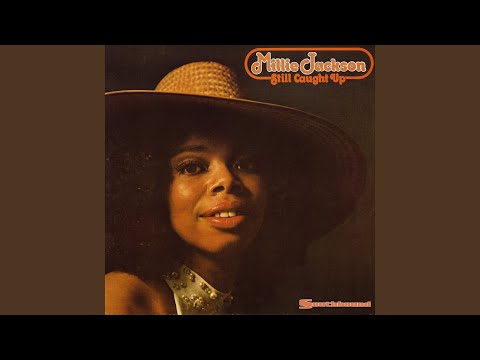
"Ask Me What You Want" — Millie Jackson's Breakthrough Moment in 1972 The Raw Voice Arriving on Spring Radio Spring of 1972 was a moment of considerable ferm…
01 The Story
"Ask Me What You Want" — Millie Jackson's Breakthrough Moment in 1972
The Raw Voice Arriving on Spring Radio
Spring of 1972 was a moment of considerable ferment in American R&B. The genre was diversifying rapidly, pulling in multiple directions at once: the orchestral sweep of Philadelphia soul was rising on the East Coast, Marvin Gaye and Stevie Wonder were deepening the artistic ambitions of their Motown output, and a cohort of Southern soul singers were pushing against the boundaries of what was considered acceptable subject matter for mainstream pop radio. Into this environment stepped Millie Jackson, a young artist from Thomson, Georgia, who had been working the club circuit for years and who possessed a vocal directness that set her apart immediately.
"Ask Me What You Want" debuted on the Billboard Hot 100 on March 25, 1972, entering at number 99. What followed was a climb that demonstrated the loyalty of Jackson's early fanbase and the genuine commercial appeal of what she was offering. By late April the single had climbed to number 56; by late May it had broken into the top 30; and on June 10, 1972, it reached its peak position of number 27 on the Hot 100. The track spent 14 weeks on the chart, a substantial run that marked Jackson as a significant new presence in R&B.
A New Kind of Soul Directness
What distinguished Jackson from many of her contemporaries was a quality that resists polite description: she sang about adult subjects as though they required no apology or euphemism. While the broader pop and soul landscape of the early 1970s was certainly not innocent, much of what reached mainstream radio still operated within conventions about how directly desire and its complications could be addressed in a song. Jackson felt no particular obligation to those conventions.
"Ask Me What You Want" positioned Jackson as a woman speaking directly and without self-consciousness about her own desires. The title itself was an assertion of agency: the singer was not waiting to be approached on someone else's terms but was extending an invitation on her own. This framing was genuinely distinctive in early-1970s R&B, where songs from a female perspective were often more passive or more mournful than what Jackson was delivering.
The Production Context
Jackson's early recordings were made in an R&B production environment that prioritized the vocal above the arrangement, allowing her voice's distinctive qualities to carry the weight of the material. The production on "Ask Me What You Want" gave her voice sufficient space without stripping away the rhythmic foundation that kept the track functional on dance floors and in clubs, which remained important commercial contexts for R&B singles in this period.
The track's success owed less to production innovation than to Jackson herself. Her voice combined technical capability with a quality of abandon, a willingness to push the sound into registers that felt slightly dangerous, that made her recordings immediately identifiable. That vocal identity was present from her earliest recordings and would become increasingly central to her artistic identity as her career developed.
The Beginning of a Long Career
"Ask Me What You Want" was Millie Jackson's first significant pop crossover moment, but it was far from her last. Through the 1970s and into the 1980s, she would build a catalog that became increasingly explicit in its subject matter, developing a persona that made her one of the most distinctive artists in R&B. Her later work, particularly on albums that blended music with spoken-word monologues addressing the complications of romantic relationships, found a devoted audience that appreciated her willingness to say what many artists avoided.
The 1972 Hot 100 success was the foundation on which all of that later work was built. It demonstrated that there was an audience for the kind of direct, unashamed female perspective on desire and relationships that Jackson was prepared to provide, and it gave her the commercial traction to continue making records that pushed further in that direction.
Positioning in Early 1970s Soul
Looking at the spring 1972 R&B landscape as a whole, Jackson's breakthrough placed her in a group of artists who were collectively expanding the genre's thematic territory. The early 1970s saw the beginning of a sustained push toward more adult subject matter across R&B and soul, and Jackson was at the leading edge of that movement from the very beginning.
For listeners returning to this record today, it is striking how fully formed Jackson sounds on her first major pop hit. The voice, the attitude, the refusal to hedge, these qualities were present from the start. Turn up "Ask Me What You Want" and hear an artist arriving fully confident in what she had to offer.
"Ask Me What You Want" — Millie Jackson's singular moment on the 1970s charts.
02 Song Meaning
The Meaning Behind "Ask Me What You Want" by Millie Jackson
Female Desire on Its Own Terms
Popular music in the early 1970s was not short of songs about love and desire. What was considerably rarer was a song in which a woman articulated her own desires clearly, without framing them in the context of what a man wanted, needed, or approved of. Millie Jackson's "Ask Me What You Want" was that kind of song: a direct expression of a woman's sense of her own agency in romantic and physical situations, delivered without apology or circumlocution.
The title itself is an invitation that places the speaker in control. The question being posed is not "what do you want from me" in the passive sense of awaiting an assignment; it is a genuine offer, made from a position of confidence. The singer is asserting that she has something worth wanting, and she is extending permission for the asking. This framing reversed the conventional dynamic of many popular songs of the era, in which women's desires were typically expressed reactively, in response to male pursuit or rejection.
Soul Music and the Politics of Directness
The Southern soul tradition from which Millie Jackson emerged had always been somewhat more direct about adult subject matter than mainstream pop allowed. Artists in that tradition had navigated censorship and radio restrictions throughout the 1950s and 1960s, finding ways to communicate content that the format gatekeepers might prefer to restrict. By the early 1970s, those restrictions were loosening, and artists across R&B and soul were pushing into territory that would have been commercially impossible a decade earlier.
Jackson's particular contribution was to bring this directness to a specifically female perspective. She was not the first woman to do so, but she was among the most committed and the most comfortable in this territory. The willingness to be explicit about desire from a woman's point of view was a form of cultural statement whether or not it was consciously framed as such, and it resonated with a female audience that recognized the experience being described as their own.
The Broader Cultural Moment
1972 was a pivotal year in American conversations about gender and sexuality. Second-wave feminism was at a high point of cultural visibility; the women's liberation movement was reshaping expectations across professional, domestic, and intimate spheres. The idea that women had the same range of desires, appetites, and entitlements to self-expression as men was being articulated loudly in books, magazines, and public demonstrations.
A pop song that enacted this idea in its own modest way, that positioned a woman's desire as the active, driving force of the narrative, was participating in this broader cultural conversation whether or not its listeners or its creator thought of it in those terms. Popular music often reflects and reinforces cultural shifts without consciously advocating for them; the appeal of "Ask Me What You Want" to its R&B audience was likely felt as personal and emotional rather than political, even as it was both.
Legacy in Jackson's Career
The record proved to be the beginning of an artistic identity that Jackson would develop with increasing boldness over the following decades. Her subsequent albums moved steadily toward more explicit content and more confrontational subject matter, building on the foundation established by her early singles. The directness that had made "Ask Me What You Want" distinctive became, in her later career, one of the defining qualities of a unique artistic voice.
Returning to this first major hit offers a glimpse of that identity in its early form, already recognizable but not yet fully extended. The values that would make Jackson a cult figure in the world of explicit R&B were already present in 1972. The song resonated because it was true to something real about human experience, and it communicated that truth without flinching.
"Ask Me What You Want" — Millie Jackson's singular moment on the 1970s charts.
→ More from Millie Jackson
View all Millie Jackson hits →
→ More from the 1970s File
View all 1970s hits →




Keep digging