The 1970s File Feature
Walk In The Night
Walk In The Night — Jr. Walker The All Stars The Saxophone That Never Stopped Walking There was a time in the late 1960s and early 1970s when Jr. Walker's sa…
01 The Story
Walk In The Night — Jr. Walker & The All Stars
The Saxophone That Never Stopped Walking
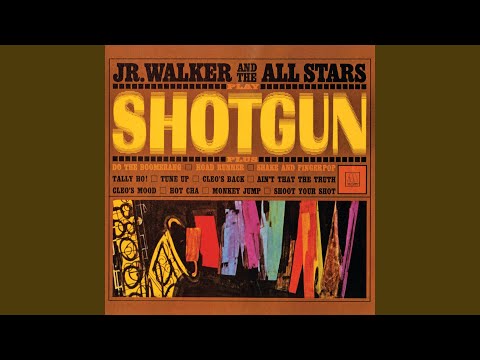
There was a time in the late 1960s and early 1970s when Jr. Walker's saxophone was one of the most identifiable sounds in American popular music. The raw, honking tenor that had driven "Shotgun" to number four on the Hot 100 in 1965 had made him a genuine star in the Motown stable, and Walker had spent the intervening years maintaining a steady presence on the charts with a style that resisted easy categorization. He was too rough for easy pop, too melodic for pure funk, too rooted in R&B tradition to be assimilated into the rock-influenced soul that was taking over Black radio. Walk In The Night, released in 1972, found Walker doing what he always did best: turning a mood into a groove.
The song came at a pivotal moment for both the artist and his label. Motown had relocated from Detroit to Los Angeles in 1972, a move that disrupted the company's operations and creative ecosystem in ways that would take years to fully resolve. Jr. Walker and The All Stars remained signed to the Motown subsidiary Soul Records, but the infrastructure around them was in flux, and the kind of institutional support that had produced their earlier hits was being reorganized.
The Sound of the Track
Walk In The Night is built around a sinuous melodic line that Walker's saxophone traces with characteristic directness. The production has the slightly denser, bass-forward quality that early 1970s soul was adopting as funk's influence permeated the genre. There is a nighttime quality to the track that its title announces and its arrangement delivers: the tempo is mid-range, the groove deliberate, the saxophone leading through the sonic landscape the way a lone figure moves through a darkened street, purposeful but alert.
Walker's saxophone technique, which had always prioritized feeling over technical display, is particularly well-suited to this kind of material. He was not a bebop player given to harmonic complexity; he was a communicator whose instrument conveyed emotion with the directness of a human voice. Walk In The Night plays to that strength, giving him a melodic framework spacious enough to inhabit fully.
The Chart Journey
The single debuted on the Billboard Hot 100 on April 1, 1972, entering at position 86. It climbed through April with steady consistency: 81, then 79, then 70, then 57 as radio play continued building. The song peaked at number 46 on June 3, 1972, spending a total of 12 weeks on the chart. The performance on the R&B chart was considerably stronger, as had typically been the case for Walker's releases throughout his Motown tenure. His core audience was never primarily the mainstream pop audience, though his chart crossovers were genuine and not merely incidental.
Twelve weeks on the Hot 100 was a solid commercial showing for an instrumental-led track in 1972, a year when vocals dominated the chart and instrumental performances faced structural disadvantages in the radio format ecosystem. Walker's name recognition from his earlier Motown successes gave him a degree of promotional support that less established artists with similar material might not have received.
Jr. Walker's Motown Legacy
Jr. Walker and The All Stars were among the most unusual acts in the Motown roster, in the sense that their commercial identity was built around instrumental saxophone rather than the vocal harmonies and orchestrated pop that defined the label's mainstream output. Harvey Fuqua and Johnny Bristol produced much of Walker's classic 1960s Motown work, and the transition to the 1970s brought changes in the production team as well as the broader label environment.
Walker's durability through this period speaks to the strength of his connection with his audience. He was not chasing trends; he was playing the music he had always played and finding that enough listeners continued to respond to make the chart appearances possible. Walk In The Night is a good example of this consistency: not revolutionary, not commercially massive, but genuine and accomplished on its own terms.
The Enduring Appeal of Walker's Sound
Decades after its chart run, Walk In The Night continues to find listeners through compilation albums, streaming playlists, and the ongoing appreciation for early 1970s soul among collectors and new audiences. The track's atmospheric quality gives it a timelessness that some of its more specifically produced contemporaries have not maintained as well. A saxophone and a groove speak across eras in ways that more period-specific production choices sometimes do not.
Put it on after dark and let the saxophone lead the way.
"Walk In The Night" — Jr. Walker & The All Stars' singular moment on the 1970s charts.
02 Song Meaning
Walk In The Night — Jr. Walker & The All Stars: Meaning and Legacy
The Night as Sonic Setting
In the tradition of African American popular music, the night has always been a complex setting: a space of freedom, of danger, of romance, of possibility unavailable during daylight hours. Walk In The Night draws on this rich tradition, using the night as both a literal setting and an emotional atmosphere. The track does not tell a narrative story in the conventional sense; it creates and sustains a mood, and that mood is distinctly nocturnal, the particular feeling of moving through a world that has relaxed some of its daytime constraints.
Jr. Walker's saxophone is the primary vehicle for this meaning-making. The instrument has its own long association with the night, with jazz clubs, with the intimate spaces where American music history was made after hours. Walker was working in that tradition whether consciously or not, and the track carries the weight of that association even for listeners who could not articulate its sources.
Instrumental Music and Emotional Communication
One of the interesting questions raised by Walk In The Night is what it means to communicate through a purely instrumental track in the context of popular music. The song has no lyrics, no narrative, no explicit emotional statement. Everything it communicates is conveyed through melody, rhythm, and the tonal character of Walker's saxophone playing. This places considerable responsibility on the instrument and the player to do the work that words would otherwise handle.
Walker meets that responsibility through the expressiveness of his technique. The way he bends notes, the roughness he introduces at moments of emphasis, the breath and space in his phrasing: these are all communicative gestures that translate into emotional experience for the listener even in the absence of words. This is what distinguishes a great instrumental performance from mere technical display.
The R&B Tradition and Broader Context
In 1972, Black popular music was navigating one of its most productive and contested periods. The influence of funk was reshaping the rhythmic foundation of soul, while artists like Marvin Gaye and Curtis Mayfield were expanding the thematic range of what Black pop could address. Jr. Walker occupied a different part of this landscape: his music was rooted in an earlier R&B tradition, one that valued feeling over complexity and directness over elaboration.
Walk In The Night represents that tradition with confidence. It does not attempt to compete with the conceptual ambitions of Gaye's What's Going On or the political urgency of Mayfield's work; it simply delivers the pleasure of a well-made groove led by an expressive horn, which is its own legitimate contribution to the musical landscape of the moment.
Why Instrumental Soul Still Matters
The legacy of tracks like Walk In The Night runs through decades of subsequent music. The combination of a saxophone-led melody over a funk-influenced groove influenced the smooth jazz genre that emerged in the late 1970s and 1980s, various forms of electronic music that sampled from this tradition, and the ongoing appreciation for what is sometimes called "classic soul" among listeners who discovered it long after its original moment.
Walker's contribution to this lineage is understated but genuine. He demonstrated across his Motown career that an instrument could carry a whole track, that you did not need a spectacular vocalist to reach a mainstream audience if your saxophone could do the communicating. That demonstration opened space for subsequent artists working in purely instrumental modes, and Walk In The Night is one of the clearer examples of what that communication could achieve.
→ More from Jr. Walker & The All Stars
View all Jr. Walker & The All Stars hits →



→ More from the 1970s File
View all 1970s hits →




Keep digging