The 1970s File Feature
Gotta Hold On To This Feeling
"Gotta Hold On To This Feeling" — Jr. Walker and the Sound of Motown Unfiltered The Saxophone That Cut Through Everything In the spring of 1970, Motown was a…
01 The Story
"Gotta Hold On To This Feeling" — Jr. Walker and the Sound of Motown Unfiltered
The Saxophone That Cut Through Everything
In the spring of 1970, Motown was at a crossroads. The label had spent the 1960s constructing a machine of melodic precision and production gloss, turning out hit after hit with a consistency that remade American popular music. As the new decade arrived, the cultural landscape was shifting: soul was getting grittier, funk was starting to assert itself, and listeners were showing appetite for something less polished and more immediate. Jr. Walker and the All Stars had always represented Motown's rawer edge, a band whose recordings carried the rough, live-performance energy that the label's more refined productions sometimes submerged. Gotta Hold On To This Feeling arrived in February 1970 with exactly that kind of energy.
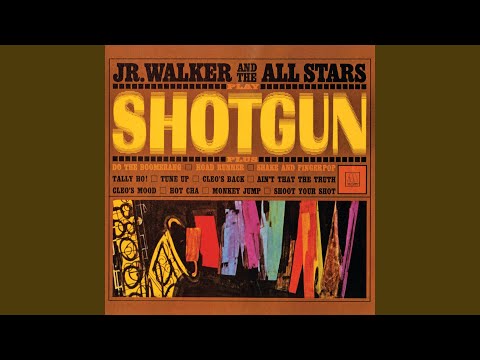
Jr. Walker, born Autry DeWalt II, had been one of Motown's more distinctive presences since his 1965 breakthrough with Shotgun. Where most Motown artists worked within the label's highly controlled production framework, Walker's recordings retained a looseness and a grit that connected them to earlier R&B and to the raw soul that was thriving in Memphis and elsewhere. His saxophone, which he played with muscular abandon, was the instrumental signature of his recording identity, placing him in a tradition of honking, testifying reed players that stretched back to the origins of rhythm and blues.
A Record Built on Urgency
Gotta Hold On To This Feeling carried its emotional imperative in its title. The lyric addressed the need to grasp and preserve a feeling of rightness, of romantic completeness, before it slipped away. This was a theme with obvious emotional logic: the awareness that good feelings are temporary, that attention and effort are required to sustain them, and that the failure to act is itself a kind of loss. Walker's vocal delivery, rough-edged and urgent, made the imperative feel genuine rather than theoretical.
The production on the track balanced Motown's characteristic instrumental cleanliness with the looser, more expressive character of Walker's performing style. The arrangement gave his saxophone room to assert itself while keeping the rhythmic foundation tight and radio-friendly. This balance was the key to his crossover success, making music that felt raw without sacrificing accessibility.
The Billboard Hot 100 Performance
The track debuted on the Billboard Hot 100 on February 21, 1970, entering at number 64 before leaping to 31 in its second week. That jump reflected strong radio traction and confirmed that the record was connecting broadly. The climb continued through the 20s before the song peaked at number 21 on March 28, 1970, spending a total of 10 weeks on the Hot 100.
A peak of number 21 on the Hot 100 was a genuine commercial achievement for a recording in this stylistic lane, confirming that Walker's music was crossing genre lines and finding listeners who might not have identified primarily as soul or R&B consumers. The 10-week chart run supported the peak, indicating that the record was sustaining its audience rather than flaring and fading.
Walker's Place in the Motown Catalog
Jr. Walker and the All Stars occupied a specific and somewhat unusual position within Motown's roster. The label's production philosophy prioritized a smooth, sophisticated sound that appealed to the broadest possible audience; Walker's recordings were rougher, bluesier, and more firmly rooted in pre-crossover R&B. His consistent Hot 100 success demonstrated that Motown's audience had room for his approach, that listeners wanted both the polished pop-soul of the Supremes and the gritty saxophone funk of Walker without needing to choose between them.
His career from the mid-1960s through the early 1970s produced a remarkable string of crossover successes, of which Gotta Hold On To This Feeling was a significant part. Each entry added to a body of work that established him as one of Motown's most enduring recording artists.
The Lasting Appeal of Urgency
What makes this recording compelling across time is the urgency of its performance. Walker sang and played as though the feeling described in the lyric was genuinely at risk of slipping away, and that urgency communicates directly even to listeners who encounter the recording decades after its release. The saxophone, in particular, carries the emotional charge that the lyric asks for: insistent, warm, and slightly desperate in the best possible sense.
Press play and that urgency reaches across fifty years without diminishment. Walker understood that music could embody the feeling it described, and on this record he achieved exactly that alignment. You cannot listen to this song passively.
"Gotta Hold On To This Feeling" — Jr. Walker and the All Stars' singular moment on the 1970s charts.
02 Song Meaning
The Meaning Behind "Gotta Hold On To This Feeling" by Jr. Walker and the All Stars
The Anxiety of Good Things
There is a particular kind of happiness that carries its own anxiety inside it. When something feels right, when a relationship or a moment achieves the quality of completeness that we most desire, the awareness of its potential loss arrives almost simultaneously with the joy itself. Gotta Hold On To This Feeling is a song about exactly that doubling: the urgency to grasp and preserve something wonderful precisely because wonderful things are fragile. Walker's lyric gave voice to an emotional truth that listeners recognized immediately, the knowledge that feelings worth keeping require active effort to keep.
In 1970, this emotional logic carried additional resonance. The late 1960s had offered moments of collective possibility, of social transformation and cultural openness, that were already visibly contracting by the time the decade turned. The imperative to hold on, to preserve what was good, spoke to both personal and broadly social dimensions simultaneously.
Soul Music's Relationship to Feeling
The word "feeling" in soul music has a specific weight that goes beyond its dictionary meaning. In the tradition from which Walker emerged, feeling was both the subject and the method of the music: you made it with feeling, and you made the listener feel it. Soul's entire project was the transmission of feeling from performer to audience, the creation of a shared emotional state through the combination of voice, rhythm, and instrumental expression.
A song that made "feeling" its explicit subject was thus doing something self-referential in a productive way. Walker was singing about the importance of holding onto feeling while simultaneously using feeling as his primary creative instrument. The medium and the message reinforced each other, which gave the song a unity that less self-aware recordings lack.
The Saxophone as Emotional Voice
Junior Walker was primarily known as a saxophonist before he was known as a vocalist, and his instrumental approach informed his singing deeply. Both his playing and his vocal style prioritized expressiveness over technical perfection, communicating emotional states through the texture and energy of the sound rather than through precisely controlled intonation. The saxophone in soul and R&B carries associations with emotional directness, with the kind of unmediated feeling that polished orchestration sometimes filters out.
On recordings where Walker played his saxophone prominently, that instrument served as a second voice, amplifying and extending the emotional content of the lyric. Even when the saxophone was in a supporting role rather than a featured one, its presence colored the overall sound with an urgency and warmth that listeners associated with genuine emotion rather than commercial calculation.
The Universal Imperative
What gives this song its lasting appeal is the universality of its central command. "Gotta hold on" is advice that applies to nearly any good thing in a human life: a relationship, a friendship, a feeling of peace or purpose or clarity. The specific romantic context of the lyric opened outward into a broader philosophy of attentiveness, the idea that the good things in life require our active participation to sustain them.
Walker's delivery communicated this with the kind of conviction that made the listener want to take the advice, not just enjoy the song. The urgency in his voice was not performed anguish but something that sounded earned, the conviction of someone who understood from experience what the cost of not holding on might be. That earned quality is what separates lasting soul recordings from those that merely imitate the form.
→ More from Jr. Walker & The All Stars
View all Jr. Walker & The All Stars hits →



→ More from the 1970s File
View all 1970s hits →




Keep digging