The 1960s File Feature
These Eyes
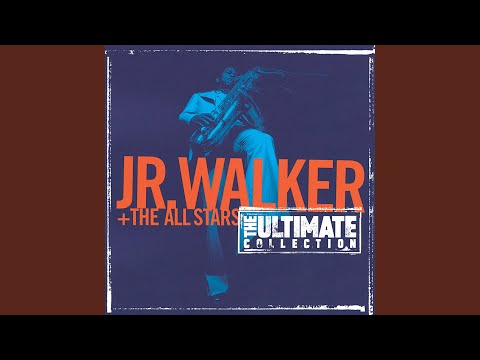
These Eyes — Jr. Walker & The All Stars (1969) Note: This entry addresses "These Eyes" as recorded by Jr. Walker & The All Stars on Soul/Motown in 1969. The …
01 The Story
These Eyes — Jr. Walker & The All Stars (1969)
Note: This entry addresses "These Eyes" as recorded by Jr. Walker & The All Stars on Soul/Motown in 1969. The song was originally written and recorded by The Guess Who, a Canadian rock band, and became a hit for them in the same year. Jr. Walker's version is an entirely separate recording, a soul cover that brought the song to a Motown audience and earned its own significant chart success.
Jr. Walker & The All Stars occupied a distinctive position within the Motown Records constellation. While most Motown acts were carefully groomed, choreographed, and polished under Berry Gordy's "hit factory" methodology, Jr. Walker's ensemble was rawer, funkier, and more rooted in the earthy R&B tradition than most of the label's flagship artists. Junior Walker (born Autry DeWalt Mixon Jr.) was primarily a saxophone player of tremendous power and expressiveness, and his recordings for the label typically featured his tenor sax as prominently as his vocal work, creating a sound that was simultaneously more roots-oriented and more instrumentally adventurous than what Motown's primary acts were releasing.
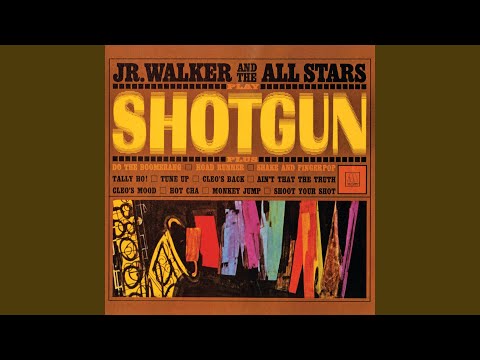
The band had established their reputation with "Shotgun" in 1965, a driving, aggressive track whose raw energy was striking coming from a label that prided itself on sophisticated production and crossover appeal. "Shotgun" reached number four on the Billboard Hot 100 and became one of the defining tracks of Motown's mid-1960s catalog, demonstrating that the label's audience was responsive to material with harder edges than the Supremes or the Four Tops were delivering. Walker's honking saxophone was the sound of an older R&B tradition being channeled into the pop mainstream without losing its essential character.
By 1969, Walker and the All Stars had maintained a consistent presence on the R&B and pop charts through a series of recordings that balanced his instrumental prowess with vocal tracks aimed at the pop crossover market. The decision to record a version of "These Eyes," which Burton Cummings and Randy Bachman had written for The Guess Who, was part of a broader Motown strategy of covering pop hits for R&B audiences, a practice the label had employed since its earliest years with considerable commercial success. Taking a song that was already charting on pop radio and delivering it in a soul idiom allowed Motown artists to reach audiences who might not have sought out the original recording.
Walker's recording of "These Eyes" was released on Soul Records, the Motown subsidiary that served as the primary vehicle for the label's more traditionally R&B-oriented material. The Soul imprint had been created precisely to accommodate acts whose music sat slightly outside Motown's primary pop crossover focus, and Walker was one of its most commercially significant artists. The production on his version of "These Eyes" maintained his essential character, featuring his saxophone and bringing a warmth and a gospel-inflected vocal approach to material that The Guess Who had approached from a rock-pop angle.
The single reached the top twenty of the Billboard Hot 100 and performed strongly on the R&B charts, a commercial result that confirmed the wisdom of the cover strategy and demonstrated Walker's versatility as a performer. His ability to take a song from Canadian rock and roll and deliver it convincingly within a Motown soul framework reflected both his musical intelligence and the universal quality of the original composition, which was strong enough to support multiple interpretations without losing its emotional content.
The Guess Who's original recording of "These Eyes" was itself one of the more significant Canadian pop breakthroughs of the late 1960s, reaching the American Top Ten and helping establish the band as a genuine force in North American rock. Burton Cummings's vocal on the original was emotionally raw and direct, and Walker's cover had the challenge of finding an equally valid emotional register from within a different sonic and cultural tradition. That he succeeded in doing so speaks to the depth of his musicianship and his understanding of how to serve a lyric.
Walker's career at Motown had always involved navigating the tension between his natural inclinations as a bluesy, instrumental R&B musician and the label's commercial imperatives, which required him to produce material accessible enough for pop radio. "These Eyes" represented a moment when those imperatives aligned particularly well, because the song's emotional directness and melodic strength were qualities that translated naturally from one tradition to the other. The recording stands as one of the more successful examples of Motown's cover strategy during a period when the practice was generating significant commercial results for several of the label's artists.
Jr. Walker's legacy at Motown encompasses an important chapter in the label's history, demonstrating that Berry Gordy's enterprise was large enough to accommodate artists who did not fit the polished pop-soul template that dominated the label's public image. His saxophone playing and his raw vocal approach represented a different tradition and a different emotional register, and recordings like his version of "These Eyes" showed how effectively that tradition could engage with the broader pop mainstream when the right material was chosen and the performance matched the song's demands.
02 Song Meaning
Meaning and Themes: These Eyes (Jr. Walker & The All Stars)
Note: This discussion addresses Jr. Walker & The All Stars' 1969 soul recording of "These Eyes," which is a cover of The Guess Who's original composition written by Burton Cummings and Randy Bachman. The two recordings share a lyric but represent distinct artistic and cultural interpretations.
"These Eyes" is a song about watching helplessly while a relationship deteriorates, the painful experience of observing one's own emotional life from a position of relative powerlessness. The lyric presents a speaker whose eyes have witnessed promises being broken, whose patience has been strained to its limits, and who is reaching the boundary between endurance and departure. The emotional register is one of accumulated pain rather than sudden crisis, the kind of sorrow that builds slowly over time through small disappointments and quiet betrayals rather than arriving in a single catastrophic event.
Jr. Walker's approach to the material brought a specifically soul-inflected emotional quality to the lyric. Where The Guess Who's original version carried the track in a rock-pop idiom that emphasized the melodic hook and the harmonic structure, Walker's recording placed greater weight on the raw emotional testimony embedded in the lyric, letting his vocal delivery communicate the accumulated hurt of the situation rather than the song's pop-song architecture. His saxophone, when it appeared in the arrangement, added an additional expressive layer, the instrument serving as an extension of the vocal emotion rather than as a separate musical element.
The soul tradition that Walker inhabited had developed specific techniques for communicating this kind of emotional content. Gospel-derived melisma, the stretching of a single syllable across multiple notes, communicated the intensity of feeling that straightforward singing could not always convey. Dynamics, the building from quiet vulnerability to full-throated declaration, traced the emotional arc of the lyric without requiring the words to explain themselves explicitly. Jr. Walker employed these techniques with the authority of a musician deeply rooted in the tradition that had generated them.
The decision to cover a song by a white Canadian rock band and deliver it in a Black soul idiom was itself a meaningful act in 1969, a moment when the relationships between rock and R&B, between Black and white popular music traditions, were being renegotiated in real time. Soul and rock had emerged from shared roots in the 1950s before diverging into distinct commercial and cultural territories, and cover recordings like this one asserted, through the act of translation itself, that the emotional content of great songs could travel across those boundaries.
The theme of watchful, accumulating pain that the lyric describes also carries a specific resonance within the soul tradition, where songs frequently addressed the experience of love that demands more than it offers, of emotional commitment made to partners who do not reciprocate in kind. The Motown catalog is full of songs about this experience, and Walker's recording of "These Eyes" adds to that catalog a piece of evidence that the experience the lyric describes was universal enough to find expression in multiple musical traditions simultaneously.
Walker's saxophone, his primary musical identity, shaped how listeners experienced even his vocal recordings. Knowing that the same musician who played with such raw expressiveness on the horn was also delivering the vocal performance changed the listener's relationship to both, creating a unified sense of an artist whose entire musical identity was directed toward emotional expression and away from technical display. "These Eyes" in Walker's hands became not a pop cover but an extension of the same artistic project that had animated his playing since "Shotgun," the project of delivering maximum emotional content with minimum pretension, honesty in the service of feeling rather than sophistication in the service of appearance.
→ More from Jr. Walker & The All Stars
View all Jr. Walker & The All Stars hits →
→ More from the 1960s File
View all 1960s hits →




Keep digging