The 1970s File Feature
Holly Holy
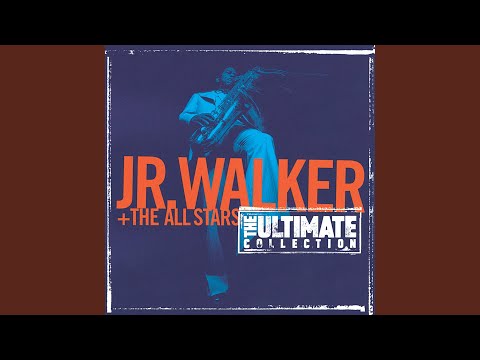
The Story Behind Holly Holy by Jr. Walker The All Stars Motown's Soul Records imprint spent the turn of the 1970s pushing its horn-driven veterans toward new…
01 The Story
The Story Behind "Holly Holy" by Jr. Walker & The All Stars
Motown's Soul Records imprint spent the turn of the 1970s pushing its horn-driven veterans toward new sonic territory, and Jr. Walker & The All Stars found an unexpected source for reinvention: a Neil Diamond ballad, reworked into a slow-burning soul instrumental showcase for the year's final weeks.
A Saxophone Legend Adapting to a New Decade
By 1970, Jr. Walker had spent most of the previous decade as one of Motown's most distinctive instrumental voices, his gritty, honking tenor saxophone driving hits like "Shotgun" and "What Does It Take (To Win Your Love)." As the decade turned, Walker and his band leaned into cover material and a smoother, more contemporary soul sound, adapting their raw R&B foundation to a changing musical landscape shaped by rock and singer-songwriter influences.
Reworking a Neil Diamond Original
The song took Neil Diamond's spiritually charged 1969 composition and rebuilt it around Walker's saxophone, transforming a folk-rock hymn into a slow, soulful groove. The arrangement gave Walker's horn ample space to carry the melody's emotional weight, letting the instrumental voice do the work a vocalist might otherwise handle, a hallmark of the group's approach throughout their catalog.
A Real, Extended Chart Run
The single debuted on the Billboard Hot 100 on December 26, 1970, at number 87, then climbed steadily through 81 and 76 before reaching its peak of number 75 on January 16, 1971, holding that position for a total run of five weeks on the chart. Those numbers reflect a modest but genuine crossover success for a soul instrumental built on unlikely source material. Neil Diamond's original had reached the top ten of the Hot 100 the previous year, giving Walker's instrumental reworking a built-in familiarity with radio audiences already fond of the song's melody, even in this dramatically different arrangement. The single arrived on Motown's Soul imprint during a transitional period for the label as a whole, with Motown increasingly experimenting with rock, folk, and singer-songwriter material as the counterculture reshaped popular taste heading into the new decade. The label's founder, Berry Gordy, had built Motown's reputation on tight creative control, but by 1970 that control was loosening as artists across the roster pushed for more say in their own material and direction.
A Cover Choice That Signaled Change
That willingness to look outside the label's own songwriting stable for material reflected a broader shift across Motown's roster in these years, as acts long associated with a specific, tightly controlled house sound began drawing more freely from the wider rock and pop landscape around them.
A Late Highlight in a Storied Run
"Holly Holy" never rivaled Walker's biggest hits, but its chart appearance underscored the group's continued relevance as Motown's sound evolved into the 1970s. It stands as a small, satisfying example of soul musicians finding fresh material in unexpected places. Give it a listen and hear a saxophone giant reshaping someone else's song into something entirely his own.
"Holly Holy" — Jr. Walker & The All Stars's singular moment on the 1970s charts.
02 Song Meaning
The Meaning Behind "Holly Holy"
"Holly Holy," in its original form and in Jr. Walker's reworking, carries a spiritual, almost devotional quality, its themes of transcendence and searching translated here into a wordless, instrumental meditation.
From Lyric to Instrumental Feeling
Neil Diamond's original lyric wrestled with questions of faith and searching for meaning beyond the everyday, and Walker's saxophone-led version inherits that searching quality even without words, using melodic phrasing to suggest yearning rather than stating it directly. The instrumental format shifts the song's meaning from explicit statement to implied emotion.
The Saxophone as Voice of Longing
Throughout his career, Walker's tenor saxophone functioned as a genuinely vocal instrument, bending notes and sustaining phrases in ways that mimicked a singer reaching for something just out of grasp. That quality suits this particular song especially well, since its original lyric was itself about reaching toward something transcendent and hard to name.
Soul Music's Gospel Roots Resurfacing
The slow, building arrangement draws on gospel music's tradition of tension and release, mirroring the way a congregation might build toward a moment of spiritual climax. That connection feels appropriate given the original song's quasi-religious title and themes, even filtered through a completely different genre and instrumental approach.
Reinterpretation as Its Own Statement
By choosing to cover a song this openly spiritual, Walker and his band made an implicit artistic statement: that instrumental soul music could carry the same emotional and even spiritual weight as a fully lyrical composition, trusting melody and tone to communicate what words normally would. The choice to cover a song so recently popular also reflected a savvy commercial instinct, trusting that listeners already emotionally attached to the original melody would welcome a fresh, soulful interpretation rather than viewing it as redundant. The absence of Diamond's original lyric also strips away any specific religious framing the song may have carried, leaving behind a more universal instrumental mood that any listener, regardless of background, could project their own sense of searching onto.
Why It Resonated With Listeners
Audiences responded to the warmth and sincerity of the arrangement, finding in its wordless yearning a familiar emotional register even without Diamond's original lyric, proof that a well-chosen cover could carry real feeling across genre lines.
→ More from Jr. Walker & The All Stars
View all Jr. Walker & The All Stars hits →
→ More from the 1970s File
View all 1970s hits →




Keep digging