The 1970s File Feature
Heartbreaker
Heartbreaker: Grand Funk Railroad's Early Hard Rock Statement "Heartbreaker" stands as one of the earliest significant singles from Grand Funk Railroad, the …
01 The Story
Heartbreaker: Grand Funk Railroad's Early Hard Rock Statement
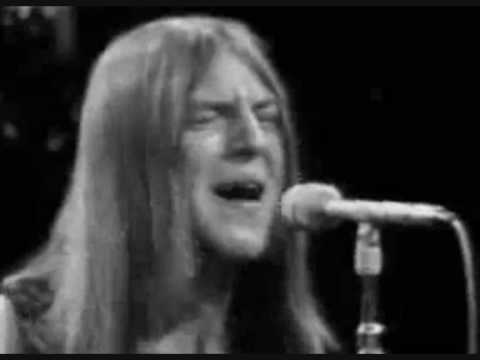
"Heartbreaker" stands as one of the earliest significant singles from Grand Funk Railroad, the Flint, Michigan hard rock power trio that became one of the most commercially successful American bands of the early 1970s. Released in 1970 on Capitol Records, the single arrived during a period when Grand Funk was building an audience through relentless touring and a high-volume live performance style that connected immediately with young rock audiences even as it drew persistent critical derision from the established rock press. The paradox of Grand Funk, critically dismissed but massively popular, defines the context in which "Heartbreaker" must be understood.
The band consisted of Mark Farner on guitar and vocals, Mel Schacher on bass, and Don Brewer on drums, a three-piece configuration that demanded each member contribute to a sound larger than the instrumentation technically supported. Farner wrote most of the early material, including "Heartbreaker," drawing on a blues-rock vocabulary that owed debts to Cream and other British power trios while maintaining a specifically American, specifically Midwestern directness that separated Grand Funk's aesthetic from its British models. The sound was loud, insistent, and designed for arenas before arenas were the dominant American rock venue.
Terry Knight managed Grand Funk Railroad during the early Capitol years and played a significant role in shaping the band's commercial strategy and public presentation. Knight's promotional instincts were aggressive and occasionally controversial, and his relationship with the band would eventually deteriorate into litigation, but during the period when "Heartbreaker" was released, the Knight-managed Grand Funk machine was operating efficiently. Capitol Records had signed the band based on Knight's vigorous promotion, and the early singles represented an attempt to translate the band's live energy into a format that radio could accommodate.
The hard rock market in 1970 was rapidly evolving. The heavy blues-rock of the late 1960s was giving way to something harder and more explicitly commercial, and bands like Grand Funk were helping define what that something would sound like. "Heartbreaker" fit into this transitional moment as a song that retained the blues-rock energy of the immediate past while pointing toward the arena rock of the immediate future. The production kept the instrumental attack front and center, allowing the rhythm section to operate with a weight that reinforced the song's essential heaviness.
"Heartbreaker" received significant FM rock airplay, the format that had become the primary distribution mechanism for album-oriented rock in this period. AM radio was still relevant for pop crossovers, but the heavy rock audience was building its relationship with FM stations that programmed longer songs with less commercial interruption and more aesthetic adventurousness than the AM format allowed. Grand Funk's recordings fit the FM aesthetic despite the band's reputation for commercial simplicity, because the sound itself, dense and physical, rewarded the fidelity that FM broadcasting offered.
Grand Funk Railroad's commercial ascent in the early 1970s was extraordinary by any measure. The band sold out Shea Stadium in 1971 in a record 72 hours, breaking the ticket sales record that the Beatles had set for the same venue, a fact that the band and its management publicized aggressively and that the rock press received with varying degrees of credibility. Whether or not one accepted the comparison, the underlying fact of Grand Funk's commercial power was undeniable, and "Heartbreaker" was among the early recordings that had established the foundation for that ascent.
The critical reception of the early Grand Funk recordings including "Heartbreaker" was largely negative among the tastemaker publications of the period. Rolling Stone and similar outlets treated the band as a cautionary example of commercial rock at its most cynical, music made for maximum volume and minimum artistic ambition. This critical position proved durable enough to follow the band through its most successful years and to shape its retrospective reputation even after the immediate commercial reality of its popularity had faded.
In subsequent decades, Grand Funk Railroad has been re-evaluated more generously, with critics and historians acknowledging that the early recordings including "Heartbreaker" contained a genuine energy and a specific historical significance that the hostile contemporary reception had obscured. The band's role in the development of arena rock and in the commercial expansion of hard rock's audience is now recognized as genuinely important, whatever one's aesthetic judgment of the music itself. "Heartbreaker" sits within that story as a document of a band and a genre in their formative moment.
02 Song Meaning
Heartbreaker: Volume, Betrayal, and the Hard Rock Emotional Economy
"Heartbreaker" operates within the hard rock tradition's characteristic approach to romantic betrayal: the subject is treated with intensity and directness, the emotional temperature runs high, and the musical texture reinforces the lyrical content through sheer physical force. Grand Funk Railroad built their entire early aesthetic on the proposition that emotional states could be communicated most honestly through volume and attack, and "Heartbreaker" is an early demonstration of that proposition applied to the most traditional of rock and roll subjects.
The song's narrator has been deceived or abandoned, and the response is not the nuanced ambivalence of more sophisticated romantic songs but an unmediated declaration of pain and accusation. Mark Farner's songwriting in this period drew on a blues-rock tradition that treated emotional directness as an aesthetic value in itself, rejecting the irony or complexity that critics associated with more "serious" rock artists in favor of a confrontational simplicity that communicated to a young audience on immediate terms.
This approach has always divided critics and audiences. Those who value emotional directness in rock music hear in Grand Funk's early recordings a genuine working-class expressiveness that the rock press, operating from more culturally elevated positions, was ill-equipped to recognize. Those who find the approach limited see in songs like "Heartbreaker" a compression of emotional range that forecloses more interesting possibilities. The debate maps onto larger arguments about authenticity, class, and what rock music is actually for that have never been fully resolved.
The title word itself carries a specific weight in the rock and roll tradition. Heartbreaker is one of the oldest designations in popular song, a figure who causes romantic damage without necessarily intending it or taking responsibility for it. The accusatory energy of Grand Funk's song places the narrator in the position of someone defining their pain by naming its source, a rhetorical move that transfers agency from the singer to the accused. This is not a complex emotional transaction, but it is a real one, and the intensity of the musical delivery amplifies the stakes of the accusation.
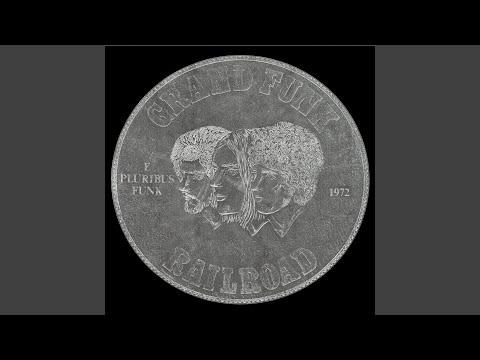
In the context of Grand Funk's catalog, "Heartbreaker" represents the unmediated early version of an emotional vocabulary that the band would develop in more varied directions as their career progressed. Later Grand Funk recordings, including the more polished work produced by Todd Rundgren in 1973 on the "We're An American Band" album, demonstrated a wider range. But the early recordings including "Heartbreaker" established the baseline from which that development departed, and there is value in the unvarnished version precisely because it shows where the band's emotional instincts began.
The song also participates in a distinctly American hard rock emotional register that differs meaningfully from the British blues-rock that influenced it. Where the British tradition often filtered its blues influence through a layer of aesthetic distance or irony, the American hard rock bands of the early 1970s tended to take their emotional materials more literally. Grand Funk's "Heartbreaker" is a product of that American directness, and its place in the band's catalog reflects the aesthetic choices that made them simultaneously very popular and very easy to dismiss.
→ More from Grand Funk Railroad
View all Grand Funk Railroad hits →
→ More from the 1970s File
View all 1970s hits →




Keep digging