The 1960s File Feature
Mr. Limousine Driver
Grand Funk Railroad's Mr. Limousine Driver Imagine the closing days of the 1960s, the idealism of the decade curdling into something heavier and more cynical…
01 The Story
Grand Funk Railroad's "Mr. Limousine Driver"
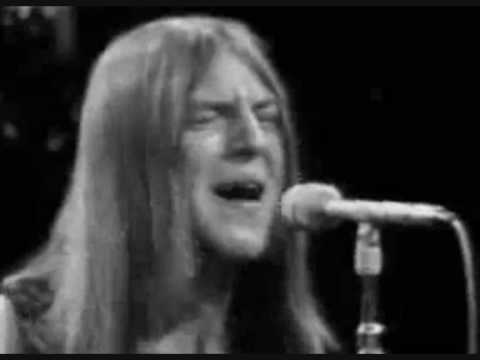
Imagine the closing days of the 1960s, the idealism of the decade curdling into something heavier and more cynical, and a new kind of rock band rising up to match the harder mood. Loud, blue-collar, and unconcerned with critical approval, Grand Funk Railroad came roaring out of Flint, Michigan, to become one of the most commercially powerful American hard rock acts of their time. "Mr. Limousine Driver" offers a glimpse of the raw, heavy power-trio sound that would soon make them arena-filling superstars.
The People's Band From Flint
Grand Funk Railroad were a power trio in the truest sense, built around heavy guitar, thundering bass, and pounding drums. Emerging from the industrial heartland of Michigan, they cultivated an image as a working-class band for working-class fans, and they connected with their audience on a massive scale even as critics dismissed them. By late 1969 they were on the cusp of an extraordinary commercial breakthrough, building a devoted following through relentless touring and a sound that prized force and feeling over polish. Their appeal was raw and direct.
Heavy Rock In Its Early Days
"Mr. Limousine Driver" captured the band's foundational sound: muscular, riff-driven hard rock with a bluesy underpinning and an unmistakable heaviness. The track leaned on the power-trio formula, every instrument pushed to the front, the energy raw and unrelenting. This was the sound of late-1960s hard rock evolving toward the heavier styles that would dominate the coming decade. There was nothing subtle about it, and that was precisely the point. The band traded in volume, attitude, and visceral impact.
A Faint Mark On The Hot 100
The single's chart performance was modest, a reminder that Grand Funk's strength always lay in albums and live shows rather than hit singles. "Mr. Limousine Driver" debuted on the Billboard Hot 100 at number 98 on December 20, 1969, and barely moved during its brief stay. It reached only its peak of number 97 on December 27, 1969, and spent a mere 2 weeks on the Hot 100 before disappearing. Those numbers tell a familiar story for the band: while singles often underperformed, their albums sold in enormous quantities, driven by a fan base that pop radio could not measure.
Critics Versus The Crowd
Few bands embodied the gap between critical opinion and popular devotion quite like Grand Funk Railroad. The rock press of the era frequently savaged them, dismissing their music as crude and their playing as unsophisticated. Their fans, numbering in the millions, could not have cared less. That disconnect became part of the band's identity, a badge of honor that bound them ever closer to their working-class audience. The more critics sneered, the more loyal the fan base grew, treating the band's commercial triumphs as a vindication. Records from this period capture a group that needed no critical blessing because it had something far more valuable: a devoted following willing to follow it anywhere.
The Foundation Of A Commercial Juggernaut
The modest chart showing of this single belies what came next. Grand Funk Railroad would soon become one of the biggest-selling and highest-grossing acts in American music, packing stadiums and moving millions of records throughout the early 1970s. They famously sold out Shea Stadium faster than the Beatles had. Early tracks like "Mr. Limousine Driver" laid the groundwork for that explosion, defining the heavy, unpretentious sound that legions of fans would embrace. It is a snapshot of a juggernaut just before it took off.
Press Play And Crank It Up
Cue this one up and turn the volume high. The riffs are heavy, the energy is raw, and the whole thing rumbles with the unpolished power that made Grand Funk Railroad a people's favorite. It is a taste of American hard rock at its most direct and forceful. Press play and hear the band that would soon conquer the stadiums.
"Mr. Limousine Driver" — Grand Funk Railroad's singular moment on the 1960s charts.
02 Song Meaning
The Meaning Behind Grand Funk Railroad's "Mr. Limousine Driver"
The meaning of "Mr. Limousine Driver" centers on disillusionment and the search for direction at the end of a turbulent decade. The song addresses a chauffeur as a figure who might somehow provide guidance or escape, channeling a broader sense of being lost and weary. Beneath its heavy rock exterior lies a feeling of fatigue and uncertainty, a young person's plea for someone to point the way forward through a confusing world.
A Plea For Direction
The central conceit is the appeal to the limousine driver, a figure who controls the journey and knows the road. By addressing him, the narrator seems to be asking for guidance, for someone to take the wheel when his own sense of direction has failed. There is weariness in the request, a suggestion that the narrator is tired and unsure of where he is headed. The driver becomes a stand-in for any authority or guide who might offer a way out of confusion.
The Mood Of A Decade's End
The song's undercurrent of disillusionment reflects the cultural moment of its creation. As the optimism of the 1960s gave way to a harder, more skeptical mood, much of the era's music began to express fatigue and uncertainty. The heaviness of Grand Funk's sound matched that shift, giving voice to a generation's growing sense of weariness. The plea in the song can be heard as part of that broader disenchantment, a search for grounding amid upheaval.
Power As Catharsis
For Grand Funk and their fans, the heavy, driving sound itself carried meaning. The sheer force of the music offered a kind of release, a way to channel frustration and weariness into something loud and physical. The meaning of the song lies partly in that catharsis, the sense that cranking up the volume and feeling the riffs could provide an outlet for emotions that words alone could not resolve. The power was the point as much as the lyric.
The Voice Of The Everyman
Part of what gave the song meaning for its audience was the way it spoke from a regular person's perspective. Grand Funk built their identity on being a band of and for ordinary people, and the weariness in this lyric felt like the genuine fatigue of working-class life rather than rock-star posturing. The plea for someone else to take the wheel carried the honest exhaustion of people who labored hard and wondered where it all was leading. That authenticity was central to the bond the band forged with its enormous fan base.
Why It Connected
The song resonated with the band's devoted following because it spoke their language. Its undercurrent of weariness and searching reflected feelings that many young listeners shared at the close of the 1960s. The raw, heavy sound offered the cathartic release that drew fans to the band in the first place. That combination of relatable disillusionment and visceral power is what gave the song its appeal. Grand Funk never needed critical praise; they needed only to connect with listeners who felt the same fatigue and found release in the same wall of sound.
→ More from Grand Funk Railroad
View all Grand Funk Railroad hits →
→ More from the 1960s File
View all 1960s hits →




Keep digging