The 1970s File Feature
Feelin' Alright
Feelin' Alright — Grand Funk Railroad (1971) Grand Funk Railroad's recording of "Feelin' Alright" is a useful case study in how cover versions can acquire an…
01 The Story
Feelin' Alright — Grand Funk Railroad (1971)
Grand Funk Railroad's recording of "Feelin' Alright" is a useful case study in how cover versions can acquire an identity entirely distinct from the original. The song was written by Dave Mason and first performed by Traffic on their 1968 self-titled album, then made famous in a different direction by Joe Cocker's soulful treatment on his 1969 debut. By the time Grand Funk Railroad recorded it for their 1971 album "Survival," the song had already traveled a significant distance from its British rock origins into American soul territory. Grand Funk's version took it somewhere else again: into the arena rock register that the band had made their own.
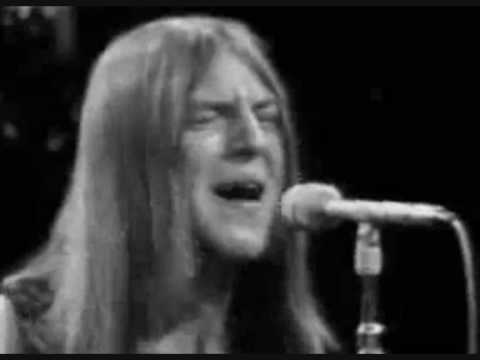
Grand Funk Railroad in 1971 were one of the most commercially successful acts in American rock, despite, or perhaps because of, the persistent critical contempt that greeted their work throughout their peak years. The band, consisting of Mark Farner on guitar and vocals, Mel Schacher on bass, and Don Brewer on drums, had built an audience of millions through relentless touring and a sound that prioritized power and volume over subtlety. Their concerts were genuine mass events, with a dedicated fanbase that had a fanaticism more commonly associated with the Beatles or Rolling Stones than with a Michigan hard rock power trio.
The "Survival" album was produced by Terry Knight, who had been the band's manager and the force behind their initial commercial breakthrough, though his relationship with the band would become increasingly contentious in subsequent years. Knight's production approach suited Grand Funk's strengths: he gave them a big, live-feeling sound that captured the energy of their concerts without over-polishing it. The band's decision to include "Feelin' Alright" on "Survival" reflected their confidence that they could make the song their own.
Grand Funk's treatment of the song amplified its rock dimensions substantially, leaning into Farner's growling vocal style and the band's characteristically massive rhythm section. Where Cocker's version had emphasized gospel-soul feeling and Traffic's original had a British psychedelic-rock quality, Grand Funk's recording prioritized sheer sonic force. The result was recognizably the same song but transformed by a completely different aesthetic sensibility and set of musical values.
The song appeared on Capitol Records, Grand Funk's label throughout their commercial peak. Capitol had initially been skeptical of the band's potential but had watched with something like astonishment as the group sold out arenas and moved albums in quantities that their critical standing would not have predicted. By 1971, Capitol was fully invested in the Grand Funk commercial enterprise, and "Survival" received the promotional support that a major label gave to a proven commercial property.
Grand Funk Railroad's commercial performance in 1971 was remarkable by any standard. They sold out Shea Stadium in 72 hours during this period, faster than the Beatles had managed the same feat, a piece of commercial data that was cited extensively in their promotional materials and that underlined the disconnect between their popularity and their critical reception. "Feelin' Alright" benefited from appearing in the catalog of a band that could sell records in those quantities almost regardless of critical opinion.
Album-oriented rock radio was the primary format for the song's exposure, as "Feelin' Alright" was an album cut rather than a separately released single in the United States. The AOR format, which was consolidating in the early 1970s as FM radio displaced AM as the preferred medium for rock audiences, was well suited to Grand Funk's sound and gave the song extended exposure to the band's core demographic.
The band's touring operation was the engine that drove all of their commercial activities, and "Feelin' Alright" became a reliable part of their live set, a song that translated well to the arena context and that gave Farner material suited to his particular vocal and performance gifts. The live version of the song was reportedly an audience favorite, building on the Cocker tradition of the track as a vehicle for demonstrative vocal performance.
In retrospective assessments of early 1970s American rock, Grand Funk Railroad has been gradually rehabilitated from the critical dismissiveness they endured during their peak years. Their commercial achievements, including "Feelin' Alright" as part of a broader catalog of arena rock touchstones, are now more frequently recognized as reflecting genuine musical qualities: powerful performances, enormous energy, and an instinct for what large rock audiences wanted that bordered on the uncanny. The song in their hands became a document of that era's rock culture at its most unironic and massive.
02 Song Meaning
Release, Escape, and the Transformative Power of Grand Funk's "Feelin' Alright"
"Feelin' Alright" is a song about emotional liberation, specifically the relief that comes when a damaging relationship or a suffocating circumstance is finally left behind. Dave Mason, who wrote the song for Traffic in 1968, constructed a lyric that described the passage from emotional pain to something approaching equanimity, a narrative arc that gave performers across multiple decades a vehicle for demonstrating their capacity to convey both suffering and recovery. Grand Funk Railroad's interpretation made that arc more physical and immediate, converting Mason's relatively measured original into something that felt like a full-body release.
The core emotional logic of the song involves a narrator who has been diminished by a relationship, made smaller and less capable by someone else's behavior, and who discovers, with something between surprise and relief, that their departure actually produces something positive. The "feelin' alright" of the title is not triumphalist; it is more quiet than that, more like the absence of pain than the presence of joy. That nuance was present in Mark Farner's performance even as he delivered it with the full force of Grand Funk's arena-scaled sound.
The song's meaning shifted somewhat depending on who was singing it and how. Traffic's original had a British psych-rock quality that made the emotional content feel slightly more distanced and intellectual. Joe Cocker's famous cover made it explicitly soulful, rooting the emotional liberation in a gospel-inflected tradition where the body itself was the instrument of feeling. Grand Funk Railroad's version was something different: the feeling of alright was communicated through volume, rhythm, and the physical experience of a loud rock band playing together at full power. The medium was the message in a very direct way.
Within the context of Grand Funk Railroad's catalog and identity, "Feelin' Alright" was more than just a cover choice. It signaled something about the band's relationship to American popular music traditions, their willingness to engage with a song that had already accumulated multiple interpretive layers and to add their own. The choice of this particular song, with its roots in British rock but its most famous prior treatment in American soul, reflected a certain confidence in their ability to find their own version of material that already had competing versions in circulation.
The song also spoke to Grand Funk's audience in a specific way. Their fanbase in the early 1970s consisted largely of working-class American teenagers and young adults who found in the band's music a direct and uncomplicated emotional experience. The promise of "Feelin' Alright" was one they could respond to viscerally: the idea that it was possible to be battered by circumstances and still come through in reasonable condition, that the end of something painful could open into something better.
The arena rock context in which Grand Funk performed the song gave it an additional communal dimension. Heard live in a venue of tens of thousands of people, all responding together to Farner's vocal and the band's enormous rhythm section, the feeling of "feelin' alright" became shared rather than individual, a collective emotional experience amplified by the sheer physical fact of that many people experiencing music together. That communal dimension was always part of what made Grand Funk Railroad's concerts something that critics who judged them by studio record standards tended to miss. "Feelin' Alright" in that context was a different kind of cultural artifact than a studio track, and its meaning was correspondingly richer.
→ More from Grand Funk Railroad
View all Grand Funk Railroad hits →
→ More from the 1970s File
View all 1970s hits →




Keep digging