The 1970s File Feature
The Way I Want To Touch You
The Way I Want To Touch You — Captain & Tennille (1975) Captain & Tennille are best remembered for "Love Will Keep Us Together," the Sedaka-Greenfield compos…
01 The Story
The Way I Want To Touch You — Captain & Tennille (1975)
Captain & Tennille are best remembered for "Love Will Keep Us Together," the Sedaka-Greenfield composition that became one of the defining pop singles of 1975 and won the Grammy Award for Record of the Year, but before that commercial explosion transformed them into household names, "The Way I Want To Touch You" served as the record that introduced them to the public and demonstrated that Toni Tennille's songwriting and vocal abilities were the foundation of a commercially viable act. The song was actually written by Toni Tennille herself, which was itself a notable credential at a time when female songwriter-performers were not yet the norm in pop music.
Toni Tennille and Daryl Dragon had met in the early 1970s when Tennille was a cast member of the stage musical Mother Earth and Dragon was working as a keyboardist for the Beach Boys, where his tendency to wear a naval captain's hat had earned him the nickname "Captain." Their personal and professional partnership formed gradually, and by the mid-1970s they were performing together and recording material that blended adult pop sensibility with the kind of clean, harmonically rich production that Dragon's keyboard training and ear for arrangement enabled.
"The Way I Want To Touch You" was released as an early single on Butterscotch Castle Records, a small independent label, before the duo had attracted the attention of a major label. The self-released version of the single was performing well enough on the radio, particularly in the Los Angeles market, to bring them to the notice of A&M Records executives, who signed them in 1975 and subsequently re-released the track on the A&M label. That sequence, from self-released single to major-label reissue, was relatively unusual for the era and represented a genuine grassroots success story in which radio play preceded commercial infrastructure rather than the other way around.
The A&M re-release brought the single to a national audience that the independent release had not been able to reach, and it performed respectably on the Billboard charts, reaching the top twenty and establishing the duo's name with radio programmers and pop audiences who would then respond with extraordinary enthusiasm to "Love Will Keep Us Together" when it was released later in 1975. The sequencing of their breakthrough was important: "The Way I Want To Touch You" created awareness and goodwill, while "Love Will Keep Us Together" capitalized on that foundation with a song powerful enough to reach number one on the Billboard Hot 100 and hold there for four weeks.
Toni Tennille's songwriting on "The Way I Want To Touch You" demonstrated qualities that would characterize her best work throughout the duo's career: melodic clarity, emotional directness, and a lyrical voice that was tender without being saccharine. The song's arrangement, shaped by Daryl Dragon's keyboard sensibility and production instincts, gave the recording a warmth and a harmonic sophistication that distinguished it from the more generic soft rock material filling adult contemporary radio at the time.
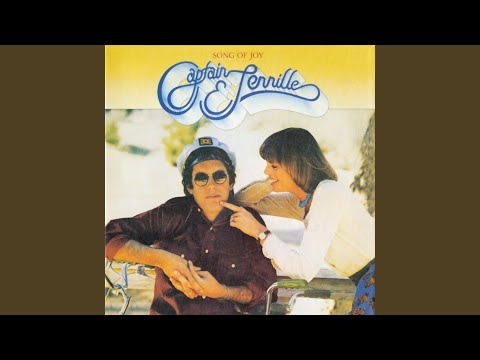
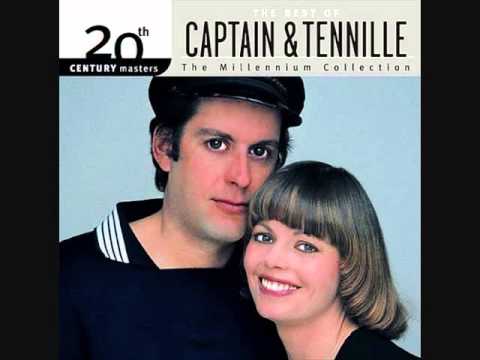
The couple's visual presentation as a married pair was central to their commercial identity during this period. At a time when pop acts frequently projected complicated personal narratives, Captain & Tennille offered something straightforwardly appealing: two people in love with each other who were also in love with making music together. That sincerity was commercially effective in 1975 among audiences who were looking for something uncomplicated and warm after several years of cultural turbulence.
The support of A&M Records, which had been built by Herb Alpert and Jerry Moss into one of the most artist-friendly and commercially sophisticated independent labels in the American music industry, was instrumental in translating their initial momentum into lasting commercial success. A&M had a particular skill for developing adult pop acts, and Captain & Tennille fit naturally into a roster that also included Carpenters, whose approach to vocal-led, melodically generous pop shared certain qualities with the new duo's sensibility.
"The Way I Want To Touch You" has continued to be performed and recognized as an important early landmark in the duo's catalog, evidence that their commercial breakthrough with "Love Will Keep Us Together" was not a fortunate accident but the culmination of a developing artistic identity that Toni Tennille had been expressing in her songwriting for some time. The record stands as documentation of a moment just before a major pop career ignited, with all the freshness and directness that such pre-stardom recordings often carry.
02 Song Meaning
Meaning and Themes: The Way I Want To Touch You
"The Way I Want To Touch You" is a romantic ballad that operates through intimacy and specificity rather than grand gesture. Toni Tennille wrote a lyric that focuses on the physical and emotional particularity of desire within an established relationship, the way that love between two people develops its own language of touch and gesture that is specific to them and to no one else. That specificity gives the song its tenderness and its sense of genuine personal feeling rather than generic sentiment.
The song's subject matter places it within the tradition of adult contemporary love songs that address the texture of long-term intimacy rather than the drama of new attraction. Pop music's default setting in the early 1970s had often been either the excitement of new love or the pain of loss, and material that addressed the daily quality of an established romantic partnership was less common and, when done well, particularly resonant with audiences in long-term relationships. Tennille was writing from a position of genuine personal experience; her real-life partnership with Daryl Dragon gave the lyric an authority of observation that pure craft alone could not have provided.
Toni Tennille's vocal performance on the recording matched the lyric's intimacy with a delivery calibrated to suggest private communication rather than public declaration. She was not projecting to an arena; she was speaking, or something close to speaking, and that restraint made the emotional content feel more genuine and more personal. The choice to hold back vocally in a genre that often rewarded demonstrative performance was a sophisticated one that reflected both her training and her instincts about what the material required.
The song also participates in the soft rock aesthetic of the mid-1970s, a movement that valued emotional clarity, clean production, and melodic accessibility over rawness, distortion, or complexity. That aesthetic has been revisited with considerable skepticism by critics who prefer their popular music rougher at the edges, but it served a genuine audience need at the time: millions of listeners found in soft rock a form of popular music that spoke directly to their daily emotional lives without requiring them to adjust to unfamiliar sonic environments. "The Way I Want To Touch You" is a perfect expression of that aesthetic at its most sincere.
The professional dynamics between Captain and Tennille are also legible in the song. Tennille wrote the lyric and delivered it; Dragon shaped the arrangement and the production. This division of labor, in which the woman provided the emotional and lyrical content and the man provided the structural and technical framework, reflected both the specific skills each brought to the partnership and broader patterns in popular music production of the era. That the woman in this case was also the primary creative voice, as songwriter, gave the partnership a character somewhat unusual for its time.
Within their catalog, "The Way I Want To Touch You" functions as a kind of artistic mission statement, establishing the emotional register and the commitment to romantic sincerity that would define their best work. "Love Will Keep Us Together" brought them commercial dominance, but this earlier song demonstrated that the foundation of their appeal was Tennille's songwriting voice, which understood how to write about love in ways that felt specific and true rather than interchangeable and formulaic. The song's endurance as a recognizable piece of their legacy reflects the genuine quality of its construction.
→ More from Captain & Tennille
View all Captain & Tennille hits →


→ More from the 1970s File
View all 1970s hits →




Keep digging