The 1970s File Feature
Muskrat Love
Muskrat Love — Captain every era has its equivalent controversies about taste and popularity. A Soft Rock Landmark The mid-1970s soft rock movement produced …
01 The Story
Muskrat Love — Captain & Tennille
America's Sweethearts and an Unlikely Hit
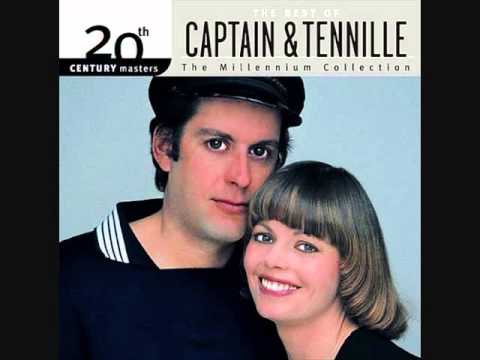
Picture the autumn of 1976. The United States is in the middle of its bicentennial glow, disco is beginning its stranglehold on the dance floors, and Toni Tennille and Daryl Dragon, professionally known as Captain and Tennille, are riding a commercial wave that no one had entirely predicted. Their 1975 debut single "Love Will Keep Us Together" had gone to number one and won the Grammy for Record of the Year. They were now among the most recognizable act in American pop, clean-cut and wholesome in an era that was growing increasingly complicated on the front pages. Into this moment they introduced Muskrat Love: a gentle, slightly absurdist song about two muskrats in romantic pursuit of each other.
The song was not new. Willis Alan Ramsey had written and recorded "Muskrat Candlelight" on his 1972 debut album, and the artist collective America had covered it as "Muskrat Love" in 1973, reaching number 67 on the Hot 100. Captain and Tennille transformed the song into something considerably more polished, more produced, and more inescapably catchy than either of its predecessors.
The Recording
Daryl Dragon, who had earned his nickname "The Captain" during his years playing keyboards for the Beach Boys, handled the production and arrangement for the duo. His musical instincts leaned toward elaborate sonic textures, and Muskrat Love gave him room to indulge that tendency. The recording featured synthesizer sounds mimicking the skittering movements of the song's rodent protagonists, a playful production choice that either delighted or irritated listeners depending on their temperament. The whirring, chittering electronic textures were genuinely unusual for mainstream pop of the period.
Toni Tennille's voice, warm and technically accomplished, carried the melody over Dragon's textured production. Her vocal performance made the song's eccentric subject matter feel genuine rather than merely novelty. The arrangement was built on a foundation of lush pop production values, with the stranger sonic elements serving as seasoning rather than the main course. The whole enterprise was released on A&M Records, the label that had already distributed their earlier successes.
The Chart Ascent
Muskrat Love entered the Billboard Hot 100 on September 25, 1976, debuting at number 68. Its climb was steady and confident: 48, then 32, then 25, then 18. The record kept climbing through October and into November. It reached its peak of number 4 on November 20, 1976, and spent a total of 20 weeks on the chart, an impressive run that demonstrated real sustained commercial appeal. Top-4 positions on the Hot 100 in 1976 represented extraordinary mainstream acceptance, placing the song alongside the era's most dominant recordings.
The song also appeared prominently on the adult contemporary chart, where Captain and Tennille had an established audience that responded warmly to their melodic, accessible style. The duo performed "Muskrat Love" at the White House for President Gerald Ford and Queen Elizabeth II during her American bicentennial tour, a cultural moment that fixed the song in the period's collective memory with unusual permanence.
The Polarizing Phenomenon
Few pop songs of the 1970s generated such consistent division. Critics and sophisticated listeners of the era found the muskrat subject matter cloying, the animal sound effects gimmicky, and the wholesome presentation vaguely uncanny. Radio programmers and their audiences felt entirely differently, keeping the record on playlists for months. This tension between critical disdain and popular enthusiasm is itself a significant part of the song's history. It represented a certain kind of unironic sweetness that the post-Watergate, post-Vietnam cultural climate had not eliminated despite some expectations that it might.
The song became something of a lightning rod for debates about what mainstream pop should sound like, about the relationship between commercial appeal and artistic ambition. These debates feel familiar in retrospect; every era has its equivalent controversies about taste and popularity.
A Soft Rock Landmark
The mid-1970s soft rock movement produced some of the decade's most commercially successful recordings, and Muskrat Love occupies a central, if contested, place in that catalog. Captain and Tennille's particular gift was their ability to find the emotional sincerity inside a song, regardless of its lyrical subject matter. Their follow-up hits and their long-running television variety show cemented their status as one of the most commercially successful acts of the latter half of the decade.
The recording endures as a genuine artifact of its moment, strange and sweet in equal measure. Give it a listen and step back into a bicentennial autumn when the most charming thing on the pop charts was two muskrats in love.
"Muskrat Love" — Captain & Tennille's singular moment on the 1970s charts.
02 Song Meaning
Muskrat Love — Themes and Legacy
Romance in Miniature
The central conceit of Muskrat Love is both simple and peculiar: two small semi-aquatic rodents experience courtship, attraction, and the giddy pleasures of young love. Willis Alan Ramsey, who wrote the song under the original title "Muskrat Candlelight," was working in a tradition of American folk and country whimsy that has always had room for the small and the overlooked. By setting a love story among muskrats, the song performs a kind of democratic emotional gesture. Love is not reserved for the glamorous or the heroic; it visits the unremarkable corners of the natural world with the same intensity it brings to human lives.
Captain and Tennille's recording amplified this gentle comedy through production choices that made the muskrats nearly audible, the synthesizer textures mimicking small animal movement and underwater busyness. The effect was divisive but undeniably distinctive. The song did not ask to be taken entirely seriously, and that permission to delight without gravity was part of its appeal to a broad pop audience.
Wholesome Culture and Its Discontents
By 1976, American popular culture was carrying the residue of a deeply troubled decade. Watergate had corroded trust in institutions. The Vietnam War had ended in circumstances that were difficult to frame as anything other than defeat. Cynicism had become a kind of default register in serious music and film. Against this backdrop, Captain and Tennille's particular brand of unironic warmth read to some as naïve and to others as genuinely restorative. The success of "Muskrat Love" suggests the latter audience was substantially larger than the critics assumed.
There is something worth examining in the enthusiasm with which audiences embraced a song about innocent animal courtship at precisely the moment when the national mood was most complicated. The desire for simplicity, for sweetness, for narrative outcomes that are purely happy, is a recurring feature of popular taste in difficult times. The song provided exactly that, and millions of listeners welcomed the reprieve.
The Novelty Spectrum
Pop music has always maintained a novelty tradition, from the comic songs of the early recording era through the quirky hits that appear on every decade's retrospective lists. Muskrat Love occupies an interesting position on the novelty spectrum. It is not quite a novelty song in the classic sense, because its melody is genuinely lovely, its production is ambitious, and its performance is sincere. It is, rather, a song with a novelty subject rendered with pop craft. The distinction matters when considering why it charted as high and as long as it did.
Pure novelty songs typically spike quickly and disappear. Records that combine unusual content with genuine musical quality tend to have more sustained chart lives, and the 20 weeks Muskrat Love spent on the Hot 100 reflects that greater staying power.
Legacy and the Cultural Imagination
The White House performance for the American bicentennial celebration and Queen Elizabeth II's visit has fixed Muskrat Love in popular memory in a way that chart positions alone cannot. It became the answer to a trivia question and the subject of gentle cultural ribbing for decades afterward. This kind of persistent cultural reference, even when the references are ironic, is its own form of longevity. Songs that people still mention, still use as shorthand for a particular cultural moment, have achieved something that more critically praised recordings sometimes fail to attain.
The song also anchored Captain and Tennille's image as a couple who meant what they sang, who brought personal warmth to whatever material they performed. Their authenticity as a real-life married duo investing in real emotional content gave the recording a sincerity that audiences found comforting. In the end, Muskrat Love is a small, joyful thing, and there is nothing wrong with that. The popular music canon has plenty of room for songs that aim at delight and land precisely on target.
→ More from Captain & Tennille
View all Captain & Tennille hits →

→ More from the 1970s File
View all 1970s hits →




Keep digging