The 1970s File Feature
Every Day Of My Life
Bobby Vinton and the Enduring Career Behind "Every Day Of My Life" By the time Bobby Vinton released "Every Day Of My Life" in early 1972, he had already exp…
01 The Story
Bobby Vinton and the Enduring Career Behind "Every Day Of My Life"
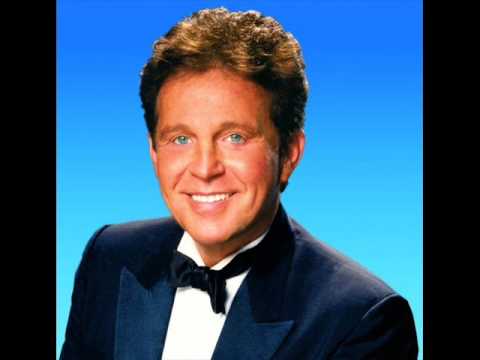
By the time Bobby Vinton released "Every Day Of My Life" in early 1972, he had already experienced more commercial vicissitudes than most artists encounter in a full career. He had arrived in the early 1960s as one of the most dominant singles artists of the decade, scored a string of massive hits including "Roses Are Red (My Love)," "Blue Velvet," and "There! I've Said It Again," and then navigated a mid-decade downturn when the British Invasion redirected American musical tastes away from the pre-rock pop he represented. His 1968 comeback with "I Love How You Love Me" had reestablished him as a commercially viable presence, and by the early 1970s he was maintaining a durable middle-charting career on Epic Records that testified to the loyalty of an audience that had never entirely abandoned him.
Stanley Robert Vinton Jr., born in Canonsburg, Pennsylvania, in 1935, had developed his artistic identity around a particular kind of emotionally straightforward pop romanticism that owed more to the Tin Pan Alley tradition than to the rock and roll revolution. His voice was warm and slightly melancholic by default, perfectly suited to the kind of ballad material that his producers consistently provided. The nickname the "Polish Prince," a reference to his Polish-American heritage that he wore with genuine pride, had become part of his public identity by the early 1970s, and his Polish-themed recordings would eventually produce one of his biggest late-career hits in 1974 with "My Melody of Love."
"Every Day Of My Life" entered the Billboard Hot 100 on January 29, 1972, debuting at number 98. Its chart trajectory over the following 16 weeks was among the more patient climbs in Vinton's discography, moving gradually through the lower and middle reaches of the chart with the consistency that characterized his recordings during this period. The single reached its peak position of number 24 on April 29, 1972, a strong showing that placed it among the better performances of his post-comeback catalog. Sixteen weeks on the Hot 100 also demonstrated the sustained airplay support that his recordings consistently attracted from the easy listening and adult contemporary radio formats that had become his primary commerciThe adult contemporary format, which was crystallizing as a distinct radio category in the early 1970s, was in many ways perfectly designed for Vinton's particular commercial proposition. The format favored melodically accessible recordings aimed at listeners who had grown up with pre-rock pop but who retained an appetite for contemporary production values. Vinton occupied this demographic intersection with precision: his recordings sounded current enough to avoid the dismissal that purely nostalgic acts received, while remaining sufficiently rooted in older pop values to connect with listeners who found the progressive rock and harder-edged sounds of the early 1970s alienating.1970s alienating.
Epic Records had been Vinton's label home since 1960, an unusually long and stable relationship by the standards of the music industry that spoke to the mutual commercial benefit each had derived from the association. The label understood his audience and his artistic strengths, and his producers during the early 1970s had developed a consistent house sound for his recordings that balanced orchestral arrangement with a contemporary pop production sensibility. "Every Day Of My Life" benefited from this institutional expertise, arriving as a polished product of a well-functioning commercial relationship.
The song itself represented Vinton at his most characteristic: a direct emotional statement delivered with straightforward sincerity, built on a melodic foundation designed for broad appeal and radio friendliness. There was nothing experimental about the recording and nothing experimental was wanted. Vinton's audience came to his records for a specific experience, and the most successful records in his catalog were those that delivered that experience with maximum competence and genuine feeling. "Every Day Of My Life" succeeded on precisely these terms.
The early 1970s were in many ways Vinton's most commercially stable period, even if the individual peaks he achieved were lower than the chart-topping successes of the early 1960s. Where he had once regularly reached the top ten and occasionally the top position, his 1970s work found him reliably in the top 30 and occasionally cracking the top 20. This moderated commercial reality was typical of artists who had survived the British Invasion and the subsequent stylistic revolutions of the late 1960s: the audience was smaller and more demographically concentrated, but it was loyal and it was real.
In 1974, "My Melody of Love" would become Vinton's final number one hit, a late-career triumph that demonstrated his continued commercial potency. But "Every Day Of My Life" represents the more typical pattern of his 1970s output: a well-crafted single that found its audience, performed solidly on the charts, and confirmed that Bobby Vinton had successfully navigated one of the most disruptive periods in pop music history without losing the connection to his core listeners that constituted his enduring commercial asset.
The broader significance of Vinton's continued presence on the charts through the early 1970s should not be underestimated. He was one of a small number of pre-British-Invasion artists who maintained genuine chart viability into the new decade, demonstrating that the American pop audience was more pluralistic and less monolithic in its tastes than the narrative of revolutionary stylistic change sometimes suggested. His records sold and received airplay because listeners actively chose them over the many alternatives available, and "Every Day Of My Life" is evidence of that ongoing and genuine commercial connection.
02 Song Meaning
The Meaning of "Every Day Of My Life" by Bobby Vinton
"Every Day Of My Life" operates within the tradition of the devotional love song, a genre with roots as deep as the popular song itself. Bobby Vinton's particular approach to this tradition was shaped by his artistic identity as the "Polish Prince" of pop: an artist who wore his sentimentality openly and without apology, treating the direct expression of romantic feeling as both an artistic value and a commercial proposition. The song's meaning is therefore inseparable from the persona that Vinton had constructed across a decade of hit recordings.
The title's grammatical construction is worth examining. "Every Day Of My Life" is a statement of temporal totality, asserting that love is not a weekend feeling or a seasonal emotion but a permanent condition that inhabits every moment of the speaker's existence. This is a maximalist romantic claim, and it is precisely the kind of maximalism that characterized the pre-rock pop tradition from which Vinton drew. In the Tin Pan Alley aesthetic that shaped his musical values, love songs were expected to reach for absolute declarations, to treat romantic feeling as the organizing principle of human experience rather than merely one element among many.
In the context of 1972, this kind of absolutism carried a specific cultural resonance. Popular music had spent the previous several years exploring fragmentation, ambiguity, and complexity in its treatment of love and relationships. The singer-songwriter movement had introduced a more confessional and psychologically layered approach, while rock music had often treated romantic feeling with an irony or aggression that stood in deliberate contrast to the earnestness of 1950s and early 1960s pop. Vinton's direct and unironic romanticism represented a conscious or unconscious resistance to all of these tendencies, a reassertion of the value of emotional clarity.
The adult contemporary audience that embraced "Every Day Of My Life" was, in demographic terms, an audience that had grown up with the pop romanticism Vinton represented and that had not followed the broader culture's drift toward musical complexity and irony. For these listeners, a Bobby Vinton recording was a form of emotional confirmation: a reminder that the values of romantic directness and melodic accessibility that had shaped their musical formation remained viable and available in the contemporary marketplace. Vinton's consistency as an artistic presence was itself a form of meaning, signaling stability and continuity in a musical culture that was otherwise in constant flux.
The song's production reinforces its emotional message. The orchestral arrangement places Vinton's voice in a context of warmth and gentleness, creating a sonic environment that is designed to be emotionally permissive, to allow the listener to feel the emotions the lyric describes without the friction of irony or ambiguity. This is a specific artistic choice, not a failure of imagination, and it reflects a sophisticated understanding of what the song's audience needed from the recording.
There is also in "Every Day Of My Life" a dimension of cultural identity that runs through Vinton's work more broadly. His Polish-American heritage and his pride in that heritage gave his music a particular community of listeners who heard in his success a reflection of their own cultural presence in American life. The values of romantic directness and familial loyalty that Vinton embodied in his public persona resonated with immigrant and working-class communities whose musical tastes the mainstream culture did not always serve well. In this sense, his recordings carried a meaning that extended beyond their lyrical content into the domain of cultural representation.
Taken as a whole, "Every Day Of My Life" means what it says and says it with conviction. That combination of semantic directness and musical sincerity is precisely what made Bobby Vinton's recordings endure through changes in musical fashion that eliminated most of his contemporaries from commercial viability. The song asks for nothing more than to be believed, and for the audience that chose it, that was more than enough.
→ More from Bobby Vinton
View all Bobby Vinton hits →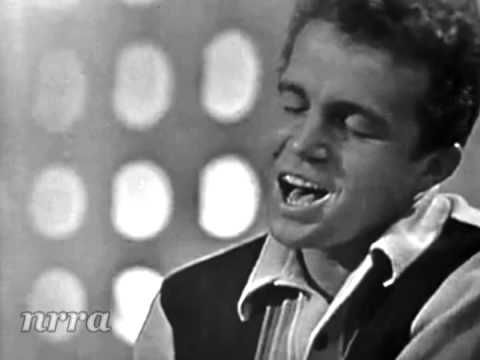



→ More from the 1970s File
View all 1970s hits →




Keep digging