The 1970s File Feature
Sealed With A Kiss
"Sealed With A Kiss" — Bobby Vinton The Unlikely Return of a Seasonal Standard Some songs find their moment once. Others find it over and over again, reinven…
01 The Story
"Sealed With A Kiss" — Bobby Vinton
The Unlikely Return of a Seasonal Standard
Some songs find their moment once. Others find it over and over again, reinventing themselves across different artists and different decades with surprising resilience. "Sealed With A Kiss" belongs firmly in the second category. By the time Bobby Vinton recorded his version in 1972, the song had already spent a decade in the cultural atmosphere. Brian Hyland had taken it to number three on the Billboard Hot 100 back in 1962, establishing it as one of the quintessential summer-farewell songs of the early rock era. Vinton's recording was not an act of nostalgia, though. It was a reclamation.
Bobby Vinton in 1972 occupied an interesting position in American popular music. He had been enormously successful in the early and mid-1960s with records like "Blue Velvet" and "Roses Are Red (My Love)," establishing himself as one of the great practitioners of the pre-Beatles pop tradition. That tradition had been largely swept aside by the British Invasion and the subsequent explosions of psychedelic rock, soul, and country-rock. But Vinton had survived, partly through sheer stubbornness and partly because there remained a substantial audience for the kind of warm, uncomplicated pop romanticism he specialized in.
A Song With Deep Roots
Written by Peter Udell and Gary Geld, "Sealed With A Kiss" had been constructed with the specific emotional logic of teenage summer romance: the sweetness of the season, the approaching separation of autumn, the promise to stay in touch through letters and memory. That scenario resonated powerfully with young listeners in the early 1960s, before cheap long-distance phone calls and certainly before any of the communication technologies that would later make geographical separation far less isolating.
Vinton understood the song's emotional mechanics and played them straight. His recording did not modernize the sentiment or add production flourishes designed to signal contemporaneity. It trusted the material, which was itself an act of artistic confidence. A lot of performers of Vinton's generation were scrambling to sound current in the early 1970s, adding rock arrangements and soul inflections to material that didn't naturally accommodate them. Vinton held his ground and recorded the song the way it wanted to be recorded.
Fourteen Weeks Through the Summer Chart
The single debuted on the Billboard Hot 100 on June 10, 1972, entering at number 73. It moved steadily through the summer, climbing through the thirties and twenties as the season progressed. The record peaked at number 19 on August 19, 1972, spending 14 weeks on the chart. The timing was perfectly suited to the song's subject matter: a record about summer endings reaching its peak as summer was indeed approaching its end created a poetic correspondence between commercial performance and lyric content that radio programmers could not have scripted better.
The chart performance confirmed Vinton's continued viability as a commercial artist even as the mainstream had moved significantly away from his core sound. He was not competing with Led Zeppelin or Stevie Wonder for the same listener; he was serving a different audience with genuine craft, and that audience remained loyal enough to send the record solidly into the top twenty.
Vinton's Place in the Pop Tradition
Bobby Vinton's career through the late 1960s and into the 1970s is often treated as a kind of afterthought in pop history, a holdover from a pre-rock era who somehow kept generating hits through sheer persistence. That reading undersells both the craft and the cultural function of what he was doing. Vinton provided continuity between the pre-rock pop tradition and the nostalgia market that would eventually become a substantial commercial force. His recordings were documents of a particular emotional register, one that valued sincerity over irony, melody over rhythm, and accessibility over artistic ambition.
His 1972 version of "Sealed With A Kiss" functions as a kind of handoff, taking a song that had already survived one generational transition and preparing it for another. The recording would go on to be covered and referenced repeatedly in the decades that followed, each iteration finding a new audience for the same simple and durable sentiment.
The Letter You Still Want to Write
What gives "Sealed With A Kiss" its staying power across so many versions and so many decades is the specificity of the emotional gesture in its title. The image of a letter sealed with a kiss is old-fashioned even by 1962 standards, but its obsolescence is part of its charm. It describes an intimacy and a care that modern communication rarely approximates. Vinton understood that. Play this record and you understand it too.
"Sealed With A Kiss" — Bobby Vinton's singular moment on the 1970s charts.
02 Song Meaning
"Sealed With A Kiss" — Meaning and Legacy
Summer's Last Letter
The emotional terrain of "Sealed With A Kiss" is unmistakably specific: two young people who have spent a summer together are facing the season's end and the separation it brings. The song does not dwell in bitterness or anger about that separation; it accepts it with a kind of dignified sadness and focuses on the promise of reunion. Letters will be written. The connection will be maintained. And the closing gesture, the kiss sealed onto the envelope, transforms a routine act of correspondence into a physical expression of feeling crossing distance.
That image of a letter sealed with a kiss is the song's central metaphor, and its power comes from the combination of tenderness and vulnerability it encodes. You cannot seal a letter with a kiss without being earnest about it. The gesture is too simple and too naked for irony. Songwriters Peter Udell and Gary Geld built the entire emotional architecture of the track around that moment of unguarded sincerity, and every other element serves it.
Seasonal Longing and the Pop Tradition
American popular music has a long tradition of seasonal songs, but the summer-farewell subgenre had a particular flowering in the early 1960s. The specific social context of that era contributed to it: young people away at summer camps, college students returning home, high school romances tested by September's return to school. These were real experiences shared by millions of listeners, and songs that articulated them with emotional accuracy found enormous audiences.
The genius of "Sealed With A Kiss" is that it approaches this common experience from the perspective of loss already accepted rather than denied. There is no bargaining in the lyric, no pretense that the separation will not hurt. The narrator acknowledges the difficulty directly and then focuses on what can be done about it: write, remember, wait, and trust in reunion. That emotional maturity, modest as it may seem, was not universal in the love-song tradition of the era.
The Durability of Simple Feeling
The song has been recorded by a substantial number of artists across six decades, each finding something in the material worth returning to. That kind of generational persistence does not happen with novelty songs or trend-chasing productions; it happens with material that captures something genuinely durable about human experience. Absence and longing are not going anywhere as emotional realities, and a song that addresses them with this combination of simplicity and sincerity will always find listeners.
Bobby Vinton's 1972 recording benefited from a decade's worth of cultural familiarity with the song, arriving at a moment when audiences already had an emotional relationship with the material. His version did not have to establish the song's credibility; it simply had to deliver on it, which his straightforward and unshowy performance accomplished without difficulty.
Nostalgia as Emotional Truth
By the time Vinton recorded the song, it already carried a layer of nostalgia on top of its intrinsic content. Listeners who had loved Brian Hyland's version as teenagers in 1962 were now adults, and the song arrived for them carrying both its original emotional message and the weight of personal memory. That doubling of feeling, loving a song and remembering loving it, is one of pop music's most powerful effects, and "Sealed With A Kiss" has been generating it in successive generations of listeners for more than sixty years. Few songs written in the early 1960s have demonstrated that kind of cross-generational reach.
→ More from Bobby Vinton
View all Bobby Vinton hits →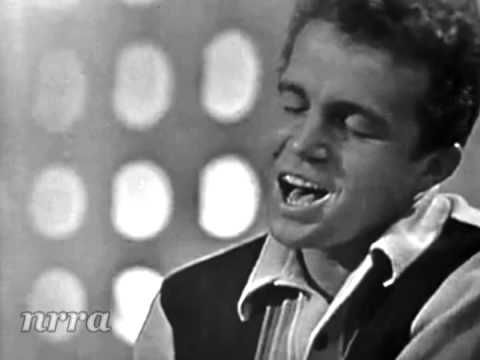




→ More from the 1970s File
View all 1970s hits →




Keep digging