The 1970s File Feature
From His Woman To You
"From His Woman To You" — Barbara Mason's Philadelphia Soul Confession Philadelphia Soul and the Art of Uncomfortable Truth Philadelphia in the early 1970s w…
01 The Story
"From His Woman To You" — Barbara Mason's Philadelphia Soul Confession
Philadelphia Soul and the Art of Uncomfortable Truth
Philadelphia in the early 1970s was producing some of the most sophisticated soul music in the world, a sound built on lush orchestration, tight rhythmic discipline, and lyrics that were willing to explore emotional territory that earlier pop had avoided. Barbara Mason was a Philadelphia native who had been part of the city's music scene since her debut in the early 1960s, and by 1974 she had developed a vocal style and an artistic sensibility uniquely matched to the kind of emotionally complex material that Philadelphia soul permitted its artists to explore.
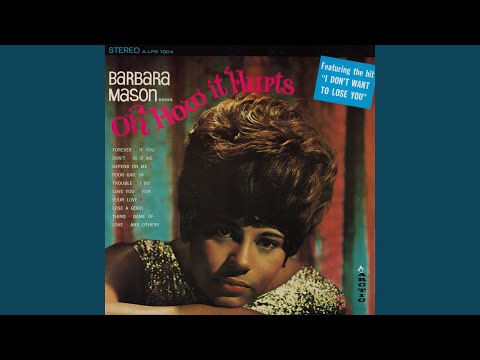
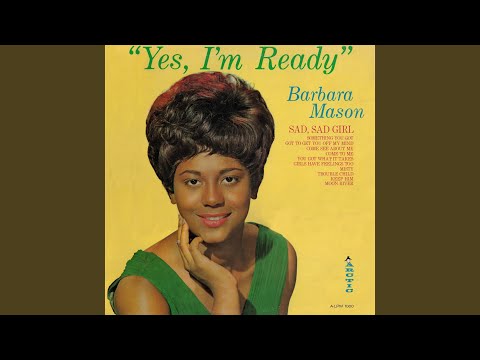
Mason's career had begun with the 1965 hit Yes, I'm Ready, a record that reached number five on the Billboard Hot 100 and established her as a young artist of real promise. Through the late 1960s and early 1970s, she continued recording and performing, building a catalog that demonstrated her facility with the full range of soul expression, from gentle romance to harder-edged emotional confrontation. "From His Woman To You" represented one of the more challenging emotional premises she had yet attempted on record, addressing the situation of a woman involved with a man who belongs to someone else, and doing so from a position of defiant self-awareness rather than simple guilt or self-pity.
The Song's Bold Premise
Few pop songs have approached their subject matter with as much directness as this one. The title announces the situation without softening or euphemism: the speaker is addressing another woman, the man's primary partner, and the address is both an acknowledgment and a challenge. In 1974, this kind of lyrical directness about female sexuality and complicated desire was genuinely unusual in mainstream pop, even within the more permissive soul idiom. Mason brought to the performance the kind of vocal authority that made the song's emotional complexity feel earned rather than merely provocative.
The production placed Mason's voice in a setting that balanced the warmth of Philadelphia soul's characteristic string arrangements with a rhythmic drive that kept the track from becoming too comfortable. This was deliberate: the subject matter was not comfortable, and the production understood that making the listener too relaxed would undercut the lyrical tension. The result was a record that felt slightly dangerous, not in a threatening sense but in the sense of something that addressed real emotional experience without flinching.
The Chart Run
The single debuted on the Billboard Hot 100 on November 30, 1974, at position 85. Over the following weeks through December and into January 1975, it climbed steadily through the chart: 73, then 62, then 51, then 38 as the year turned. The track reached its peak position of number 28 on January 18, 1975, completing a ten-week chart run that placed it solidly in the upper third of the Hot 100. A peak of 28 with ten weeks on the chart represented genuine commercial achievement, the kind that required sustained radio support across the holiday season, a period when competition for airplay is intense and radio programmers are conservative about adding unfamiliar or challenging material.
The fact that a song with this particular premise managed to maintain a ten-week chart run through the winter of 1974-1975 suggests that the audience responded to Mason's performance with enough enthusiasm to keep program directors returning to it. Songs about complicated romantic situations sometimes find broader audiences than more conventionally uplifting material, because they address experiences that a significant portion of listeners recognize from their own lives but rarely hear acknowledged directly in commercial music.
Mason's Place in Soul History
Barbara Mason occupies an interesting position in the history of Philadelphia soul. She was of the first generation to record in the city's studios, predating the formal consolidation of the Philadelphia International Records operation that would define the genre's commercial peak in the early 1970s. Her earlier work appeared on other labels, and her later recordings including "From His Woman To You" found her working within the evolved sound of the city's music scene rather than at its commercial center.
Her vocal approach was always more conversational than theatrical, which suited material that was asking the listener to participate in a private emotional situation. The intimacy of her delivery was a technical choice as much as a personal characteristic, creating the sense that she was confiding rather than performing, which made the emotional content of songs like this one land with unusual directness. In a genre not short of powerful vocalists, that conversational quality was Mason's distinctive contribution.
A Record That Respected Its Listener
What is most striking about "From His Woman To You" from any temporal distance is how much it respected the intelligence and emotional experience of its audience. It did not simplify the situation it described, did not assign clear moral roles, and did not resolve the tension it created with a tidy emotional conclusion. It presented a complicated human situation with candor and left the listener to sit with the complexity, which is a genuinely mature artistic choice for a commercial pop record made in 1974.
That respect for complexity is what gives the song its continued relevance. Situations like the one it describes do not become less common over time, and music that addresses them with honesty rather than evasion continues to find listeners who recognize what it is talking about. Barbara Mason built a small but real piece of pop history with this record. Put it on and hear exactly why it found the audience it did.
"From His Woman To You" — Barbara Mason's singular moment on the 1970s charts.
02 Song Meaning
The Themes and Legacy of "From His Woman To You" by Barbara Mason
The Third Party Speaks
Pop music has explored the romantic triangle from almost every possible angle over the decades, but the address that "From His Woman To You" takes is genuinely uncommon: the speaker is the other woman, and she is speaking directly to the primary partner. This is not the familiar confession of guilt or the defiant declaration of victory over a romantic rival. The address is more complicated than either of those, holding within it something closer to an acknowledgment between two women who find themselves connected through a man's divided attention and the complicated feelings that generates.
Barbara Mason brought to this material an emotional intelligence that prevented the song from becoming simply scandalous. Soul music in the early 1970s had developed a tradition of addressing adult romantic situations with directness and without moral simplification, and Mason was working within that tradition while pushing its boundaries slightly further toward emotional complexity. The listener is not positioned to judge the speaker but to understand her, which is a considerably more difficult artistic challenge.
Female Desire and Complicated Relationships in Early 1970s Soul
The cultural context of 1974 is important for understanding how this song was received. The women's movement had expanded the range of experiences that popular culture was willing to address directly, including aspects of female desire and agency that earlier decades had kept off the commercial pop record. Soul music, with its roots in musical forms that had always been more candid about physical and emotional experience than mainstream pop, was particularly well positioned to explore this expanded territory.
Songs that refused to simplify complicated female emotional situations into victim narratives or straightforward moral lessons were part of a larger cultural shift in how women's inner lives were being represented in popular culture. Mason's recording participated in that shift, offering a female speaker who was neither innocent nor simply guilty, who had made choices she was prepared to acknowledge and whose emotional experience the song treated as worthy of serious attention. That refusal to moralize was itself a kind of feminist statement, even if it was not framed in explicitly political terms.
The Philadelphia Soul Aesthetic and Emotional Realism
Philadelphia soul's willingness to address adult emotional situations with candor was one of the genre's defining characteristics. The productions associated with the Philadelphia sound tended to treat their lyrical content as genuinely important, matching the emotional complexity of the words with musical settings that were sophisticated enough to carry that weight. String arrangements that could suggest both warmth and tension, rhythm sections that drove the emotional momentum, vocal performances that were asked to communicate nuance rather than simply power: these were the tools of the Philadelphia approach.
Mason's vocal performance on "From His Woman To You" demonstrates exactly this kind of emotional precision. She does not over-emote, which would have turned the song's complexity into melodrama. She also does not underplay, which would have drained it of the emotional stakes that make it worth listening to. The calibration she achieves is the kind that only comes from a deep understanding of the material and a genuine commitment to serving the song's emotional truth rather than the singer's own expressiveness.
Legacy and Cultural Significance
Barbara Mason's "From His Woman To You" has maintained a reputation among soul music historians and enthusiasts as one of the more honest and emotionally complex recordings of its era. Its chart peak of 28 during a ten-week run in late 1974 and early 1975 was a real commercial achievement, but the song's lasting significance is the emotional territory it mapped and the artistic courage it demonstrated in doing so without softening the edges.
The song's continued discovery by new listeners through streaming and soul music revival circles reflects the enduring appeal of music that respects the audience's ability to sit with moral complexity. Mason did not offer easy resolutions because the situation she was describing does not have easy resolutions. The emotional honesty of that choice is what keeps the record alive and what makes it more than a period artifact. It is a document of what popular music can do when it decides to tell the truth.
→ More from Barbara Mason
View all Barbara Mason hits →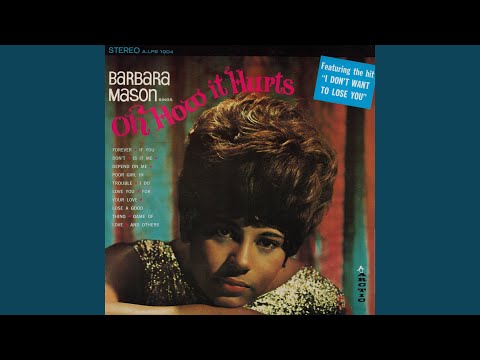

→ More from the 1970s File
View all 1970s hits →




Keep digging