The 1960s File Feature
Sad, Sad Girl
Barbara Mason and the Philadelphia Soul of "Sad, Sad Girl" In the summer of 1965, Philadelphia was emerging as a serious contender in the geography of Americ…
01 The Story
Barbara Mason and the Philadelphia Soul of "Sad, Sad Girl"
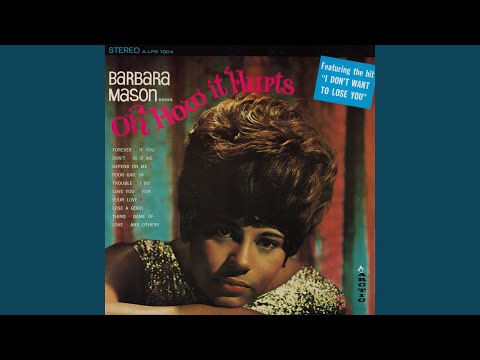
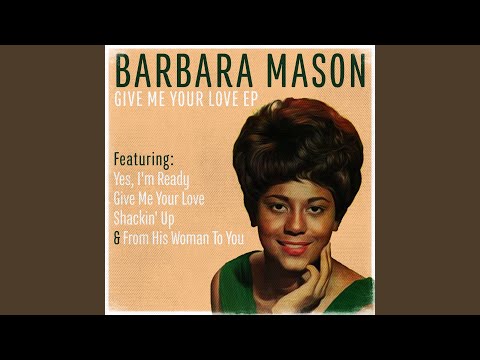
In the summer of 1965, Philadelphia was emerging as a serious contender in the geography of American soul music, its local scene producing artists and records that would eventually coalesce into the fully realized sound later celebrated as Philadelphia soul. Among the voices that contributed to that emergence was Barbara Mason, a teenager from the city whose debut single "Yes, I'm Ready" had already caught significant attention. "Sad, Sad Girl," her follow-up, pushed her further up the Billboard Hot 100, reaching number 27 and spending nine weeks on the chart, confirming that her initial commercial success was not a fluke.
Mason was born in Philadelphia in 1947, and her musical development was shaped by the rich local gospel and R&B scene that the city sustained through the postwar decades. She began performing publicly at an early age and demonstrated the kind of natural vocal authority that made her an attractive prospect for the city's emerging independent record labels. Her signing to Arctic Records connected her with the local infrastructure that would give her early releases the production polish and distribution reach necessary for national chart placement. Arctic was a small label, but it had the ambition and the local music industry connections to punch above its weight class in the competitive mid-1960s soul"Yes, I'm Ready" had established Mason's commercial viability with its straightforward, emotionally direct treatment of romantic anticipation. The song's success owed much to Mason's ability to convey genuine feeling without pushing into the kind of theatrical intensity that could alienate listeners outside the core soul audience. She had the rare quality of sounding simultaneously trained and natural, polished enough for mainstream radio but raw enough to retain the authenticity that soul audiences demanded.diences demanded.
"Sad, Sad Girl" extended these qualities into a more overtly melancholic emotional register. Debuting on the Billboard Hot 100 on August 7, 1965, at number 90, the single climbed methodically through the August and September weeks: to 68, then 55, then 44, then 34, before reaching its peak of 27 during the chart week of September 25, 1965. The nine-week run was compact by the standards of her first hit but reflected consistent commercial momentum that demonstrated genuine national radio support rather than regional concentration.
The production on the record reflected the Philadelphia approach of the mid-1960s, which differed from the contemporaneous Motown sound in its slightly rougher edges and its willingness to let the emotional weight of the vocal performance carry more of the record's impact without the cushioning of elaborate orchestration. The strings that appear on the recording are present to support and underscore Mason's performance rather than to dominate it, and the rhythm section maintains a pulse that is propulsive without being aggressive. This calibration was characteristically Philadelphian: sophisticated enough for pop radio, earthy enough to retain soul credibility.
The competitive landscape in which "Sad, Sad Girl" appeared was formidable. The summer and fall of 1965 saw releases from Motown's most accomplished artists, including multiple chart entries from Marvin Gaye, the Temptations, the Supremes, and the Four Tops, as well as major entries from Stax-distributed artists and a range of independent Southern soul acts. For an eighteen-year-old from Philadelphia releasing her second single on a local independent label to reach the top thirty nationally in that environment was a considerable achievement.
Mason's subsequent career would take her through various labels and sonic environments, and she would continue to place records on both the pop and R&B charts through the following decades. But the 1965 period, and the one-two punch of "Yes, I'm Ready" and "Sad, Sad Girl," established the foundation of her reputation as one of Philadelphia's most gifted vocal talents. The city's music industry took note, and Mason would eventually benefit from the fully developed Philadelphia soul infrastructure that emerged in the early 1970s through the work of producers Kenny Gamble and Leon Huff. Those later recordings would find her audience still loyal, precisely because the emotional honesty she demonstrated on "Sad, Sad Girl" in 1965 remained the constant through her evolving commercial context.
02 Song Meaning
The Meaning Behind "Sad, Sad Girl"
"Sad, Sad Girl" occupies a central position within one of popular music's most enduring emotional territories: the articulation of romantic pain from within the experience itself. The doubled adjective in the title is not merely stylistic emphasis; it signals a depth of sadness that ordinary language struggles to contain. By intensifying the descriptor, the song immediately communicates that the emotional state being described exceeds the usual vocabulary of loss, and this excess is what gives the record its particular power.
Barbara Mason's performance serves the song's emotional logic with exceptional skill. She was eighteen years old at the time of the recording, and the youth in her voice is inseparable from the vulnerability the song requires. There is no distance between performer and material; Mason inhabits the sadness directly, without the protective irony or stylistic detachment that a more experienced performer might have reached for. This unmediated quality is what makes the record feel genuine rather than calculated, and it is the primary reason the song achieved the national chart success it did in the competitive summer of 1965.
The song's thematic territory is the aftermath of romantic loss, a subject so common in popular music that distinguishing one treatment from another requires attention to the specific quality of feeling each recording conveys. What distinguishes "Sad, Sad Girl" is not novelty of subject but fidelity of emotional rendering. The sadness the song describes is specific rather than generic: not the clean, self-contained sadness of a completed grief process, but the messier, more persistent sadness of someone still inside the experience, still surprised by its weight and still without a clear path through it.
The Philadelphia soul context in which the song was produced gave it a particular sonic character that reinforced its emotional content. The city's mid-1960s sound was characterized by a directness that suited the expression of genuine feeling: less polished than Motown, less rough than the deepest Southern soul, it occupied a middle space where emotion could be presented with clarity rather than being either over-produced into abstraction or under-produced into rawness. "Sad, Sad Girl" benefits from this calibration; the production supports the feeling without overwhelming it.
The song also participates in a tradition of African American popular music in which the expression of pain is itself a form of dignity. The blues tradition, which underlies all of American soul music, does not treat sadness as weakness but as evidence of depth of feeling and engagement with life. To be a sad girl in this tradition is not to be diminished but to be fully alive to the realities of love and loss. Mason's performance implicitly invokes this tradition, transforming what might otherwise seem like simple lament into something that carries genuine emotional authority.
The repetition encoded in the title reappears throughout the recording as a structural principle. The reiteration of phrases and feelings that characterizes the best soul music of the period serves a specific psychological function: it mimics the circular, repetitive quality of grief itself, the way the mind returns again and again to the source of pain in an attempt to process what has not yet been resolved. "Sad, Sad Girl" is not just a description of grief; it is a formal enactment of grief's essential quality, the impossibility of simply moving on. That formal intelligence, whether consciously intended or intuitively achieved, elevates the record from simple pop song to emotional document.
→ More from Barbara Mason
View all Barbara Mason hits →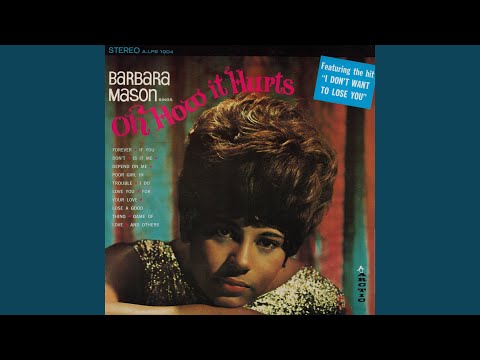

→ More from the 1960s File
View all 1960s hits →




Keep digging