The 1960s File Feature
Come On Up
Come On Up by The Young Rascals Picture a sweaty club somewhere in the New York metro area in the middle of the 1960s, the kind of room where the organ is lo…
01 The Story
"Come On Up" by The Young Rascals
Picture a sweaty club somewhere in the New York metro area in the middle of the 1960s, the kind of room where the organ is louder than the conversation and the floor never quite stops moving. That world, the one of go-go boots and Vox amplifiers and packed Long Island dance halls, is exactly where The Young Rascals came from, and you can hear every bit of it crackling inside this two-and-a-half-minute burst of blue-eyed soul. It does not waste a second. It grabs you by the collar and dares you to sit still.
A Band Built on the Bandstand
By the time this single arrived, The Young Rascals were no overnight novelty. They had built their reputation the hard way, playing relentless live sets and learning to read a crowd from behind their instruments. The lineup of Felix Cavaliere on the organ and vocals, Eddie Brigati on vocals and percussion, Gene Cornish on guitar, and Dino Danelli on drums had already broken through earlier in 1966 with the explosive "Good Lovin'", a song that hit the top of the charts and announced them as one of the most exciting acts working the American club circuit. They were a group of white kids from the Northeast who had soaked up rhythm and blues until it ran in their veins, and audiences responded to the sheer conviction of it.
The Sound of an Organ on Fire
This track is essentially Cavaliere's playground. His organ work churns and swirls, giving the song a thick, gospel-tinged drive that pushes everything forward. Danelli, widely regarded as one of the great rock drummers of the era, keeps the engine roaring with a restless, propulsive beat. There is nothing polite about the arrangement. It is loud, urgent, and built for motion, the sound of a band that knew its primary job was to make people dance until their feet hurt. Where many of their peers leaned on jangle and harmony, the Rascals leaned on groove and grit.
A Modest Climb Up the Hot 100
For all its energy, the single did not become one of the band's monster hits. It debuted on the Billboard Hot 100 on September 24, 1966, at number 86, and over the following weeks it clawed its way upward through the lower reaches of the chart. It peaked at number 43 during the week of October 29, 1966, and spent a total of seven weeks on the Hot 100. Coming on the heels of a chart-topping smash, those numbers might read as a relative cooldown, yet they capture a band still very much in demand, churning out singles at the breakneck pace the industry expected in those years.
A Snapshot of a Group About to Evolve
What makes this record fascinating in hindsight is where it sits in the band's arc. Within a year or two, the group, soon to drop the "Young" from their name, would pivot toward gentler, more reflective material and score enormous hits with songs like "Groovin'" and "A Beautiful Morning," and later the socially conscious anthem "People Got to Be Free." This song belongs to their earlier, rawer phase, when the priority was pure adrenaline. It is the sound of a band at full throttle before they learned how powerful they could be when they slowed down.
Why It Still Crackles
Decades later, this single remains a favorite among fans of garage rock and 1960s soul because it is unfiltered. There is no studio gloss smothering the performance, just four musicians playing as if the room is on fire. Drop the needle and you are transported to a basement club where the air is thick and the organ is howling. Press play, turn it up, and let The Young Rascals remind you why they were one of the most electric live bands of their generation.
"Come On Up" — The Young Rascals' singular moment on the 1960s charts.
02 Song Meaning
The Meaning Behind "Come On Up"
On the surface, this is a simple invitation, a come-hither call dressed up in organ swirls and a relentless beat. Yet the way it is delivered tells you almost everything about the spirit of the band and the moment that produced it. The lyric is less a story than a mood, a flirtatious summons charged with the kind of confidence that only a band riding high on a string of dance-floor triumphs could muster. There is no hesitation in it, no second-guessing, only the sound of young performers certain of their own appeal.
An Invitation Set to a Groove
The words center on temptation and pursuit, the singer beckoning someone closer, promising warmth and good times if they simply come up to where he is. It is romantic in the loosest sense, more about the thrill of the chase and the heat of the moment than about any deep emotional confession. The repetition of the central plea functions almost like a hook you can dance to, the meaning carried as much by the rhythm and the urgency of the vocal as by the literal phrases themselves. The feeling comes through the groove before the words even register.
The Confidence of the Mid-Sixties
Listen closely and you hear the swagger of a particular cultural instant. The mid-1960s American club scene prized energy and immediacy, and songs like this one were engineered for connection on a crowded floor rather than for quiet contemplation. The message is open, physical, and unguarded, reflecting a youth culture that was loosening up and learning to celebrate desire without so much apology. That openness is part of what made the Rascals feel so alive, a band fully at home in the heat and noise of a packed room.
Soul Sung Through a Different Lens
Part of the song's emotional charge comes from the band's deep love of rhythm and blues. They were channeling the gospel-rooted passion of the soul singers they admired and translating it for a wide pop audience. The yearning in the vocal is real, even if the scenario is playful, and that sincerity keeps the track from feeling like a mere exercise. You sense a band that meant every shout, that treated a dance number with the conviction others reserved for ballads. That earnestness is the secret ingredient.
A Mood More Than a Message
It would be a mistake to over-interpret a song like this one. Its purpose was never to deliver a profound statement, and reading too much philosophy into it would miss the point entirely. The meaning lives in the energy, in the way the organ and the beat conspire to make you feel invited, wanted, swept up. That is its whole emotional argument, and it makes that argument with total conviction every time the needle drops.
Why It Connected
Listeners responded because the record asked nothing of them except to move and feel good. In a year crowded with ambitious studio experiments, there was something refreshing about a song that simply wanted to lift the room. Its peak at number 43 on the Hot 100 may be modest, but its real success was always measured on the dance floor, where its meaning has never needed translation. The invitation still stands every time the organ kicks in, and the answer is still yes.
→ More from The Young Rascals
View all The Young Rascals hits →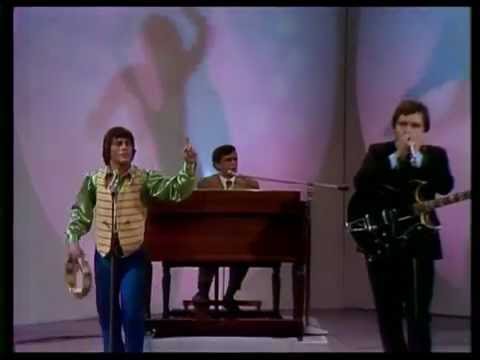

→ More from the 1960s File
View all 1960s hits →




Keep digging