The 1960s File Feature
Good Lovin'
Good Lovin' — The Young Rascals (1966) Few garage-soul singles of the mid-1960s captured the raw, unguarded energy of young America quite as directly as "Goo…
01 The Story
Good Lovin' — The Young Rascals (1966)
Few garage-soul singles of the mid-1960s captured the raw, unguarded energy of young America quite as directly as "Good Lovin'," the record that transformed The Young Rascals from a regional New Jersey club act into a nationally recognized force on the Billboard Hot 100. Released on Atlantic Records in the spring of 1966, the track shot straight to the top of the chart and cemented the group's reputation as one of the most exciting white acts working in an idiom rooted firmly in Black American rhythm and blues.
The song itself was not an original composition. It had been written by Rudy Clark and Arthur Resnick and first recorded by The Olympics in 1965, where it enjoyed modest regional attention without making a substantial national impact. When the Young Rascals got hold of the material, they rebuilt it from the foundation up, injecting a fervor and a physical insistence that made the original seem almost tentative by comparison. Vocalist Felix Cavaliere, who had honed his skills playing organ and singing in Joey Dee and the Starliters, delivered the lead vocal with a hoarse, pleading urgency that drew direct comparisons to the great soul singers working out of Memphis and Detroit at the same time.
The group's lineup at the time of the recording consisted of Cavaliere on lead vocals and organ, Eddie Brigati sharing vocal duties, Gene Cornish on guitar, and Dino Danelli on drums. Danelli in particular was a revelation, a technically accomplished jazz-trained drummer who played with a snapping authority that gave the track a rhythmic backbone far more sophisticated than most garage recordings of the period. The interplay between Cavaliere's Hammond organ swells and Danelli's kit work gave "Good Lovin'" a texture that felt simultaneously loose and locked-in, precisely the combination that made dance floors respond.
Production on the record was handled with a sensitivity to the group's live sound. The single was recorded to capture the feel of the band in full performance mode, with the vocal pushed forward in the mix to ensure that the emotion registered immediately on radio. Atlantic's engineering team, experienced in recording soul and R&B acts, understood how to place a voice in a sonic landscape that felt both intimate and large enough to fill a room.
"Good Lovin'" entered the Hot 100 and climbed with remarkable speed, reaching number one on the Billboard Hot 100 on April 30, 1966, where it held that position. The single became one of the defining hits of the spring season, competing in a chart environment that included major releases from The Beatles, The Rolling Stones, and the full range of Motown's hitmaking roster. That the Young Rascals could find the top position in that company spoke directly to the record's visceral, genre-crossing appeal.
The commercial success of "Good Lovin'" was significant not merely because of the peak position but because of what it represented culturally. The Young Rascals were a white group from the New Jersey and New York club circuit performing material that was unmistakably rooted in African American musical traditions, doing so at a time when questions of authenticity, appropriation, and cross-cultural musical exchange were being actively debated in the music press and among listeners. Critics at the time noted both the group's obvious debt to its sources and the genuine skill with which they translated that influence into something immediate and commercially powerful.
Radio programmers embraced the single enthusiastically, and it received saturation airplay on the AM stations that dominated popular music broadcasting in 1966. The record's energy translated perfectly to the transistor radio format, with the hook hitting hard enough to cut through static and the tempo perfectly suited to the driving, breathless pace that top-40 programmers preferred. The result was a record that felt inescapable throughout the spring and early summer months.
Following the success of "Good Lovin'," the Young Rascals became reliable chart presences, scoring additional major hits including "Groovin'" in 1967, which reached number one on the Billboard Hot 100 and demonstrated their range by operating in a more relaxed, summery groove. The group eventually dropped "Young" from their name and continued to evolve their sound through the late 1960s, adding more complex arrangements and incorporating psychedelic and soul-jazz elements.
The legacy of "Good Lovin'" has remained durable. The track has appeared in numerous film and television productions over the decades, each placement reintroducing the record to audiences who were not alive when it first charted. It became one of the signature songs associated with the mid-1960s AM radio era, an emblem of a moment when rock, soul, and rhythm and blues were permeable categories, and when a band from the New Jersey shore could legitimately compete at the very top of the American popular music market by playing with authentic feeling and considerable technical skill.
The Young Rascals were inducted into the Rock and Roll Hall of Fame in 1997, with "Good Lovin'" standing as one of the primary exhibits cited by the nominating committee in recognition of their contribution to American popular music. The record remains a touchstone for discussions of blue-eyed soul, the garage-rock moment of the mid-1960s, and the cross-cultural musical dialogue that shaped American popular music during one of its most creatively explosive decades.
02 Song Meaning
What "Good Lovin'" Means: Desire, Relief, and the Soul Tradition
"Good Lovin'" operates on one of the oldest, most direct frameworks in popular music: the idea that romantic love or physical affection provides relief from a generalized state of distress. The lyrical premise is not complicated, and it was never intended to be. The narrator describes a condition of emotional and physical restlessness, something close to illness or disorientation, that can only be resolved through the particular comfort that a romantic partner offers. The cure, as the song frames it, is the love of one specific person, and the craving for that cure is what drives every line of the performance.
What makes the song's meaning exceed its surface simplicity is the manner in which Felix Cavaliere and Eddie Brigati perform the sentiment. The desperation in the vocal delivery transforms what might otherwise be a pleasant dance-floor number into something closer to a genuine expression of longing. Cavaliere's vocal performance locates the song in a tradition of soul music that treated romantic need as a serious, almost existential condition rather than a casual preference. The performance says that this matters, that the need is real, and that its satisfaction would represent genuine relief rather than mere pleasure.
The soul tradition from which the song draws had long used this framework of emotional and physical need to explore wider themes of human vulnerability. By adopting the idiom with evident commitment, the Young Rascals participated in a conversation about feeling and expression that crossed the racial and regional boundaries that formally separated different American musical markets in the mid-1960s. The record's success on the Billboard Hot 100 demonstrated that audiences across those boundaries responded to the emotional content without requiring any particular credential from the performers beyond the sincerity of the performance itself.
The theme of relief through connection also fits neatly into the specific cultural mood of mid-1960s youth America. Young people in 1966 were navigating an increasingly turbulent social landscape, with the Vietnam War escalating, civil rights confrontations continuing across the South, and a broader sense of cultural instability making ordinary life feel uncertain. Within that context, a song that promises the possibility of a specific, personal remedy for generalized suffering carried resonance that went beyond the dance-floor context in which it was most commonly consumed. The simplicity of the cure the song proposes was part of its comfort: the world might be complicated, but the right person's company could make things manageable.
In terms of what the single meant for the Young Rascals' catalog and trajectory, "Good Lovin'" established several things simultaneously. It demonstrated that the group could carry a high-energy performance onto record without losing the urgency that had made them so effective as a live act. It positioned them as genuine practitioners of soul and rhythm and blues rather than mere imitators of a trend. And it gave them a commercial foundation from which to develop, to experiment with more complex arrangements, and to earn the critical credibility that would eventually produce "Groovin'" and the more psychedelic material of their later years. The number-one peak in 1966 was not just a commercial milestone but a statement of artistic legitimacy, a signal that the band's approach to the soul tradition was being received as credible and vital rather than derivative.
Decades after its release, the song continues to be understood as an emblem of a particular kind of uncomplicated but deeply felt popular sentiment. Its longevity across film soundtracks and oldies programming speaks to the way that its emotional directness transcends specific historical context. The desire it expresses, the relief it promises, and the exuberance of its delivery remain legible to listeners with no firsthand memory of 1966.
→ More from The Young Rascals
View all The Young Rascals hits →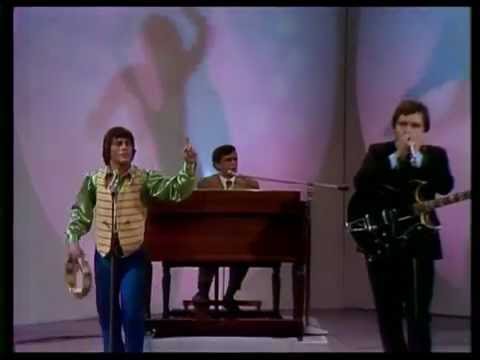


→ More from the 1960s File
View all 1960s hits →




Keep digging