The 1960s File Feature
I've Been Lonely Too Long
"I've Been Lonely Too Long" — The Young Rascals Blue-Eyed Soul at Its Peak Early 1967 was an electric moment in American popular music. Motown's assembly lin…
01 The Story
"I've Been Lonely Too Long" — The Young Rascals
Blue-Eyed Soul at Its Peak
Early 1967 was an electric moment in American popular music. Motown's assembly line was running at full capacity, the British Invasion had reconfigured the sonic landscape, and a handful of American groups were working out how to compete by absorbing R&B and soul into their own rock framework. The Young Rascals were doing this more persuasively than almost anyone. Felix Cavaliere, Eddie Brigati, Gene Cornish, and Dino Danelli had built a reputation on a hard, sweaty club sound rooted in New Jersey and New York that owed as much to Black American soul as it did to the British bands they admired.
"I've Been Lonely Too Long" arrived in January 1967 and captured the Young Rascals at the height of their powers in this format: raw, urgent, soulful, and unmistakably their own. Felix Cavaliere wrote and arranged the track, drawing on the organ-heavy, gospel-influenced soul approach that had become the band's signature. The Hammond organ was central to the Rascals' sound in a way that was distinctive even among the many organ-playing acts of the mid-1960s.
Fourteen Weeks of Momentum
The chart run of "I've Been Lonely Too Long" tells a story of slow, inexorable audience growth across a long winter season. The single debuted on the Billboard Hot 100 on January 28, 1967, entering at number 79. Over the following weeks it climbed through the sixties, fifties, forties, and thirties, building week by week with the consistency of a record that had found genuine radio traction. After fourteen weeks on the chart, it reached its peak of number 16 on April 1, 1967.
That peak positioned the record among the significant pop hits of the first quarter of 1967, a period that included some of the decade's most celebrated singles. The fourteen-week run was also a testament to the song's replay value: this was not a record that flared and faded, but one that radio audiences returned to week after week as it gradually crested.
The Sound of the Record
What you hear on "I've Been Lonely Too Long" is a band in complete control of a particular emotional frequency. Cavaliere's Hammond organ provides both rhythm and color simultaneously, locking with Dino Danelli's drumming in a way that creates an almost hypnotic forward motion. Eddie Brigati's backing vocals complement and push Cavaliere's lead, and the interplay between the two voices gives the track the call-and-response energy that is essential to its gospel-soul roots.
The song's energy rises and falls within a tight structure, never releasing the tension it builds but also never collapsing under the weight of it. This control is part of what defined the Young Rascals at their best: emotional intensity delivered through musical discipline, soul feeling that is also technically precise.
The Rascals and the Soul Question
The Young Rascals occupied a complicated position in the cultural landscape of the mid-1960s. Four young white men from the New York area making music that drew so deeply from Black American soul tradition inevitably raised questions about appropriation and authenticity. The band was generally received by Black audiences and critics as genuine rather than imitative, in part because their engagement with the music went beyond surface borrowing. Cavaliere's church-trained organ playing, Danelli's rhythmic sophistication, and the tightness of their live performance all testified to musicians who had absorbed their influences at a deep level.
This position made them important figures in the integration of soul and rock, a cultural conversation that was happening throughout the 1960s and would continue to shape American popular music for decades afterward. Their success on the Hot 100 with tracks like "I've Been Lonely Too Long" demonstrated that soul-inflected rock had a mainstream audience on both sides of racial lines.
A Moment Before "Groovin'"
"I've Been Lonely Too Long" came from the same creative well that would produce "Groovin'" later in 1967, the record that reached number one and became the Young Rascals' most celebrated hit. In retrospect, "I've Been Lonely Too Long" can be read as a preview of that creative peak: the band fully confident in its sound, capable of sustaining an emotional performance across the length of a pop single without any of the straining that less accomplished acts showed. The Rascals in early 1967 were at the top of their form, and this record documents that moment precisely. Put it on at the right volume and the organ comes for you immediately.
"I've Been Lonely Too Long" — The Young Rascals' singular moment on the 1960s charts.
02 Song Meaning
"I've Been Lonely Too Long" — Themes and Legacy
Loneliness as Physical State
There is nothing abstract about the loneliness in "I've Been Lonely Too Long." The Young Rascals render it as a physical condition, something felt in the body before it is processed by the mind. Felix Cavaliere's vocal delivery conveys this quality precisely: the voice does not reflect on the loneliness from a safe distance but inhabits it in real time, making the plea at the center of the song feel immediate and unconstructed. The song treats emotional isolation as urgency, not as melancholy. This is what distinguishes it from the many other lonely-heart records of the mid-1960s. The narrator is not resigned; they are insisting.
That insistence connects the track directly to the soul and gospel tradition the Young Rascals were drawing from. In gospel music, the plea for rescue from suffering is expressed with the same fervor that "I've Been Lonely Too Long" brings to its more secular request. The emotional mechanism is identical, even if the object of the appeal has shifted.
Youth and the Search for Connection
The mid-1960s were a moment of intense social and generational friction, and the popular music of the period reflected that friction in its obsessive return to themes of connection, belonging, and the fear of isolation. Young Americans and young Britons were navigating a cultural landscape that simultaneously offered unprecedented freedom and unprecedented uncertainty. The old social structures that had organized previous generations' romantic and social lives were under pressure, and the resulting anxiety produced a vast body of popular music centered on finding and keeping human connection.
"I've Been Lonely Too Long" fits squarely within that body of work. It does not address the political or cultural dimensions of its moment explicitly, but the emotional temperature it captures is inseparable from that context. The loneliness it describes is not simply the loneliness of one person; it is the loneliness of a generation working out how to be close to other people under new and uncertain conditions.
The Organ's Role in Soul Music
Understanding the song's emotional impact requires paying attention to what the Hammond organ is doing throughout the track. Cavaliere's organ playing is not decoration; it is the emotional substrate on which everything else rests. The instrument's characteristic sound, warm, slightly fuzzy, capable of both gentleness and enormous power, had been central to gospel and soul music for decades. When Cavaliere deployed it in a rock context, he was bringing all of those associations with him.
The organ in soul music carries connotations of church, of community, of collective emotional experience. Its presence in "I've Been Lonely Too Long" transforms what might otherwise be a simple pop complaint into something that feels communal and rooted. The loneliness the song describes is set against an implied backdrop of belonging, and the organ is the sonic representation of that backdrop.
Blue-Eyed Soul and Cultural Authenticity
The Young Rascals' work raises perennial questions about cultural borrowing in popular music that are worth addressing honestly. Their appropriation of Black musical forms was widespread practice among white rock and pop acts of the era, and the specific question of whether any given act was genuinely engaged with the tradition or simply mining it for commercial advantage does not have a universal answer. In the Rascals' case, the depth of their engagement with soul music is evident in the technical choices they made: the emphasis on organ, the call-and-response vocal approach, the rhythm section's gospel inflections.
Those choices reflect musicians who listened hard and played harder. The chart success they achieved with tracks like "I've Been Lonely Too Long" also helped bring the sound to audiences who might not otherwise have encountered it, which is a complicated legacy but not a simple one to dismiss. The song endures because the emotion in it is real, and real emotion in recorded music does not respect the cultural boundaries that produced it.
→ More from The Young Rascals
View all The Young Rascals hits →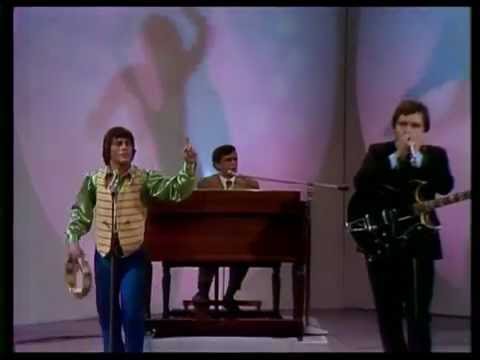


→ More from the 1960s File
View all 1960s hits →




Keep digging