The 1960s File Feature
He Will Break Your Heart
He Will Break Your Heart: The Righteous Brothers' 1966 Brief Chart Appearance June 1966 was a complicated moment for the Righteous Brothers. The duo of Bill …
01 The Story
He Will Break Your Heart: The Righteous Brothers' 1966 Brief Chart Appearance
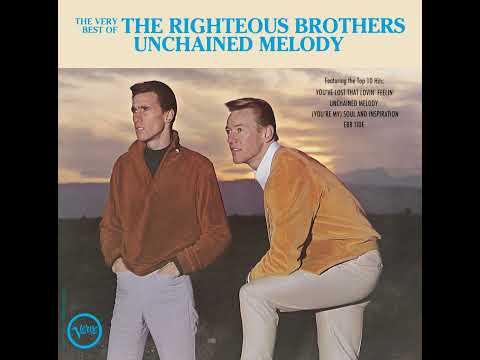
June 1966 was a complicated moment for the Righteous Brothers. The duo of Bill Medley and Bobby Hatfield had achieved extraordinary commercial success with their Phil Spector productions, with “You've Lost That Lovin' Feelin'” and “Unchained Melody” establishing them as one of the most commercially powerful vocal acts of the mid-1960s. But their relationship with Spector had ended, and the post-Spector recordings were showing the difficulty of finding another production context equal to what that partnership had produced.
The Post-Spector Challenge
Phil Spector's Wall of Sound productions for the Righteous Brothers had created recordings of such sonic density and emotional intensity that virtually any subsequent production would have sounded comparatively thin. The challenge facing Medley and Hatfield after their departure from Philles Records was real and commercially significant. Their recordings for Verve Records in the mid-1960s tried to maintain the emotional intensity of the Spector work through different production approaches, with varying success. “He Will Break Your Heart” was part of this transitional period, released at a moment when the duo was searching for a production context that could sustain their commercial momentum.
One Week on the Hot 100
“He Will Break Your Heart” debuted on the Billboard Hot 100 on June 4, 1966, at number 91, its peak and only chart position. The single's one-week chart life was a modest performance by the standards the duo had established in their Spector period, but it reflected a difficult moment in their commercial trajectory rather than any fundamental diminishment of their vocal abilities. Both Medley's baritone and Hatfield's tenor remained extraordinary instruments; the challenge was finding the right frame for them.
The Medley and Hatfield Voices
The Righteous Brothers' commercial identity was built on the specific combination of two extraordinary and entirely different voices. Medley's deep, resonant baritone carried the emotional weight of loss and yearning with a fullness that filled the low register of any recording; Hatfield's soaring tenor provided the anguished high notes that gave the duo's recordings their most immediately striking quality. The interplay between these two registers created a vocal effect that was genuinely unlike anything else in 1960s pop, and that distinctiveness was the duo's strongest commercial and artistic asset.
The Blue-Eyed Soul Tradition
The Righteous Brothers occupied an interesting position in the cultural politics of 1960s American music. As white artists working in the R&B and soul tradition, they were part of what was being called “blue-eyed soul,” a category that was both commercially successful and culturally complicated. Their success with Black radio audiences alongside mainstream pop success reflected the genuine quality of their vocal work; their authenticity within the soul tradition was earned by musical rather than demographic identity. The brief chart appearance of “He Will Break Your Heart” belongs to the period when that authenticity was seeking a new commercial vehicle to express itself through.
The Return and the Legacy
The Righteous Brothers' story did not end with their post-Spector commercial struggles. Their 1974 recording of “Rock and Roll Heaven” returned them to the top 5; their original recordings continued to find new audiences through television placements and film use, most notably in Ghost in 1990. The two voices that made this brief chart entry possible went on to demonstrate their durability across decades. Press play and hear what those voices sounded like in a moment of transition, still extraordinary even in search of the right context.
Medley and Hatfield as a Vocal Partnership
What made the Righteous Brothers' brief chart appearances in their post-Spector period interesting was the continued demonstration of what the two voices could do in combination. Bill Medley's baritone and Bobby Hatfield's tenor were not merely two different registers occupying different parts of the sonic spectrum; they had developed a specific chemistry through years of performing together that gave their combined sound a quality greater than the sum of its parts. Even in a one-week chart appearance, the evidence of that chemistry is audible: the interplay between the registers, the way each voice contextualizes and amplifies the other, was an artistic achievement that the chart position alone could not fully capture. The Righteous Brothers' best vocal moments were always about the dialogue between these two completely different but perfectly complementary voices.
“He Will Break Your Heart” - The Righteous Brothers' singular moment on the 1960s charts.
02 Song Meaning
Warning and Wisdom: The Emotional Geography of “He Will Break Your Heart”
Warning songs occupy a specific and interesting place in the popular music tradition. Where most romantic songs address the person who is the object of romantic feeling, warning songs address a third party, someone who is about to become romantically involved with a person the singer knows, and the singer's position is one of privileged knowledge: I know what this person is really like, and I am telling you for your protection.
The Witness as Narrator
The warning song places the singer in the role of a witness, someone who has either personal experience with the person being warned about or who has observed what that person does to others. This narrative position gives the song a quality of dramatic irony: the listener may suspect that the singer is not entirely disinterested, that the warning may be motivated by jealousy or possession as much as by genuine concern for the person being warned. That ambiguity is part of what makes warning songs interesting: they present themselves as acts of generosity while potentially functioning as acts of romantic competition.
The Righteous Brothers and Emotional Authority
The Righteous Brothers' vocal approach gave warning songs a particular emotional weight. Medley's baritone carried the authority of experience, a voice that sounded like it had lived through what it was describing; Hatfield's tenor carried the anguish of someone who had watched someone they cared about make painful choices. Together, the two voices created a comprehensive emotional portrait of the warning's sender: deeply invested in the situation, emotionally credible, and committed to the communication with full vocal force. A warning delivered by voices of this quality carried considerably more impact than the same warning delivered in a more casual register.
Heartbreak as an Ongoing Possibility
The title locates heartbreak in the future: “he will break your heart,” not “he has broken hearts” or “he broke my heart.” The future tense gives the warning its urgency; the breaking has not yet happened, which means it can still be prevented. The song positions the listener in the role of potential victim who still has agency, who can take the warning seriously and act to protect herself. This is a more empowering narrative than the after-the-fact lament, and it gives the song a forward-looking quality that is somewhat unusual in the genre of romantic pain songs.
The Gender Dynamics of Protection
Warning songs in the pop tradition have often involved male singers warning female listeners about other men, which creates a specific dynamic of protective masculinity. The singer presents himself as more trustworthy than the person being warned about, as someone whose concern for the listener's wellbeing is genuine rather than predatory. This dynamic was implicit in the Righteous Brothers' version, though the specific emotional register of the Blue-Eyed Soul tradition gave the protection a quality of genuine feeling rather than mere convention.
What the Warning Actually Says
The deepest message of a song like “He Will Break Your Heart” is about the nature of romantic knowledge and its transmission. The singer knows something the listener does not know; the song is an attempt to share that knowledge before damage occurs. This is itself a form of intimacy, the sharing of knowledge born from experience or observation, and the best warning songs create a sense of genuine concern between singer and listener that goes beyond the specific romantic situation being described. The Righteous Brothers' vocal credibility was what made that intimacy feel real rather than performed, and that credibility is what gives the song its lasting emotional power.
→ More from The Righteous Brothers
View all The Righteous Brothers hits →

→ More from the 1960s File
View all 1960s hits →




Keep digging