The 1960s File Feature
(You're My) Soul And Inspiration
(You're My) Soul And Inspiration — The Righteous Brothers After the Spector Years There is a specific kind of dread that comes with following a masterpiece. …
01 The Story
(You're My) Soul And Inspiration — The Righteous Brothers
After the Spector Years
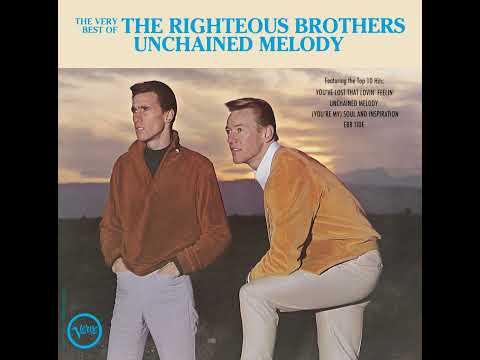
There is a specific kind of dread that comes with following a masterpiece. By early 1966, the Righteous Brothers had already recorded "You've Lost That Lovin' Feelin'," a song that had climbed to number one on both sides of the Atlantic and was already being cited as one of the greatest pop records ever made. Producer Phil Spector's Wall of Sound had enveloped Bill Medley and Bobby Hatfield in layers of orchestration so dense and emotional that the record seemed to redefine what a single could do. Now, the duo had left Spector's Philles label and signed with Verve Records. The pressure to prove they could replicate that commercial and artistic peak without their famous collaborator was enormous.
Bill Medley and Bobby Hatfield had built their reputation on vocal contrast, Medley's rich, resonant baritone against Hatfield's soaring tenor. That combination had given "Lovin' Feelin'" its emotional range, and it was the primary asset they carried to their new situation. The partnership with Verve meant working with producer Barry Mann and songwriter Cynthia Weil, who had co-written several major hits and were well-versed in the orchestral pop-soul style the duo had made their own.
Writing Toward a Sequel in Spirit
Barry Mann and Cynthia Weil wrote "(You're My) Soul And Inspiration" specifically with the Righteous Brothers' vocal architecture in mind. The song is structured to take full advantage of the same dynamic that had made "Lovin' Feelin'" so compelling, a verse that builds with controlled restraint before the chorus opens wide and lets the voices soar. Mann and Weil were among the most accomplished songwriters of the Brill Building era, and they understood exactly how to tailor material to a specific vocal palette.
The production on the recording echoes the sweeping orchestral approach associated with their earlier work, lush strings, powerful brass accents, and a rhythm section built to support rather than dominate. The arrangement creates a framework within which Medley and Hatfield could perform with the kind of theatrical emotional commitment that was their signature. When the record was completed, everyone involved understood they had something with serious commercial potential.
A Rocket Ride up the Hot 100
The single debuted on the Billboard Hot 100 on March 5, 1966, entering at number 90. What followed was one of the most aggressive chart climbs of that entire year. Within two weeks it had jumped to number 14, then to number 8 the week after that, and to number 3 in the week ending April 2. The record hit number one on April 9, 1966, and spent a total of three weeks at the top position. It remained on the Hot 100 for 13 weeks overall, one of the more sustained chart runs of the spring season.
That kind of acceleration from debut to summit, from 90 to number one in roughly five weeks, reflected both the quality of the record and the enormous goodwill the duo had built with radio programmers and listeners through their earlier success. It also confirmed that the Righteous Brothers had the commercial standing to exist independently of Phil Spector's production machinery. The number one achievement was both a creative victory and a business statement.
Comparing the Mountains
Inevitably, the conversation about "(You're My) Soul And Inspiration" returns to the comparison with "You've Lost That Lovin' Feelin'." Some critics at the time dismissed the 1966 record as a calculated imitation of the earlier sound, a view that has softened considerably over the decades. Most contemporary assessments recognize that while the two songs occupy similar emotional territory, the 1966 recording is its own accomplished work. The vocal performances are, if anything, even more controlled and precise, with Medley in particular demonstrating a dynamic range that few pop vocalists of the era could match.
The song won a Grammy Award for Best Rhythm and Blues Recording in 1967, a recognition that placed it in serious company and acknowledged the skill involved in its creation. That honor helped consolidate its status as something more than a hit single, confirming it as one of the defining recordings in the duo's catalog.
Staying Power
The song has appeared in films and television productions across five decades, typically deployed at moments when a production needs to convey sweeping romantic emotion with the authority of an established classic. The Righteous Brothers' catalog as a whole has proven remarkably durable, sustained by the unambiguous quality of those voices and the emotional directness of the material they chose. Medley continued performing the song as a solo artist after his partnership with Hatfield ended, and the recording retains its power precisely because it asks so little of the listener except to feel what the voices are feeling. Put the record on and the rest takes care of itself.
"(You're My) Soul And Inspiration" — The Righteous Brothers' singular moment on the 1960s charts.
02 Song Meaning
(You're My) Soul And Inspiration — Meaning, Themes, and Legacy
The Anatomy of Devotion
At its most fundamental level, "(You're My) Soul And Inspiration" is a song about the terrifying completeness of love. The narrator does not simply love; he is structured around love. The object of his devotion is not a preference or a choice but an essential condition, the thing that makes his continued existence possible. Barry Mann and Cynthia Weil built the lyric around this idea of existential dependency, the notion that some people enter your life and reorganize everything so thoroughly that life without them becomes literally unthinkable.
That is a familiar theme in popular music, but Mann and Weil's handling of it carries particular weight because the lyric refuses to soften the stakes. The narrator is not celebrating a happy relationship; he is reckoning with vulnerability. His soul and inspiration are external to him, located in another person. That is a condition of profound openness, and the melody and arrangement amplify rather than cushion the exposure.
The Emotional Architecture of Pleading
There is something important in the song's tone, which sits precisely between confidence and desperation. The narrator knows what he feels with complete certainty, but he is less certain whether the other person understands or shares it. That ambiguity between assurance and appeal gives the performance its tension. Bill Medley's baritone carries the weight of someone stating facts; Bobby Hatfield's tenor carries the feeling of someone reaching for something just out of grasp. Together, they create a vocal texture that contains both certainty and longing simultaneously, which is a remarkably accurate representation of how serious romantic attachment actually feels.
Mid-Sixties Pop and the Language of Soul
The song arrived in 1966 at a moment when the boundary between pop and soul music was productively blurry. Recordings by artists like Otis Redding, Wilson Pickett, and Sam Cooke had expanded the emotional vocabulary available to popular music, and white pop artists were absorbing those influences in ways that the industry labeled "blue-eyed soul." The Righteous Brothers occupied an interesting position in that conversation. They were mainstream pop stars who worked in an overtly soulful idiom, and their commercial success demonstrated that audiences were not particularly interested in keeping those categories separate.
By deploying the language of soul music in a song about romantic devotion, Mann and Weil were participating in a broader cultural conversation about emotional authenticity in popular music. The word "soul" in the title is not accidental; it signals that the song intends to engage with a tradition of emotional directness that audiences associated with Black American music, while also insisting that those feelings are universally human.
Legacy and the Question of Originality
The comparison to "You've Lost That Lovin' Feelin'" has never entirely gone away, and it is worth addressing directly. The two songs share a sonic family resemblance because they share the same vocal protagonists and because Mann, Weil, and Spector all drew from the same orchestral pop tradition. What distinguishes "(You're My) Soul And Inspiration" is its affirmative stance. Where "Lovin' Feelin'" is an elegy for something disappearing, this song is a declaration about something present and essential. The emotional direction is entirely different even if the sonic atmosphere is similar.
That distinction matters for understanding why the song has remained beloved rather than merely remembered. Its Grammy recognition, its continued placement in film and television, and its sustained popularity on streaming platforms all suggest that listeners find in it something genuine rather than derivative. The voices of Medley and Hatfield remain among the most distinctive pairings in the history of American pop, and this recording captured them at the very peak of their powers.
→ More from The Righteous Brothers
View all The Righteous Brothers hits →

→ More from the 1960s File
View all 1960s hits →




Keep digging