The 1960s File Feature
Ebb Tide
"Ebb Tide" — The Righteous Brothers and the Peak of Blue-Eyed Soul The Wave at Its Highest Picture the American pop landscape at the close of 1965. The Briti…
01 The Story
"Ebb Tide" — The Righteous Brothers and the Peak of Blue-Eyed Soul
The Wave at Its Highest
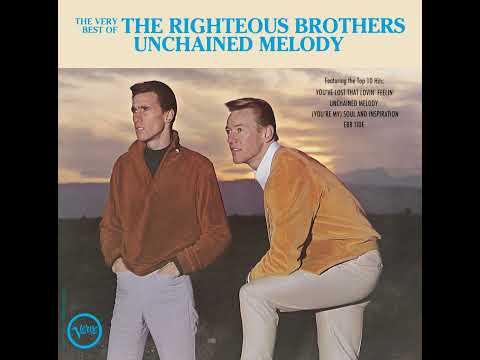
Picture the American pop landscape at the close of 1965. The British Invasion had reshaped the radio dial, Motown was producing hits with factory-like precision, and a pair of California singers who called themselves the Righteous Brothers were doing something that defied easy categorization: performing Black American soul music with such technical conviction and emotional authenticity that their records were being played on R&B stations alongside artists who had grown up in the tradition they were channeling. "Ebb Tide" arrived in December 1965 as a capstone to one of the most remarkable commercial periods any duo had enjoyed, following the epochal "You've Lost That Lovin' Feelin'" and "Unchained Melody" into the upper reaches of the charts.
Bill Medley and Bobby Hatfield
The Righteous Brothers, Bill Medley and Bobby Hatfield, had a vocal chemistry that was as unusual as it was powerful. Medley's baritone, wide and dark and capable of enormous emotional weight, existed in productive tension with Hatfield's soaring tenor, and the contrast between the two voices gave their recordings a dramatic range that few pop acts of the era could match. "Ebb Tide" was a showcase for that contrast, building from intimate understatement to full-voiced declaration in the way that the best ballads of the period were constructed, with patience and genuine dynamic commitment.
A Classic Song Given New Life
"Ebb Tide" was not a new composition when the Righteous Brothers recorded it. The song had been written by Carl Sigman and Robert Maxwell and had been a hit for several artists in the 1950s, including Frank Chacksfield and Roy Hamilton. The Righteous Brothers' version updated the material through their characteristic treatment, applying the blue-eyed soul approach to a piece of material that already had proven emotional architecture. The result was one of the most radio-friendly recordings of their career, a ballad that sat comfortably alongside their original material without feeling like a concession to nostalgia.
The Chart Climb Through Winter
"Ebb Tide" debuted on the Billboard Hot 100 on December 4, 1965, at number 41. Its rise was rapid and steady through the holiday season, climbing through the twenties, then the teens, reaching its peak position of number 5 on January 8, 1966. The track spent nine weeks on the Hot 100, a strong run for a ballad in a competitive market. The timing of its chart peak, in the first week of the new year, gave it a particular atmospheric appropriateness: a song about the tides of emotion arriving at the moment when many listeners were themselves reflecting on what the passing year had carried away and what the new one might bring.
The Verve Label and a New Chapter
"Ebb Tide" was released on Verve Records, marking a transitional period for the duo. The Righteous Brothers' previous commercial peak had come during their time with Philles Records and producer Phil Spector, whose Wall of Sound approach had defined the sonic character of their biggest hits. Moving to Verve brought a slightly different production aesthetic, one that retained the emotional power of their performances while allowing more of the two voices' natural interplay to sit at the front of the recording. The song benefited from this shift: without the maximalist production shaping every sonic detail, the chemistry between Medley's baritone and Hatfield's tenor was more immediately audible, and the emotional directness of the performance landed with particular clarity.
Legacy in the Blue-Eyed Soul Canon
The Righteous Brothers' work from 1964 through 1966 represents one of the most concentrated streaks of commercial achievement in blue-eyed soul history. Their recordings with producer Phil Spector and the Moonglow label, followed by their work with Verve, established a body of work that continues to appear in films, commercials, and cultural conversations decades later. "Ebb Tide" is perhaps less famous than "You've Lost That Lovin' Feelin'" or "Unchained Melody," but it belongs to the same canon of recordings that demonstrated what two voices and the right material could accomplish in a studio. Find it, turn it up, and let the tide come in.
"Ebb Tide" — The Righteous Brothers' singular moment on the 1960s charts.
02 Song Meaning
"Ebb Tide" — Loss, Longing, and the Ocean as Emotional Metaphor
Water as the Language of Feeling
Poets and songwriters have used the sea as a metaphor for emotional states for as long as either form has existed, and with good reason. Water is patient and overwhelming, beautiful and indifferent, capable of both sustaining life and ending it. The ebb tide specifically, the withdrawal of water from the shore, carries connotations of loss and departure that translate immediately into emotional register. A song built on this image is already operating in territory that listeners recognize instinctively, before a single word of the specific lyric has landed.
The Architecture of the Pop Ballad
"Ebb Tide" belongs to a specific tradition of the orchestrated pop ballad that reached its peak sophistication in the late 1950s and early 1960s before the British Invasion partially displaced it. These songs were built on long melodic lines, generous arrangements, and vocal performances that treated emotional expression as a formal skill to be developed and refined. The Righteous Brothers brought their blue-eyed soul intensity to this tradition, giving the material a rawness and directness that distinguished their version from the more polished interpretations that had preceded it.
Longing and Its Cultural Context in 1965
A song about emotional withdrawal arriving in late 1965 reached audiences who were navigating significant uncertainty. The Vietnam War was escalating, the civil rights movement was producing both legislative victories and ongoing violence, and the social fabric that the early 1960s had taken for granted was clearly shifting. Pop ballads about longing and loss served an important emotional function in this environment, giving listeners language for feelings that the public conversation was struggling to accommodate. The private experience of loss, whether romantic or more broadly felt, found a legitimate space in music like "Ebb Tide."
The Righteous Brothers and Emotional Permission
Part of what made the Righteous Brothers culturally significant was their willingness to perform emotional vulnerability with full conviction. In the mid-1960s pop landscape, the restraint that many artists maintained, the sense that too much feeling was in bad taste, gave way in their recordings to something more uninhibited. Bill Medley and Bobby Hatfield sang as though the emotional stakes were completely real, and audiences responded to that sincerity in ways that chart positions can measure but not fully explain. "Ebb Tide" gave them a vehicle perfectly suited to this approach.
Why the Metaphor Endures
The specific reason the ebb tide endures as a poetic image is its combination of inevitability and beauty. The tide does not leave because it is angry or afraid; it leaves because that is the nature of tides. Applying this to emotional experience creates a perspective that is simultaneously consoling and melancholy: loss is not a failure, it is a natural rhythm, and the water will return. In 1966, when the track peaked at number 5 on the Hot 100, this message was as timely as it was timeless. It remains so today, which is why a song written in an earlier decade continues to move listeners who encounter it for the first time through a WikiHits article or a late-night streaming session.
→ More from The Righteous Brothers
View all The Righteous Brothers hits →
→ More from the 1960s File
View all 1960s hits →




Keep digging