The 1960s File Feature
Just Once In My Life
The Righteous Brothers and the Creation of "Just Once In My Life" By the spring of 1965, the partnership between Phil Spector and the Righteous Brothers had …
01 The Story
The Righteous Brothers and the Creation of "Just Once In My Life"
By the spring of 1965, the partnership between Phil Spector and the Righteous Brothers had already produced one of the most celebrated recordings in pop history. "You've Lost That Lovin' Feelin'," released in late 1964, had reached number one on the Billboard Hot 100 in February 1965 and had demonstrated the full transformative power of Spector's Wall of Sound production methodology when applied to the voices of Bill Medley and Bobby Hatfield. The record's epic scale, its lush orchestration, its cathedral reverb and emotional enormity, had reset expectations for what a pop single could aspire to achieve. The follow-up carried enormous pressure.
"Just Once In My Life" arrived as the second Spector-produced Righteous Brothers single on the Philles Records label, reaching number nine on the Billboard Hot 100 in 1965. The song was composed by the extraordinarily productive songwriting team of Gerry Goffin and Carole King, who were at the height of their creative powers during this period, generating hit material for an almost bewildering array of artists across multiple genres. Their contribution to the Righteous Brothers' catalog represented one dimension of a creative output that also encompassed work for The Shirelles, Little Eva, The Drifters, and many others. Goffin and King had a particular gift for writing to a singer's strengths, and their construction of "Just Once In My Life" exploited the complementary qualities of Medley and Hatfield's voices with evident sophistication.
Spector recorded the track at Gold Star Studios in Hollywood, the facility that had become the primary laboratory for his sonic experiments. Gold Star's distinctive echo chambers were essential to the Wall of Sound aesthetic; the reverb they produced was not a mere effect but a structural element of the sound, creating the sense of enormous physical space that gave Spector's productions their characteristic grandeur. The session musicians who performed on Spector's recordings, the loose collective known as the Wrecking Crew, included some of the most technically accomplished players in Los Angeles, and their contributions to "Just Once In My Life" were no exception. The instrumental arrangement built layer upon layer, creating a dense orchestral fabric that supported and amplified rather than overwhelmed the vocal performances.
The dynamic between Bill Medley and Bobby Hatfield was fundamental to the record's emotional architecture. Medley's deep baritone provided the foundation, the grounded, earthbound voice of experience and longing; Hatfield's soaring tenor provided the aspiration, the reaching upward toward something barely within grasp. Spector understood this dynamic intuitively and structured the production to maximize its impact. The interplay between the two voices, sometimes in unison, sometimes in counterpoint, sometimes trading lines in a kind of emotional dialogue, gave the record a complexity that exceeded what either singer could have achieved alone.
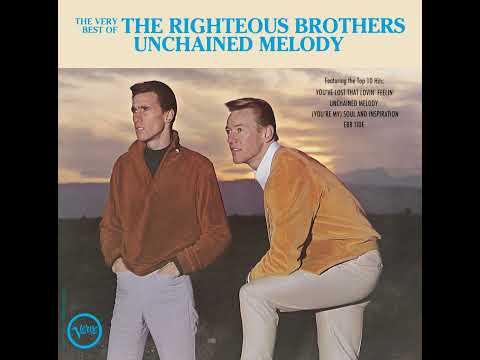
The commercial success of "Just Once In My Life" confirmed that "You've Lost That Lovin' Feelin'" had not been an anomaly but the opening statement of a genuinely productive artistic partnership. Philles Records issued further Righteous Brothers material throughout 1965 and into 1966, with "Unchained Melody" and "Ebb Tide" continuing the run of success. The Righteous Brothers had become the most commercially successful white act working in a soul-influenced idiom, and their records were drawing audiences that cut across the racial and regional boundaries that often segmented the American music market.
The partnership with Spector ultimately ended acrimoniously. Spector's eccentric working methods and his increasing erraticism created tensions that the commercial success could not indefinitely paper over. By 1966, the Righteous Brothers had moved to Verve Records, where they continued to chart, though the particular sonic signature of the Spector productions proved difficult to replicate under other hands. "Just Once In My Life" thus stands as part of a body of work that was exceptional both in its artistic ambition and in the brevity of its productive period, a window of creative collaboration that opened suddenly and closed before its full potential could be exhausted.
The recording has endured in the half-century since its release as a definitive example of the Wall of Sound's application to romantic longing. Its placement at number nine on the Hot 100 understated its influence; the record's impact on subsequent producers, arrangers, and vocalists who sought to capture the same quality of emotional enormity would prove far more lasting than any chart position could measure.
02 Song Meaning
Longing, Scale, and Emotional Architecture in "Just Once In My Life"
"Just Once In My Life" belongs to a category of pop song that might be described as the architecture of yearning: recordings whose production choices are inseparable from their emotional content, where the size of the sound is itself a statement about the magnitude of the feeling being expressed. Phil Spector's Wall of Sound methodology was not merely an aesthetic preference but a philosophical position about what emotional experience felt like from the inside. The enormous orchestral arrangements, the layered reverb, the sense of being surrounded and enveloped by sound, all of these were attempts to reproduce in acoustic form the overwhelming quality of genuine passion.
The title itself articulates a specific emotional situation: the desire for a singular, unrepeatable experience of completeness in love. "Just once" implies a life otherwise marked by incompletion, by loves that fell short of their promise, by the gap between what was felt and what was achieved. The narrator does not ask for permanence or abundance; the request is more poignant and more modest than that. A single moment of full, unambiguous love, experienced without qualification or compromise, is the object of desire. This modesty of aspiration paradoxically amplifies the emotional weight of the request; it suggests a speaker who has learned, through experience, to scale down their expectations to something that might actually be achievable.
Goffin and King's compositional approach matched Spector's production instincts in important ways. Their melodic writing gave the vocalists material that could sustain the emotional temperature Spector's arrangements created, with phrases that climbed and expanded in ways that rewarded the soaring quality of Bobby Hatfield's upper register. The interplay between Medley's grounded baritone and Hatfield's reaching tenor became a kind of embodied representation of the song's central tension: between the earthbound reality of ordinary romantic experience and the transcendent possibility that the narrator is reaching toward.
The Wall of Sound as a production concept also carried implicit democratic content. Spector was creating a music that was grand in scale, that deployed the sonic resources normally associated with classical orchestration or film scoring, in the service of the romantic lives of ordinary people. The suggestion was that the emotional experiences of working-class listeners were as large, as worthy of symphonic treatment, as the subjects of high art. This democratic grandeur resonated with audiences who recognized in the Righteous Brothers' performances an accurate representation of how love actually felt from the inside, scaled to its true emotional dimensions rather than diminished to fit the constraints of more modest production.
The record's enduring appeal lies in this combination of compositional intelligence and sonic commitment. The Goffin-King melody provides a framework of genuine emotional logic, while Spector's production ensures that the performance achieves the physical and acoustic scale the emotional content demands. Together, they created a recording in which the music and the feeling are genuinely inseparable, each requiring the other to be fully realized.
→ More from The Righteous Brothers
View all The Righteous Brothers hits →

→ More from the 1960s File
View all 1960s hits →




Keep digging