The 1960s File Feature
A Little Bit Of Heaven
Ronnie Dove and "A Little Bit Of Heaven" on the Billboard Hot 100 (1965) Ronnie Dove was one of the most prolific hitmakers on the mid-sixties American pop c…
01 The Story
Ronnie Dove and "A Little Bit Of Heaven" on the Billboard Hot 100 (1965)
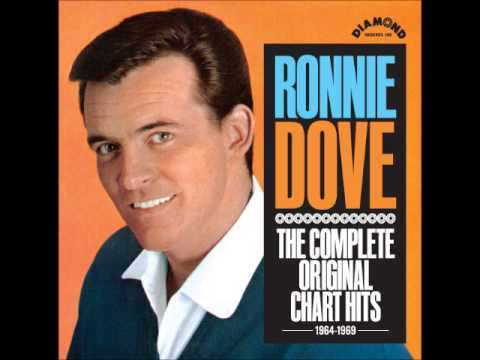
Ronnie Dove was one of the most prolific hitmakers on the mid-sixties American pop charts, a singer whose smooth, polished baritone and instinct for accessible melodic material made him a fixture on radio during a period when the industry was being transformed by the British Invasion. "A Little Bit Of Heaven" arrived in the summer of 1965 as another demonstration of his ability to craft records that connected with audiences who preferred the pre-rock tradition of American pop ballads.
Dove was born Ronald Lee Dove in Herndon, Virginia, in 1940, and spent his formative years in the Baltimore area. He began performing professionally in the late 1950s, and his early regional success in the mid-Atlantic states drew the attention of Diamond Records, the New York independent label that would become the vehicle for his commercial breakthrough. Diamond Records was a relatively small operation, but its head, Morty Craft, had a sharp ear for the mainstream pop market and an understanding of how to produce records that translated effectively to radio playlisting.
Dove's first major chart entry came in 1964 with "Say You," which introduced him to national audiences and established the template for his subsequent work: lush string arrangements, a prominent and expressive lead vocal, and lyrics that addressed universal romantic themes with directness and warmth. The record-buying public that had grown up on the sounds of Perry Como, Johnny Mathis, and Bobby Vinton responded enthusiastically, and Dove was positioned as a natural successor to that tradition even as rock and roll was reshaping the broader commercial landscape.
"A Little Bit Of Heaven" entered the Billboard Hot 100 on June 5, 1965, debuting at number 84. Its ascent was steady and consistent, moving to 68, then 47, then 32, then 20 in successive weeks, reflecting the kind of organic radio build that characterized the most effectively promoted records of the era. The song reached its peak position of number 16 on July 17, 1965, completing a run of ten weeks on the chart that represented one of Dove's strongest performances on the Hot 100.
The song's peak in the summer of 1965 placed it in competition with some of the most commercially successful recordings of the entire decade. The Beatles were releasing singles at an extraordinary pace, Motown was generating hits almost weekly, and the folk-rock movement launched by Dylan's electric turn was beginning to influence mainstream production. That "A Little Bit Of Heaven" could reach number 16 in this environment spoke to the continued vitality of the traditional pop audience and to Dove's particular effectiveness within that niche.
The production of the record was characteristic of the Diamond Records house style: orchestral arrangements that drew on the conventions of early sixties pop, a rhythm section calibrated for radio balance, and a vocal treatment that foregrounded Dove's warmth and emotional accessibility. Morty Craft understood that his artist's competitive advantage lay not in novelty but in polish, and the production of "A Little Bit Of Heaven" leaned fully into that understanding.
Dove continued to chart consistently throughout 1965 and into 1966 and 1967, placing a remarkable number of singles on the Hot 100 during those years. "Kiss Away," "Right or Wrong," "I'll Make All Your Dreams Come True," and "One Kiss for Old Times' Sake" all performed well, and he was considered by some trade publications to be among the most charted pop vocalists of the mid-sixties. This volume of activity reflected both the productivity demanded by the singles-driven market of the era and his particular ability to maintain consistent quality across a high volume of recordings.
In the decades following his commercial peak, Ronnie Dove continued to perform for audiences who remembered his work fondly, particularly in the mid-Atlantic and southeastern United States where he had built his earliest following. His recordings from this period have been reissued and collected for fans of classic American pop, and "A Little Bit Of Heaven" remains among the most representative examples of his craft at its most effective, a piece of work that captured the polish, warmth, and emotional accessibility that made him one of the overlooked gems of mid-sixties mainstream pop.
02 Song Meaning
The Meaning and Sentiment of Ronnie Dove's "A Little Bit Of Heaven"
"A Little Bit Of Heaven" belongs to a tradition of American pop songwriting in which the beloved is described in terms that borrow from the sacred. The title phrase evokes the theological concept of paradise and applies it to the experience of romantic love, suggesting that the feelings inspired by the right person are not merely pleasant but transcendent, a foretaste of something beyond ordinary human experience. Ronnie Dove brings his characteristic warmth to this sentiment, making it feel personal rather than generic.
This kind of sacred-secular language had deep roots in American popular music by 1965, drawing on both the gospel tradition and the secular Tin Pan Alley songwriting that had dominated American pop for decades. The comparison of romantic love to heavenly experience was a staple of the pre-rock ballad tradition, appearing in hundreds of songs across the 1940s and 1950s. What distinguished the best examples of this type was the ability to make the familiar metaphor feel fresh through the quality of the melody and the sincerity of the vocal performance.
Dove's particular gift was for exactly this kind of sincerity. His voice carried a warmth and directness that prevented even the most conventional material from feeling hollow. When he described something as a little bit of heaven, the listener believed he meant it, and that believability was the foundation of his commercial appeal during his mid-sixties peak. The emotional architecture of the song depends entirely on this credibility, and Dove supplied it in abundance.
The diminutive quality of the phrase "a little bit" is worth noting as well. Rather than claiming the full grandeur of the comparison, the narrator modestly suggests that what he has found is only a portion of something larger and more perfect. This rhetorical move is characteristic of the best pop ballads of the era, which understood that hyperbole becomes more effective when it is slightly understated. The speaker is not claiming that his lover is literally divine, but rather that she has given him a taste of something that feels that way, a distinction that keeps the song within the bounds of the emotionally plausible.
In the context of 1965, the song also carried a specific cultural meaning as a deliberate representative of the pre-rock pop tradition at a moment when that tradition was under considerable commercial pressure. The British Invasion had fundamentally altered the commercial landscape of American popular music, and artists like Dove who continued to work within the older idiom were making an implicit statement about the values embedded in that idiom. "A Little Bit Of Heaven" was not simply a love song but a defense of a particular kind of adult emotional restraint and melodic craftsmanship that its audience valued precisely because it was becoming less common.
The song's enduring appeal among fans of classic American pop rests on exactly these qualities: its melodic grace, its emotional directness, and its commitment to a vision of romantic love as something genuinely elevating. Ronnie Dove performed these sentiments with the conviction of an artist who believed in the tradition he was working within, and that belief communicates itself across the decades with undiminished warmth.
→ More from Ronnie Dove
View all Ronnie Dove hits →



→ More from the 1960s File
View all 1960s hits →




Keep digging