The 1960s File Feature
Him Or Me - What's It Gonna Be?
"Him Or Me - What's It Gonna Be?" — Paul Revere The Raiders The Raiders at Their Commercial Peak Spring 1967 found Paul Revere and the Raiders at the height …
01 The Story
"Him Or Me - What's It Gonna Be?" — Paul Revere & The Raiders
The Raiders at Their Commercial Peak
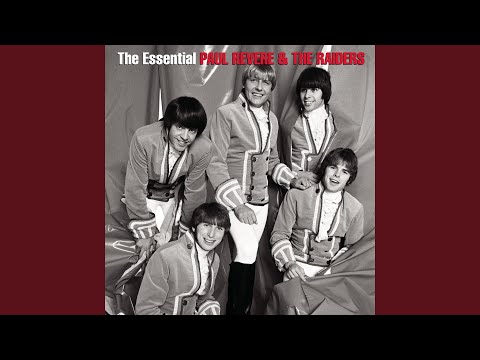
Spring 1967 found Paul Revere and the Raiders at the height of their remarkable run as one of the most commercially successful American rock acts of the mid-1960s. The Portland, Oregon group, led by keyboardist Paul Revere and fronted by the charismatic Mark Lindsay, had carved out an unlikely position in the rock landscape: they were TV-friendly without being anodyne, energetic without being threatening, and consistently capable of delivering punchy, hook-driven singles that dominated AM radio. Their exposure through Dick Clark's Where the Action Is television program had given them a national visibility that few other American acts matched during the peak years of Beatlemania.
By mid-1967, though, something was shifting in American rock music. The Summer of Love was approaching, psychedelia was beginning to eclipse the sharper-edged garage and pop-rock sounds that had defined the mid-decade chart, and artists were being asked to demonstrate their seriousness in new ways. Paul Revere and the Raiders met this challenge with "Him Or Me," a record that retained their energy and directness while pushing the band's musical ambitions modestly forward.
Mark Lindsay and the Confidence of the Lyric
"Him Or Me - What's It Gonna Be?" was written by Mark Lindsay and Terry Melcher, the latter a producer with deep connections to the California music scene of the 1960s who had worked extensively with the Raiders as well as with other significant artists of the period. The collaboration between Lindsay and Melcher had been productive throughout the band's commercial peak, and this track represents one of their strongest joint efforts.
The lyric is built on a classic pop-rock premise: an ultimatum in a romantic triangle, a demand for a choice between the narrator and a rival. The delivery is direct, even blunt, with the confidence of someone who believes the answer should be obvious. Mark Lindsay's vocal performance perfectly suits this emotional register, combining charm with something approaching swagger in a way that made the track irresistible on radio.
The production balanced the electric charge of the band's live energy with the cleaner lines of professional studio craft. The track crackles from the first bar, with the guitar work snapping forward and the rhythm section driving the whole enterprise at a pace that demanded attention.
A Rocket to the Top Five
The chart performance of "Him Or Me" was among the band's strongest. The single debuted on the Billboard Hot 100 on April 29, 1967, entering at number 65. From there it climbed aggressively and consistently through the spring, never stalling, always pressing upward. The trajectory reflected both strong radio promotion and genuine audience enthusiasm, the kind of consistent week-over-week momentum that distinguishes a real hit from a record propped up by marketing alone.
The track peaked at number 5 on June 10, 1967, making it one of the highest-charting singles in Paul Revere and the Raiders' career. It spent nine total weeks on the Billboard Hot 100, a run that confirmed the band's continued relevance at a moment when the rock landscape was undergoing considerable upheaval. Landing in the top 5 during the summer of 1967, with Sgt. Pepper's Lonely Hearts Club Band having just been released in the UK, was no small feat.
The Raiders in the Context of 1967 Rock
One of the interesting tensions in the Raiders' career at this moment was between their TV-friendly image and the rawer rock energy they were capable of in the studio. "Him Or Me" threads that needle effectively, presenting a record that sounds like it means business without abandoning the accessibility that made the band a radio staple. The production has edges where earlier Raiders singles had sometimes smoothed everything into commercial polish.
The band's unique position as simultaneously a TV fixture and a credible rock group gave them access to audiences that more underground acts of the period could not reach, while their genuine musical chops prevented them from being dismissed as mere teen idols. "Him Or Me" arrived at the exact moment when maintaining that balance required the most skill, and the record achieves it.
Legacy in the Raiders' Catalog
Across their career, Paul Revere and the Raiders placed numerous singles on the Hot 100, but "Him Or Me" stands out for its combination of commercial success and musical urgency. It represents the band operating at the peak of their powers, with a team behind them that understood exactly how to translate their live energy into a recorded format without losing the spontaneity that made them compelling.
Put it on with fresh ears and you hear why it works. The confidence in Lindsay's delivery, the tight interplay of the rhythm section, the forward momentum that never lets up: this is what American rock sounded like when it was at its most direct and most sure of itself.
"Him Or Me - What's It Gonna Be?" — Paul Revere & The Raiders' singular moment on the 1960s charts.
02 Song Meaning
"Him Or Me - What's It Gonna Be?" — Ultimatums, Agency, and the Stakes of Love
The Drama of the Forced Choice
Romantic ultimatums have powered pop songs since the medium existed. The premise is structurally dramatic and emotionally legible: two rivals, one choice, a narrator who has decided that patience and ambiguity are no longer options. "Him Or Me - What's It Gonna Be?" commits fully to this premise, placing the listener inside the mind of someone who has concluded that the current situation cannot continue, that a decision must be forced.
The effectiveness of the conceit depends on the narrator's confidence, on the listener believing that the ultimatum comes from a position of genuine conviction rather than desperation. Mark Lindsay's vocal performance supplies exactly that confidence. He does not sound like someone afraid of the answer; he sounds like someone certain of his own worth and willing to stake the relationship on the other person recognizing it. That confidence is itself appealing, and it is part of why the track resonated so broadly with a mid-1960s teenage audience.
Gender Dynamics and 1967 Pop Culture
The emotional dynamics in "Him Or Me" reflect the romantic codes of mid-1960s pop culture with some fidelity. The narrator claims a form of authority over the relationship's outcome, positioning himself as someone who can define the terms of engagement. This stance was culturally legible to listeners of the period in ways that later generations have sometimes found more complicated to navigate.
It is worth noting that the song also implicitly grants the other person genuine power: the whole point is that a choice must be made, that the narrator cannot force the outcome but can only lay out the stakes. The framing acknowledges that real agency lies with the person being addressed, not with the narrator issuing the ultimatum. This reading gives the song more emotional complexity than the surface confidence of the delivery might initially suggest.
The Musical Urgency as Emotional Argument
The sound of "Him Or Me" is itself part of the lyric's argument. The driving rhythm, the sharp guitar attack, the forward momentum of the arrangement: all of these production choices reinforce the emotional premise. This is not a song that sounds like waiting or uncertainty. The music sounds like a decision has already been made, and the lyric is simply communicating that decision to another party.
This alignment between sound and meaning is one of the track's genuine artistic achievements. Many pop songs of the period deployed energetic production regardless of lyrical content, using tempo and volume as generic engagement tools. "Him Or Me" uses its musical energy specifically and purposefully, making the production the sonic embodiment of the narrator's emotional state.
Why the Formula Still Works
Pop songs built around ultimatums risk one of two failures: they can feel manipulative and unpleasant if the narrator comes across as controlling, or they can feel toothless if the confidence never quite convinces. "Him Or Me" avoids both failures because Lindsay's performance strikes a tone of self-assured rather than threatening, and because the underlying emotional logic is simple enough to be immediately clear.
The song does not require the listener to take sides or render a judgment on the situation. It asks only that the listener recognize the emotional state it is describing: that moment when someone who has been patient long enough decides to stop being patient and demand clarity. Almost everyone has been in something like that moment, and the recognition is sufficient to carry the song.
"Him Or Me - What's It Gonna Be?" — Paul Revere & The Raiders' singular moment on the 1960s charts.
→ More from Paul Revere & The Raiders
View all Paul Revere & The Raiders hits →
→ More from the 1960s File
View all 1960s hits →




Keep digging