The 1960s File Feature
Good Thing
"Good Thing" — Paul Revere by the end of that year, the polished melodic pop the Raiders had mastered would begin to feel slightly out of step with where roc…
01 The Story
"Good Thing" — Paul Revere & The Raiders Featuring Mark Lindsay
The Portland Insurgents Hit Their Stride
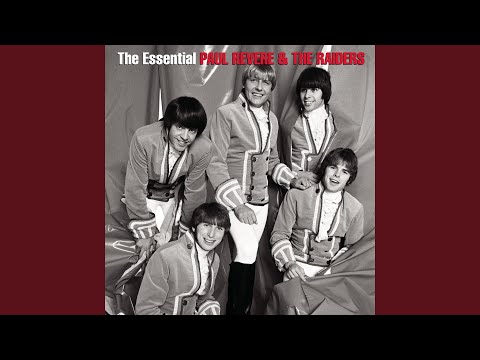
Somewhere in late 1966, American pop radio was caught in a genuine tug of war. The British Invasion had reshaped the entire landscape, the psychedelic revolution was beginning to color the edges of Top 40 programming, and every American band with ambitions had to figure out where it fit. Paul Revere and the Raiders had already carved out an identity: they wore Revolutionary War costumes on stage, they projected an irreverent, high-energy showmanship that translated well to television, and they had a knack for melodic garage pop that felt distinctly American without being provincial. By the time Good Thing arrived, they were not newcomers scrambling for attention. They were a proven chart force operating at the height of their commercial powers.
The Raiders had spent much of 1966 as virtual residents of the Dick Clark television program Where the Action Is, which gave them a visibility advantage that few American rock acts could match. That exposure had translated directly into chart success: Kicks had reached number four in the spring of 1966, and Hungry followed it to number six that autumn. The band was on a roll, and Good Thing was the next piece of that streak.
A Song Built for Radio
The track was written by Terry Melcher and Mark Lindsay, two collaborators who understood instinctively what made a record work on AM radio in the mid-1960s. Terry Melcher, the son of actress Doris Day and a seasoned producer with credits that included early work with the Byrds, brought a craftsman's sensibility to the production. Mark Lindsay, the band's charismatic lead vocalist, contributed the kind of melodic instinct that made the Raiders' best material feel effortless even when the arrangements were more sophisticated than they appeared.
The song itself is bright, propulsive, and built around a hook that catches on first listen and holds. The guitar work has that crisp, slightly aggressive quality that defined West Coast garage pop before the genre softened into sunshine, and Melcher's production kept everything sounding immediate without sacrificing the professional polish that Columbia Records expected from one of its marquee acts.
The Chart Ascent
Good Thing debuted on the Billboard Hot 100 on December 3, 1966, entering at number 88. From there it climbed with steady momentum through the final weeks of December, crossing into the top 30 just before the new year. It continued rising into January, eventually reaching its peak position of number 4 during the week of January 14, 1967, after 12 weeks on the chart. That peak made it the third consecutive top-five single for the Raiders in under a year, a sequence that placed them comfortably among the most commercially consistent American rock acts of the period.
The timing of the chart peak was significant: January 1967 placed the song at the very hinge between two cultural eras. The summer of 1967 and the psychedelic explosion were just months away; by the end of that year, the polished melodic pop the Raiders had mastered would begin to feel slightly out of step with where rock was heading. Good Thing thus belongs to a specific and brief golden window.
Mark Lindsay at the Centre
The decision to bill the record as Paul Revere and the Raiders Featuring Mark Lindsay was a reflection of the vocalist's growing prominence within the act. Lindsay possessed one of the more distinctive voices in mid-sixties pop: warm and flexible, capable of urgency without strain, and with enough personality to make radio programmers take notice. His performance on Good Thing is a masterclass in making difficult things sound easy, holding the song's energy in check just enough to let the hook do its work.
Lindsay would go on to a parallel solo career, but his work with the Raiders during this period remains his most enduring recorded legacy. Good Thing stands as one of the clearest expressions of what made the combination work: his voice above, Melcher's production below, and a song designed to be heard at full volume through a car radio with the windows down.
The Place in American Pop History
Paul Revere and the Raiders occupy a somewhat undervalued place in the story of 1960s American rock. Their theatrical presentation has sometimes been dismissed as novelty, but the quality of their best mid-decade singles argues against that assessment. In a field crowded with British imports and California dreamers, they maintained a string of genuine top-five hits through craft and consistency.
Good Thing is perhaps the purest distillation of what the band did best: aggressive melody, professional production, a vocal performance that holds the whole thing together, and a chorus that makes the three-minute pop single feel like an entirely sufficient art form. Put it on and understand immediately why it was on every jukebox in America in the winter of 1966.
"Good Thing" — Paul Revere & The Raiders Featuring Mark Lindsay's singular moment on the 1960s charts.
02 Song Meaning
"Good Thing" — Optimism as a Commercial Art Form
The Simple Power of Celebration
There is a specific kind of pop song that does not ask to be decoded. Good Thing belongs squarely in that category: it is a record about appreciating something positive in your life, about recognizing what you have before it disappears. The lyrical stance is one of gratitude edged with a mild anxiety, a recognition that good fortune is both real and potentially fragile. That combination of appreciation and urgency is what gives the song its emotional weight beneath the bright surface.
In the context of 1966 pop, this was not a complicated message. But delivery and execution are everything, and the Raiders' version of simple optimism had a particular buoyancy that distinguished it from the more earnest declarations coming from the folk-pop side of the dial. There was a knowingness to the performance, a sense that the band understood the song's lightness and leaned into it rather than inflating it.
Gratitude in an Era of Change
The mid-1960s were a period of extraordinary cultural turbulence. Civil rights struggles, the escalating Vietnam War, and rapid shifts in social norms were reshaping American life in ways that would become more visible over the following years. Pop music in this moment often served as a refuge, a space where three minutes of melody could hold genuine anxiety at bay. A song called Good Thing about holding onto what you value fits neatly into this function.
The Raiders occupied an interesting position in this cultural moment. Their Revolutionary War imagery gave them a superficially patriotic identity, but their music never felt like political commentary. They were entertainers of the most professional kind, and Good Thing reflects that clarity of purpose. The song delivers pleasure and earns its emotional resonance precisely because it does not overreach.
The Voice as Meaning
Much of what Good Thing communicates is carried not in the specific words but in Mark Lindsay's delivery. His voice conveys conviction without desperation, warmth without sentimentality. The performance suggests someone who genuinely believes what he is singing, and that sincerity is the engine of the song's emotional effect. Listeners who might have processed the lyric as ordinary pop sentiment found themselves persuaded by the person doing the persuading.
This dynamic, where the vocalist's personality becomes inseparable from the song's meaning, was central to how the Raiders worked as a commercial unit. The band provided the musical chassis; Lindsay's voice provided the human presence that made listeners care about the outcome. On Good Thing, that partnership operates at its most effective.
Why It Still Holds Up
Songs about appreciating good fortune do not age the way topical songs do. Good Thing sidesteps the period trappings that have dated some of its contemporaries, because its central emotional argument, hold onto what matters while you have it, is timeless. The production's crispness and the melodic confidence of the chorus have kept the record sounding fresh across decades of changing tastes.
For listeners discovering the Raiders' mid-sixties catalogue now, Good Thing serves as an excellent entry point. It captures the band at the precise intersection of craft and commerce where their best work lived, demonstrating that populist ambitions and genuine quality were never in opposition. The song meant something in January 1967, and it still does.
→ More from Paul Revere & The Raiders Featuring Mark Lindsay
View all Paul Revere & The Raiders Featuring Mark Lindsay hits →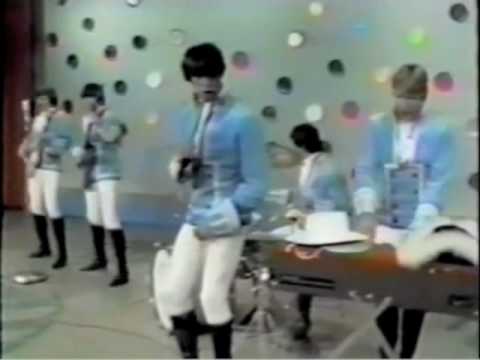
→ More from the 1960s File
View all 1960s hits →




Keep digging