The 1960s File Feature
Hungry
Hungry: Paul Revere and The Raiders Storm the 1966 Billboard Hot 100 Paul Revere and The Raiders occupied a singular position in American pop music during th…
01 The Story
Hungry: Paul Revere and The Raiders Storm the 1966 Billboard Hot 100
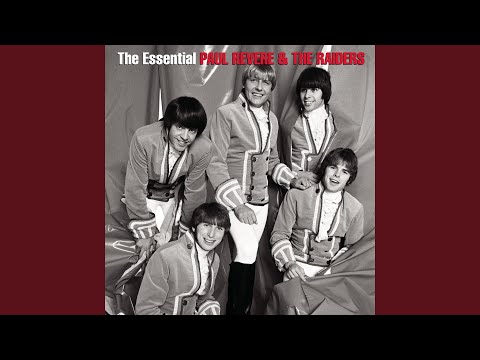
Paul Revere and The Raiders occupied a singular position in American pop music during the mid-1960s. Where the British Invasion had swept through the charts with remarkable efficiency from 1964 onward, the Raiders offered a raucous, high-energy counter-presence, an American group that matched the British bands' commitment to rhythm and blues roots while projecting an image of colonial-era rebellion that was simultaneously campy and strangely effective. By 1966, the group had evolved from Pacific Northwest roadhouse regulars into genuine chart contenders with a distinctive sound and a television presence through Dick Clark's Where the Action Is that gave them visibility beyond their radio success.
"Hungry," released in 1966 on Columbia Records and featuring vocalist Mark Lindsay prominently enough to earn a billing credit, represented the group at something close to their commercial and artistic peak. The song was written by Barry Mann and Cynthia Weil, one of the most celebrated songwriting partnerships to emerge from the Brill Building era, whose credits already included landmark recordings by other artists and who continued to demonstrate an exceptional ability to craft melodically and emotionally resonant pop songs. Mann and Weil understood the architecture of a hit with the kind of structural precision that came from years of producing material for the most demanding commercial market in the world.
"Hungry" reached number 6 on the Billboard Hot 100 in 1966, giving Paul Revere and The Raiders one of their strongest chart showings and confirming Mark Lindsay's status as one of the more compelling vocalists working in American rock and pop at that moment. The single's success was part of a remarkable run for the group during this period, when they were placing multiple recordings in the upper reaches of the chart and had established themselves as fixtures of the American teen-pop landscape.
The production of "Hungry" bore the hallmarks of the sophisticated pop craft that Mann and Weil brought to their work. The song built on a foundation of insistent rhythm and driving melody, with Lindsay's vocal performance conveying a quality of urgency and emotional need that gave the song a genuine charge beyond its pop sheen. The Raiders, who were an accomplished live band capable of considerable volume and energy, lent the recording a propulsive quality that distinguished it from more polished but less visceral pop productions of the same period.
Columbia Records had signed the group in 1963, and by 1966 the label relationship was producing consistent commercial results. Producer Terry Melcher worked with the Raiders during their most commercially successful period and played a significant role in shaping the sound that made recordings like "Hungry" so effective on radio. Melcher's production sensibility balanced the group's rougher instincts with the sonic clarity required for AM radio play, arriving at a combination that satisfied both the group's identity and commercial requirements.
The television exposure provided by Where the Action Is gave Paul Revere and The Raiders a promotional platform that was unusually effective for the era. The daily format of the show meant that the group's image and music were consistently before teenage audiences in a way that reinforced radio play and drove record sales. "Hungry" benefited from this visibility, with performances on the show helping translate the record's radio success into a broader cultural moment for the group.
Mark Lindsay's role in the Raiders was central to their commercial success during this period. His vocal performances gave the group's recordings an emotional range that the band's occasionally carnival-esque visual presentation might otherwise have obscured. On "Hungry," he delivered a performance that was direct and affecting, communicating a quality of genuine emotional investment that made the song's themes of longing and need feel credible rather than merely formulaic.
The 1966 context for "Hungry" included competition from an extraordinary array of recordings. The Beatles, the Rolling Stones, and an expanding cast of American and British acts were producing some of the most creative popular music in the history of the form, and chart success in this environment was genuinely difficult to achieve. For Paul Revere and The Raiders to reach the top 10 with a recording as direct and unironic as "Hungry" spoke to the song's genuine quality and the group's ability to connect with audiences on a fundamental emotional level.
The legacy of "Hungry" within the Raiders' catalog is that of a defining single from their most commercially potent era, a song that captured everything they did best and delivered it with maximum efficiency. The Mann-Weil composition gave them material of a quality that matched their capabilities, and the result was a recording that remains one of the more satisfying pop-rock products of its remarkable year.
02 Song Meaning
Desire and Drive: The Emotional Core of "Hungry"
"Hungry" operates on one of popular music's most durable and versatile metaphors: physical appetite as a figure for emotional and romantic longing. Barry Mann and Cynthia Weil's lyrical construction mapped a condition of deep need onto the language of hunger and wanting, creating a song whose emotional content was immediately legible to any listener while avoiding the more explicit emotional vocabulary that might have felt self-pitying or overwrought. The result is a song about desire that communicates its subject through indirection and physical imagery, giving the emotional content a visceral immediacy that more abstract love songs might have lacked.
Mark Lindsay's vocal interpretation was central to the song's meaning. He brought to the recording a quality of urgency and need that transformed the Mann-Weil composition from a professionally crafted pop song into something that felt genuinely felt. The distinction matters: many recordings from this era deployed technically proficient vocals in service of material that remained at an emotional distance from the listener. Lindsay's performance on "Hungry" closed that distance, making the song's central emotional condition feel present and immediate rather than merely described.
The song's construction follows a pattern well suited to its subject. The verses build a picture of the narrator's state through accumulated images and observations, while the chorus delivers the song's emotional thesis with the directness and repetition that makes pop music such an effective vehicle for emotional communication. Mann and Weil's mastery of this architecture meant that the emotional payoff arrived reliably and with satisfying force, confirming their standing as among the most accomplished commercial songwriters of their generation.
Within the broader context of 1966 pop, "Hungry" occupied a relatively straightforward emotional position compared to the more experimental or psychedelic content beginning to emerge from some quarters of the music industry. This directness was not a creative limitation but a deliberate choice: the song was designed to communicate clearly and powerfully with a wide teenage audience, and its unambiguous emotional statement was part of what made it so effective in that role. The cleanliness of its emotional proposition gave listeners nothing to puzzle over and everything to feel.
The theme of wanting, of reaching toward something not yet possessed, gave the song a universality that extended beyond any specific romantic situation. Adolescent audiences in particular found in songs like "Hungry" a vocabulary for feelings that were often confusing and difficult to articulate. The Raiders' high-energy delivery ensured that the emotional content was not merely conveyed but performed with a physical intensity that matched the song's subject matter. In this sense, the song operated on multiple levels simultaneously: as a pop construction, as an emotional statement, and as a performance of the very urgency it described.
The song's lasting significance in the Raiders' catalog comes from its efficient delivery of emotional content through expert songwriting and committed performance. It does not reach for complexity or challenge its listeners' assumptions, but it delivers what it promises with a conviction and craft that reward repeated listening. "Hungry" is a demonstration of what commercial pop songwriting at its best could accomplish during one of the most creatively rich periods in American popular music history, and Mark Lindsay's performance ensures that the song's emotional truth remains audible across the decades separating its creation from the present.
→ More from Paul Revere & The Raiders Featuring Mark Lindsay
View all Paul Revere & The Raiders Featuring Mark Lindsay hits →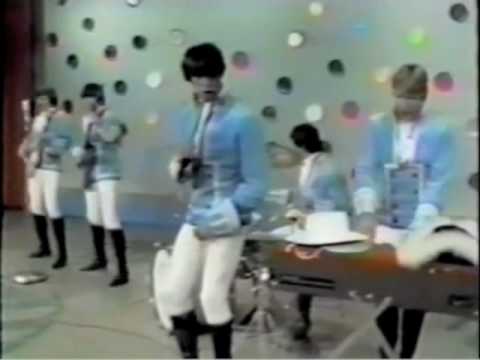
→ More from the 1960s File
View all 1960s hits →




Keep digging